
GUCCI
September 23, 2026
Inside the Appeal of Demna's GUCCI
What's the first thing that comes to mind when you think of GUCCI?
The GG monogram and the horsebit, or the sensual silhouettes and those ad campaigns nobody could look away from?
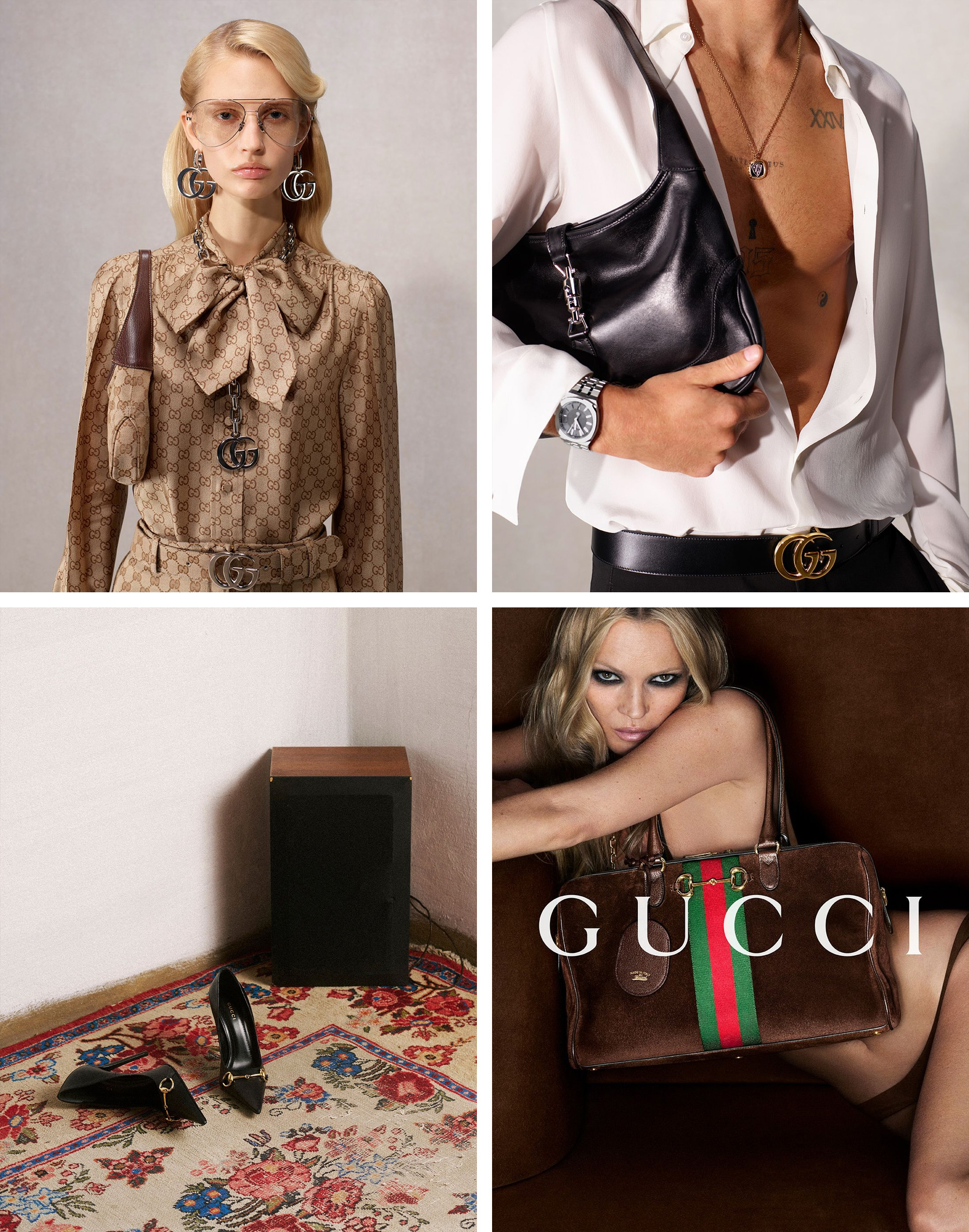 ©@gucci
Across a century of guarding its heritage, the thing that has changed GUCCI's face most dramatically has always been a new designer walking in. Tom Ford turned it into the most sensual luxury house in fashion. Alessandro Michele built something else entirely out of romance, bohemia, and genderless dressing.
So what is Demna building?
The interesting part is that his answer isn’t a new GUCCI at all. He’s pulling out the most GUCCI things we already knew and running them back through his own sensibility. Which means starting with the icons that made GUCCI GUCCI in the first place.
What GUCCI Has Always Been
It started with travel, and with the leather that came from it.
Guccio Gucci worked as a porter at the Savoy in London, where he spent his days handling the luggage of wealthy guests, and in 1921 he opened a leather goods shop in Florence on the strength of what he’d seen there, and that travel luggage made his name.
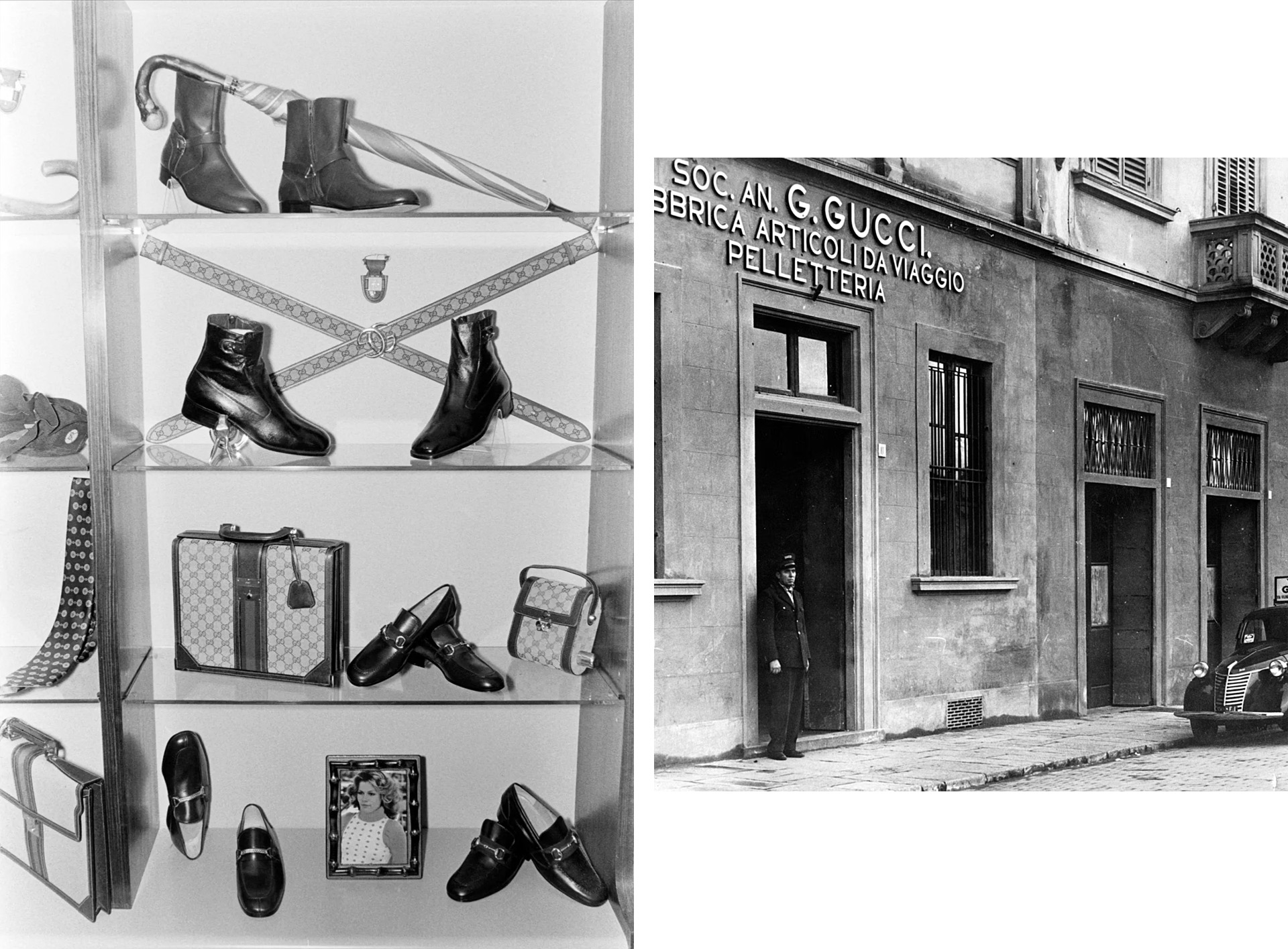 ©wwd.com, ©gucci.com
Everything that now reads as GUCCI passed through his hands. The Diamante, a diamond pattern printed on canvas instead of leather, became the basis for the GG monogram. Bamboo, picked up during a stretch when leather was hard to source, turned into the Bamboo bag. The horsebit came out of equestrian culture and never left.
So GUCCI’s history is really the story of an item becoming an icon, and that icon then building the GUCCI of the next era. An archive this deep takes on a different color depending on who’s holding it.
Tom Ford, creative director from 1994, is the clearest case. He didn’t reach for decorous classical luxury. He went straight for sensuality and desire.
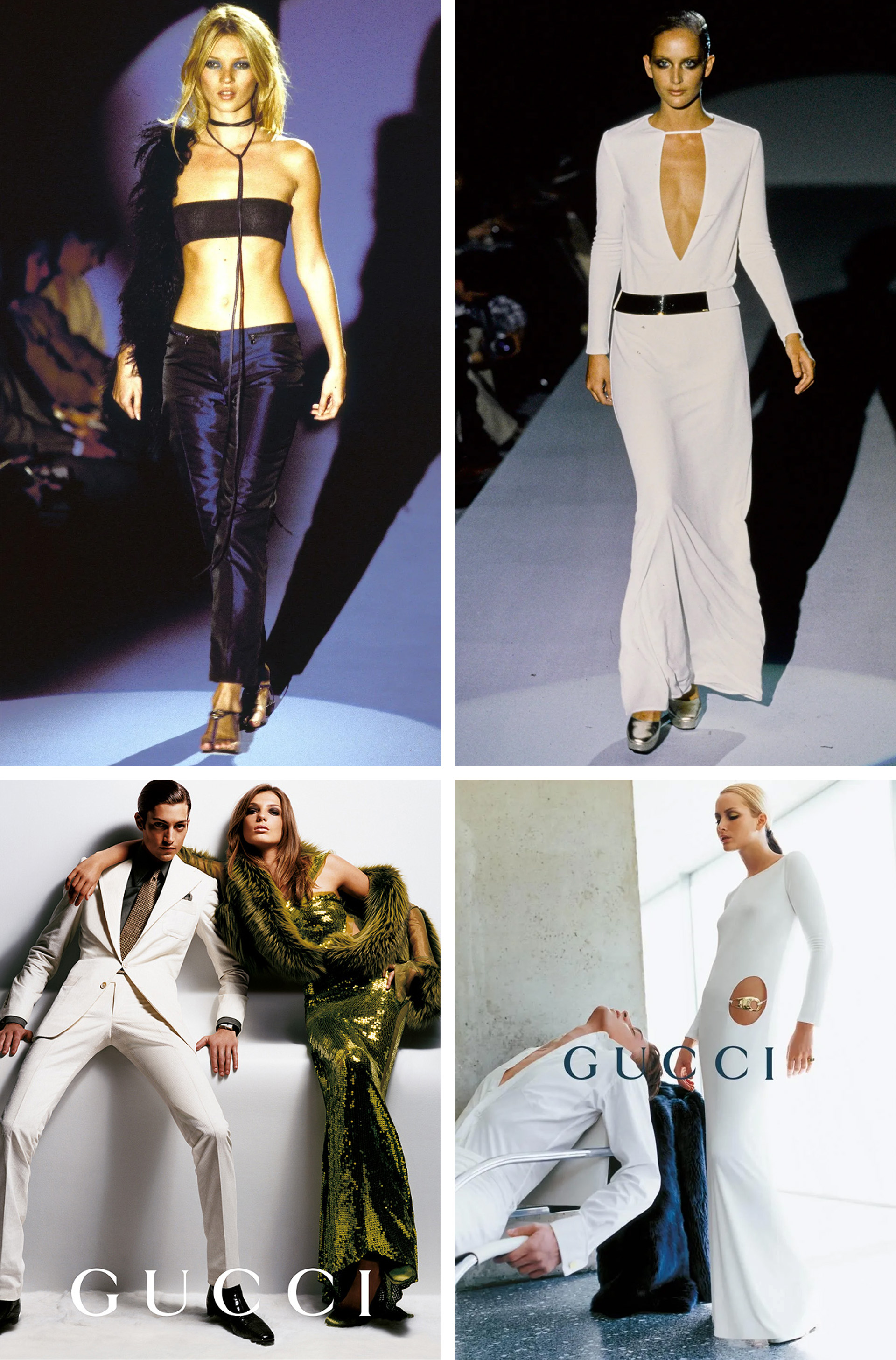 ©elle.com.au, ©vogue.com, ©fashionhistory.fitnyc.edu
Plunging necklines, low waists, fabric with a wet shine, and advertising you couldn’t scroll past. GUCCI under Ford stopped being a brand you noticed and became one you wanted to own. That’s probably why nineties GUCCI still lives in everyone’s head as sex, and why those images circulate today still looking sharper than most things made this year.
That inheritance has kept resurfacing in different forms ever since. Here are the pieces that bring the era back.
Alessandro Michele arrived in 2015 and, rather than continue Ford's formula, took the house somewhere else. Ruffles and bow ties, floral prints, vintage silhouettes, oversized accessories, styling that refused to sit on one side of the men's and women's line.
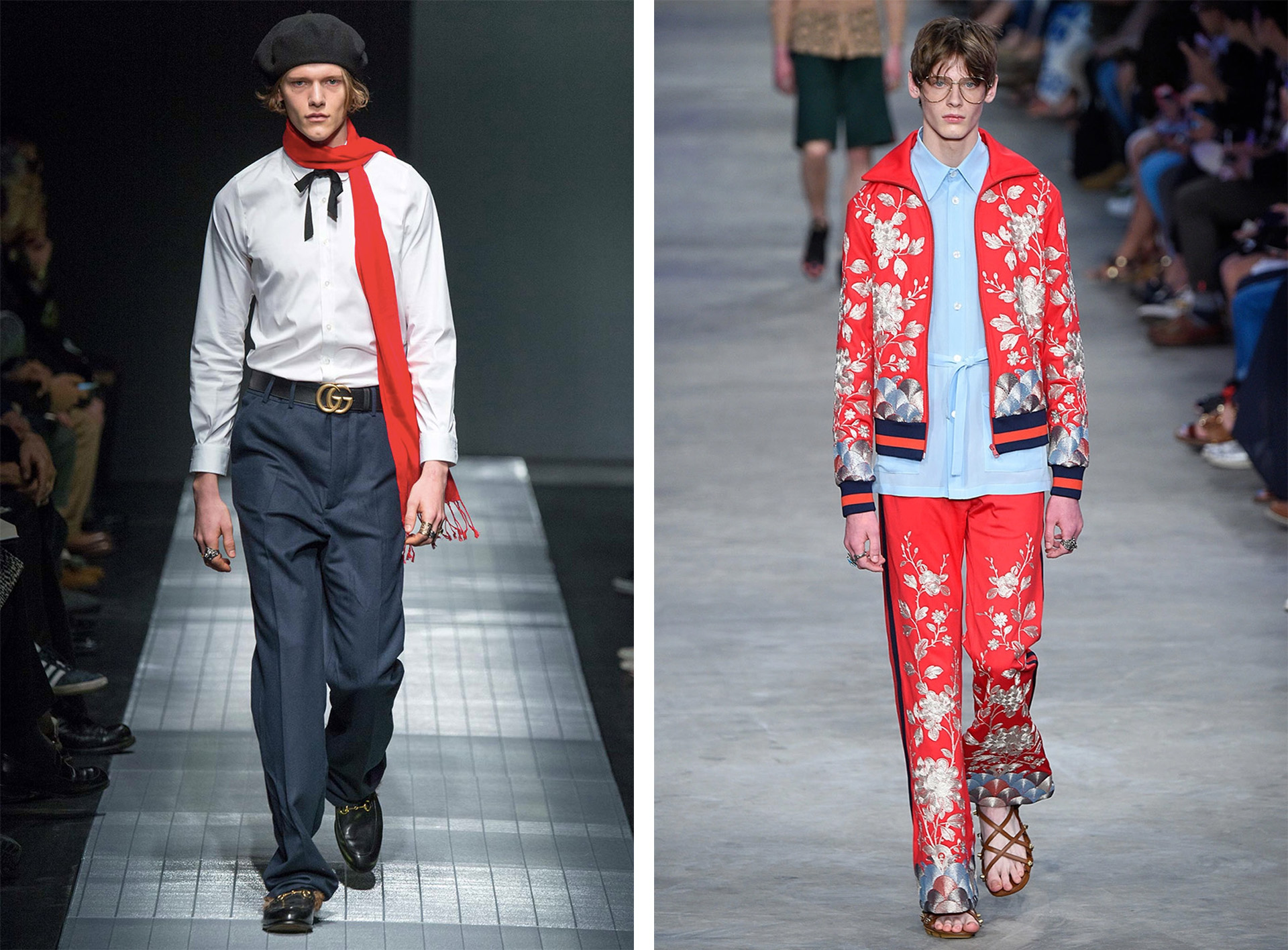 ©fuckingyoung.es
Ford redefined GUCCI through sex. Michele added a loose, wandering romance. Here are the pieces carrying that DNA.
He raided the past, blurred the gender line, and built a world that only belonged to GUCCI, and it worked. After he left in 2022, sales dropped and the brand spent a few years unable to get back into the middle of the cultural conversation.
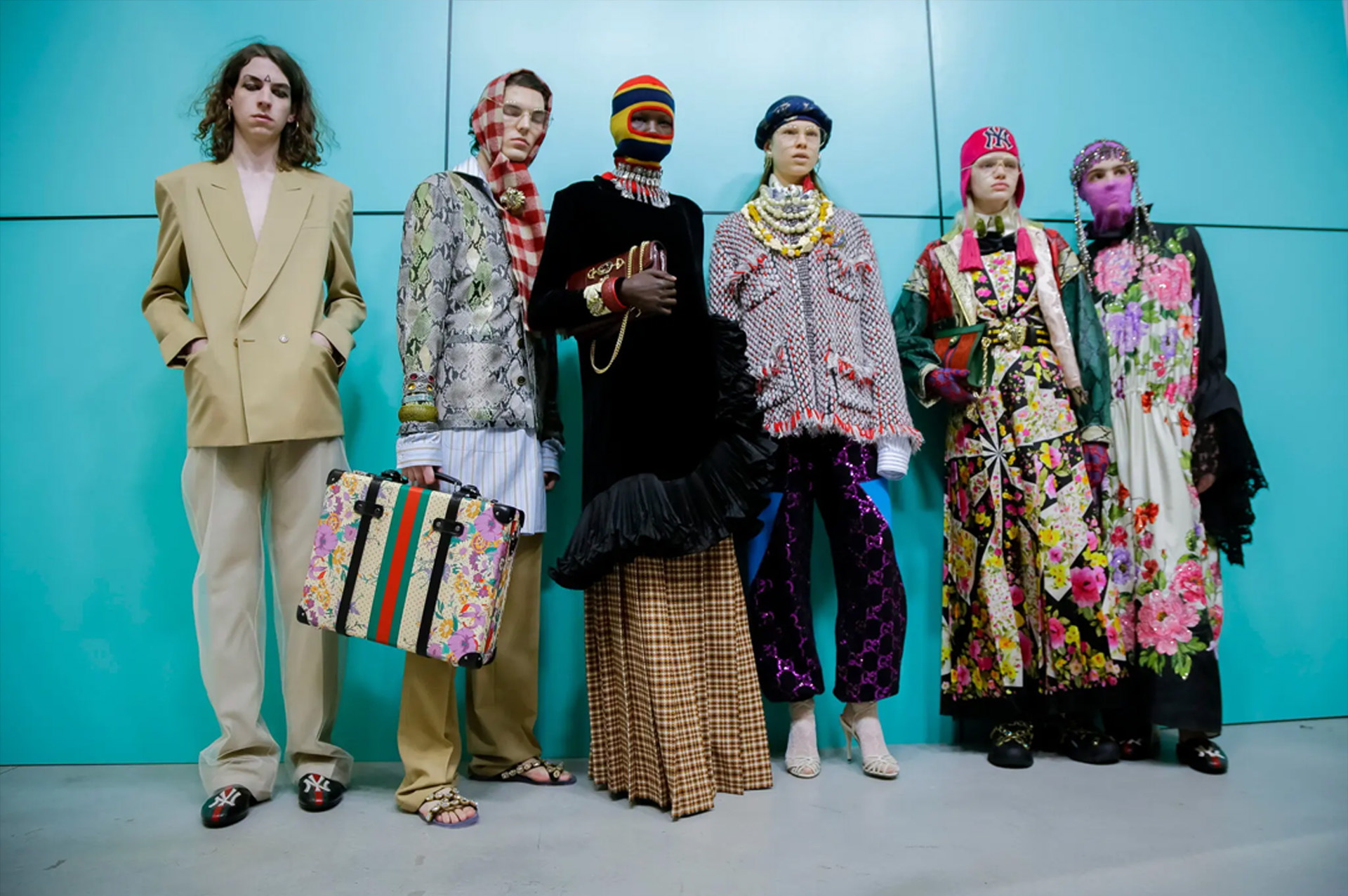 ©nytimes.com
Which is what made Kering's choice of Demna feel both obvious and, for anyone watching fashion, genuinely interesting.
At BALENCIAGA, Demna was never just a person making clothes. He pulled internet memes, street culture, celebrity, and whatever argument was happening that week into fashion's language, and he made people talk. So the real job at GUCCI was never the clothes. It was getting GUCCI talked about again.
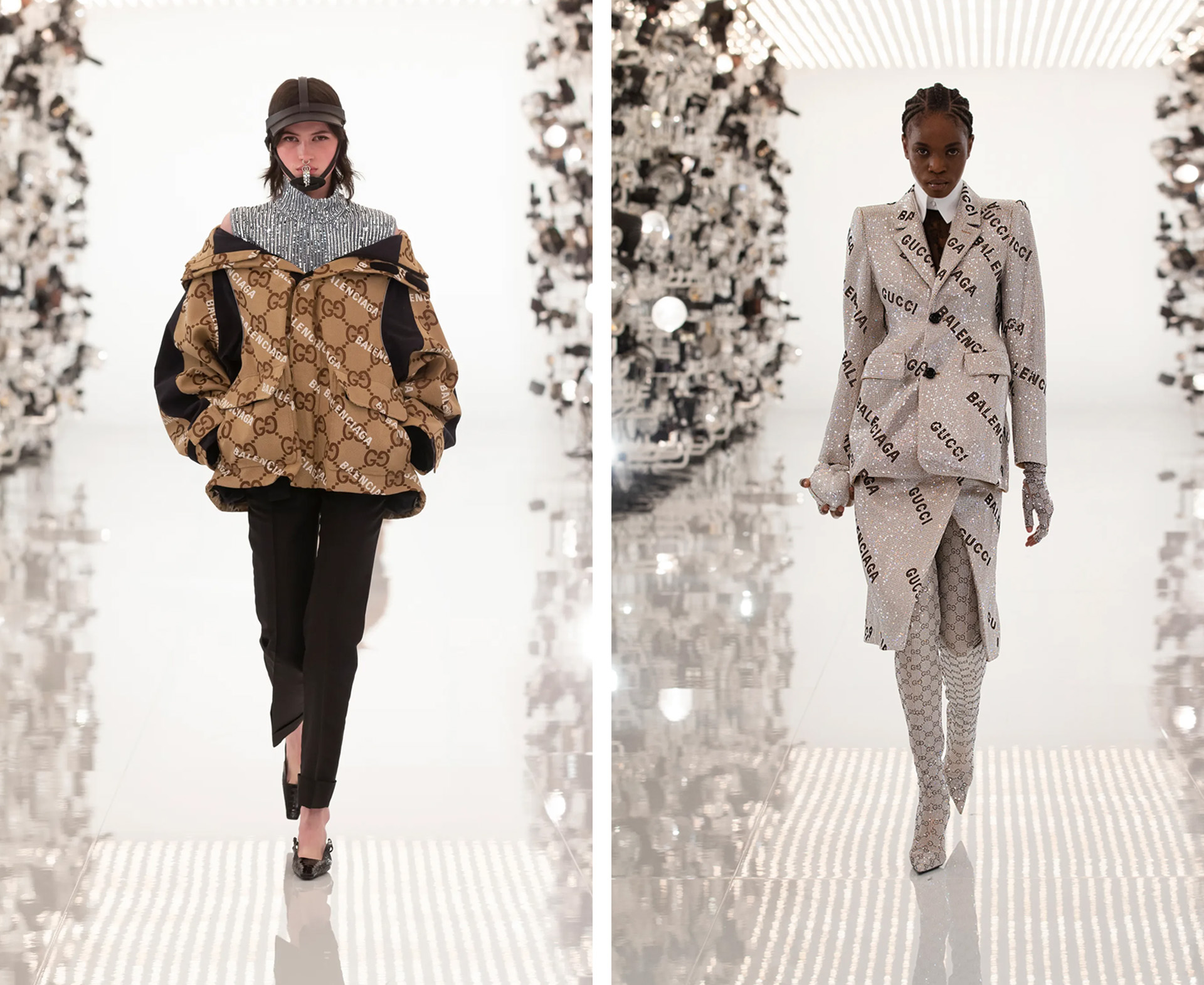 The 'Hacker Project', shown for GUCCI's 100th anniversary
And the two houses had already swapped codes once, back in 2021, when Michele reinterpreted Demna's Balenciaga inside GUCCI's vocabulary for the Hacker Project. In hindsight it reads like a trailer for what was coming.
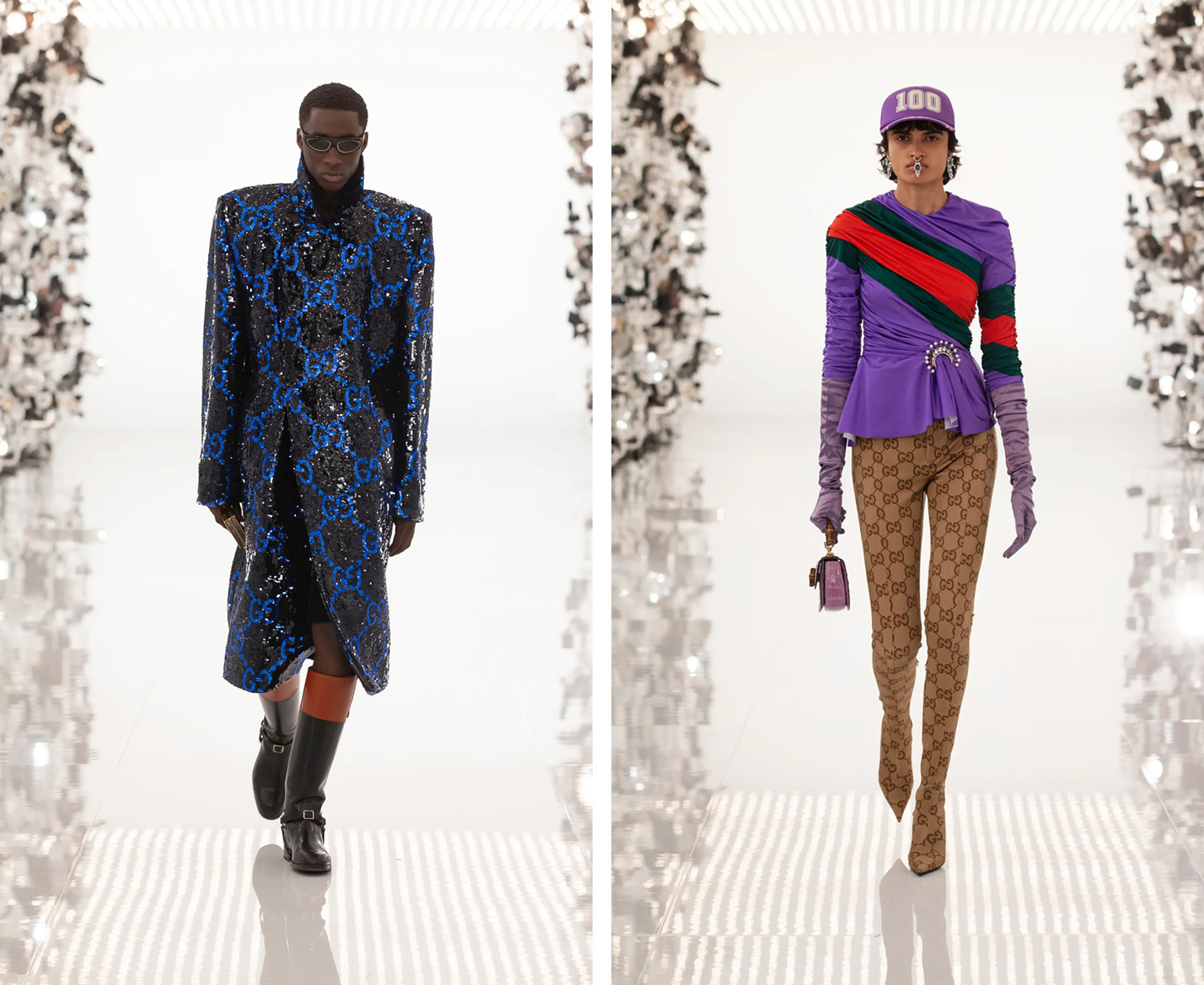 ©vogue.com
GUCCI-MAXXING the Demna Way 🟩🟥🟩
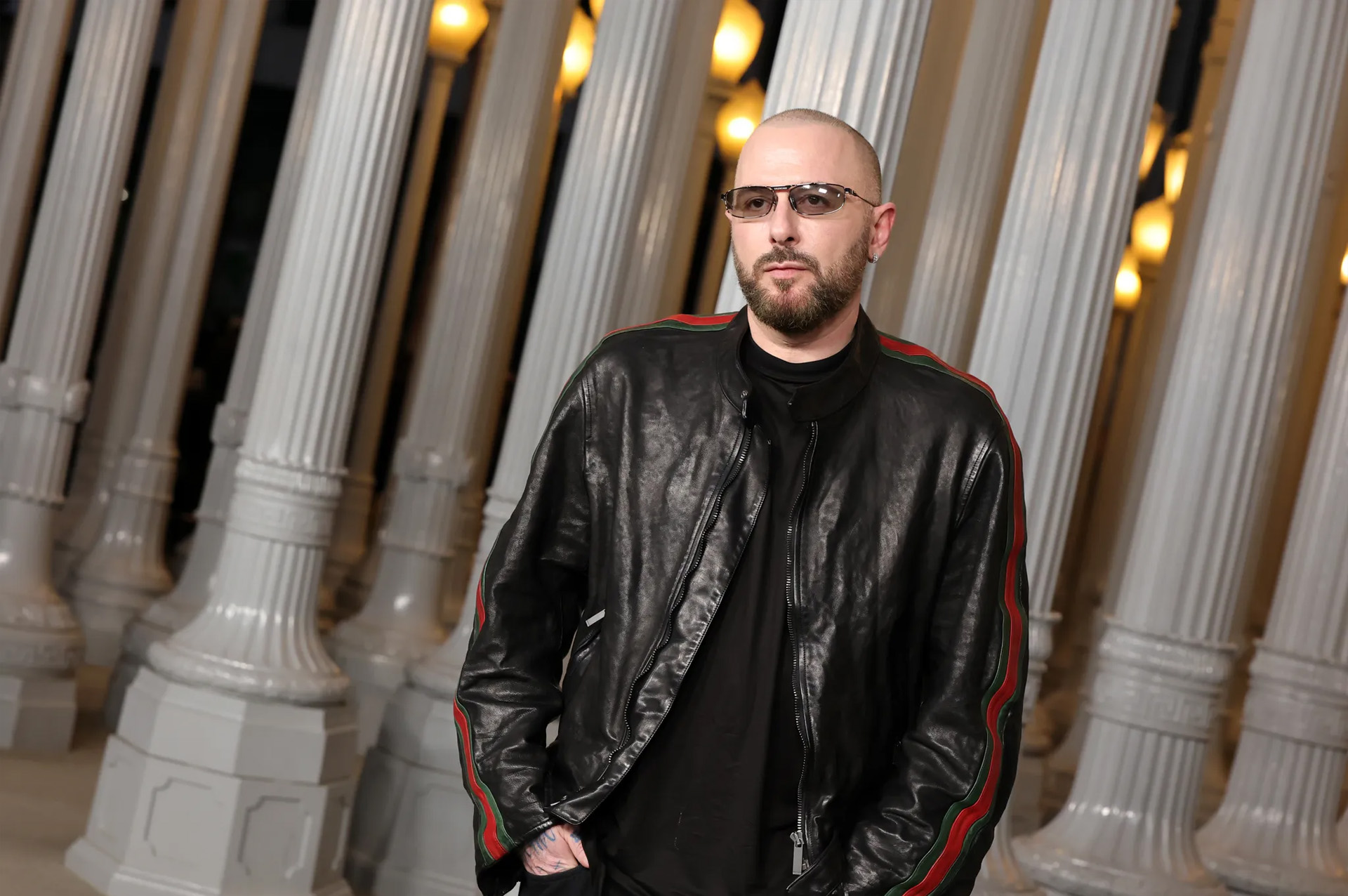 Demna himself GUCCI-MAXXING in head-to-toe GUCCI.
Several outlets landed on "GUCCIMAXXING" for his debut, and the point was that he took the house's most symbolic elements and drove them as far as they'd go.
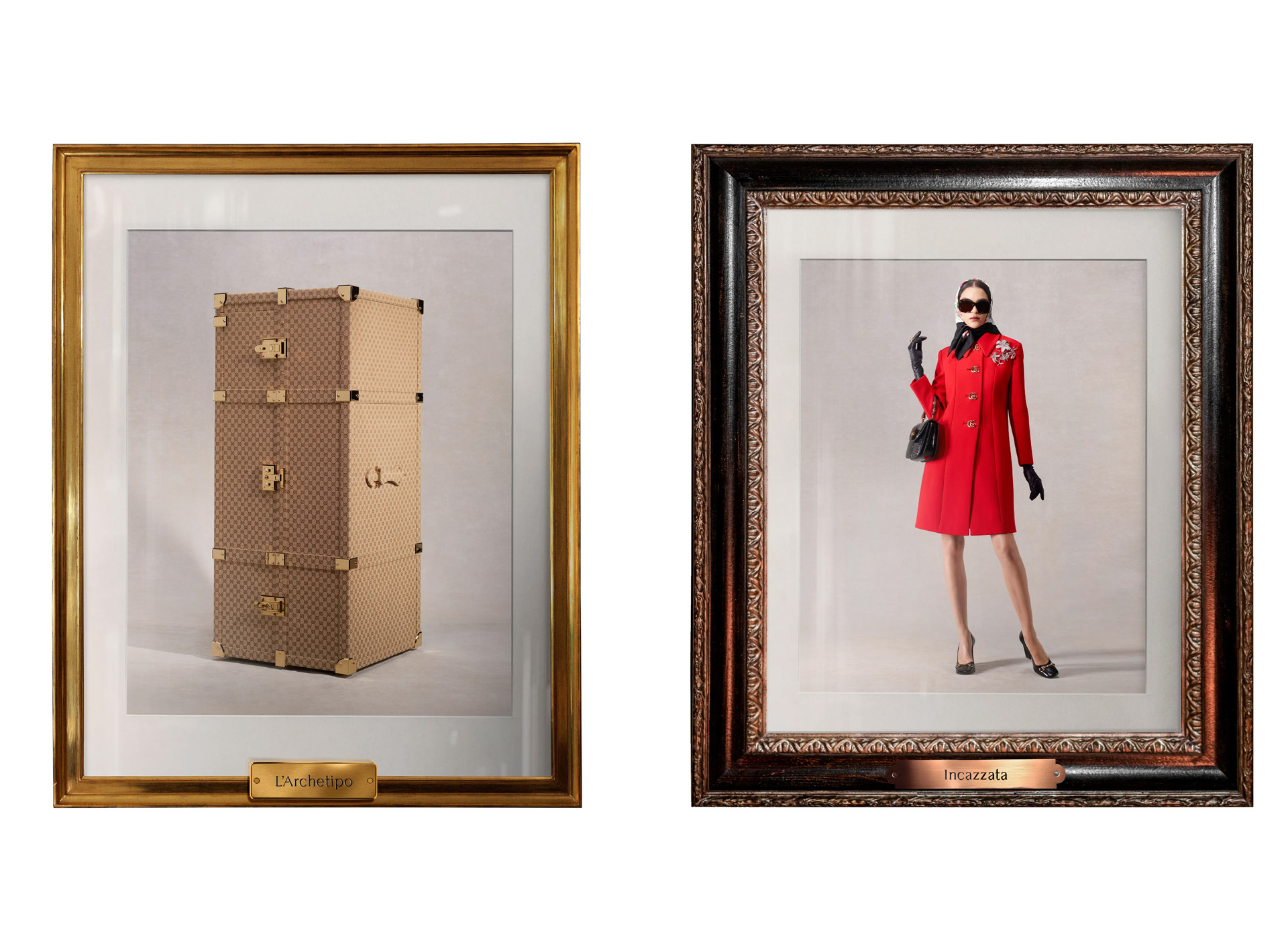 Demna's debut for GUCCI, 'La Famiglia', built as a framed introduction to a fictional Gucci family.
The first thing you see in GUCCI FW26 is the sex and the archive, both turned up. Tight t-shirts, low-rise trousers, skinny silhouettes, fur, sequins, the GG monogram, every code in the book showing up louder than before. Styling that puts the shape of the body front and center is the whole collection.
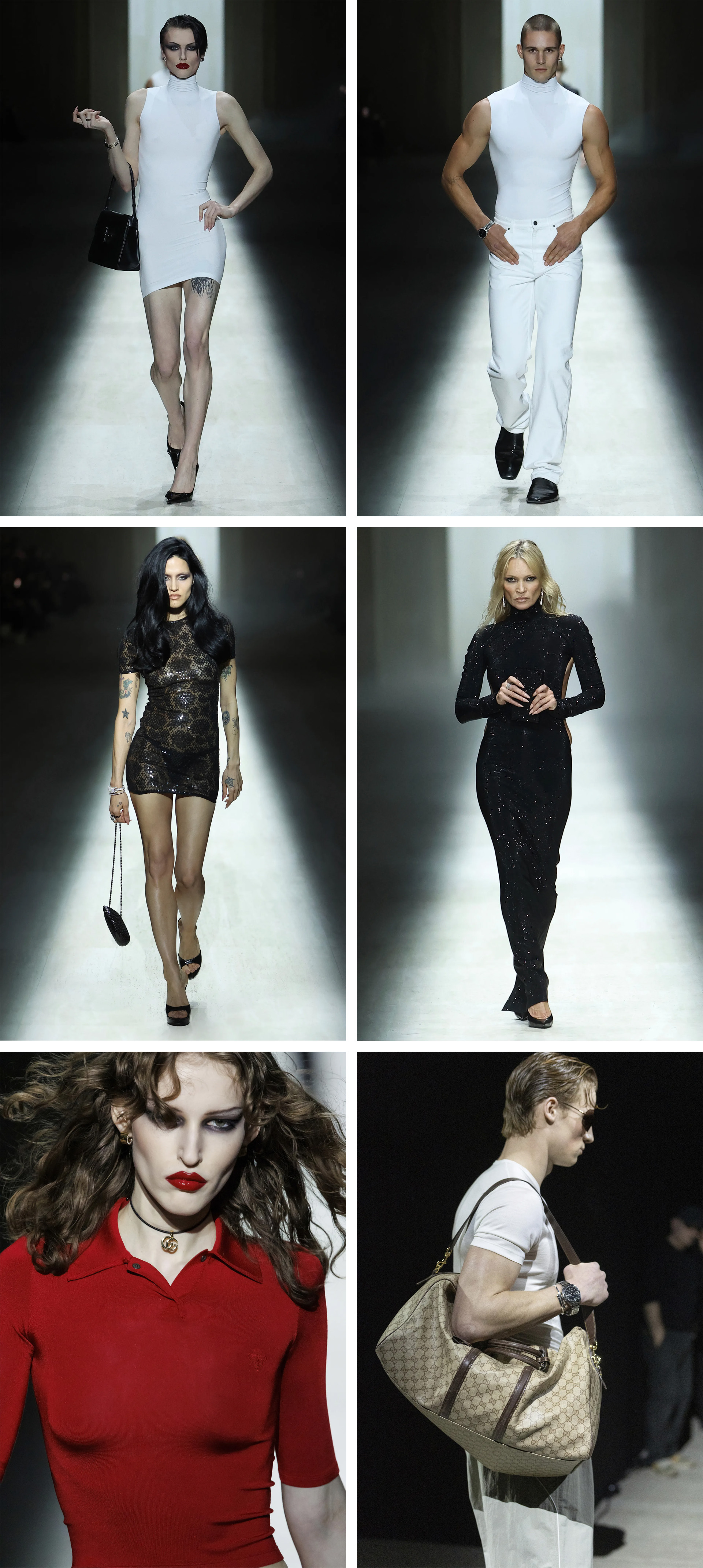 ©vogue.com
Ford's GUCCI sits underneath all of it. Demna referenced the 1996 to 2004 years directly without trying to restore them, running the sensuality through a present-day filter instead. The venue was built like a museum on a Florence reference, and with permission from the Uffizi, Roman statues were 3D scanned, replicated, and placed around the space. Calling up GUCCI's past and Italian cultural heritage in the same room, at that scale, tells you exactly how big he thinks the idea is.
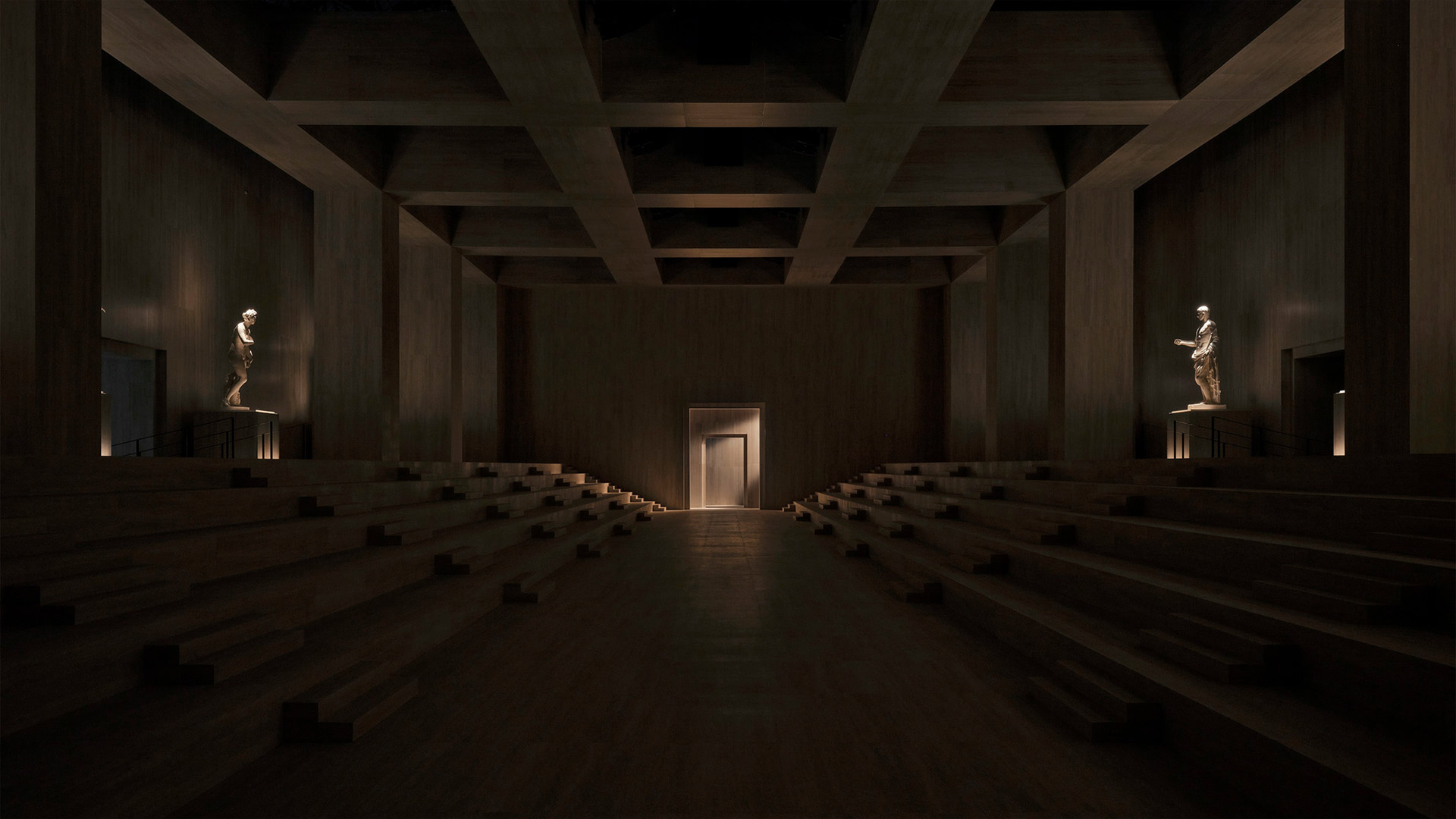 ©gucci.com
The face of this GUCCI also includes whoever is coming up in subculture right now. Underground rappers Fakemink, Nettspend, and EsDeeKid all turned up at the show, and Fakemink pulled out his phone to check it mid-runway. That's Demna doing what he always does, skipping the culture that's already established and reaching for the one currently being built.
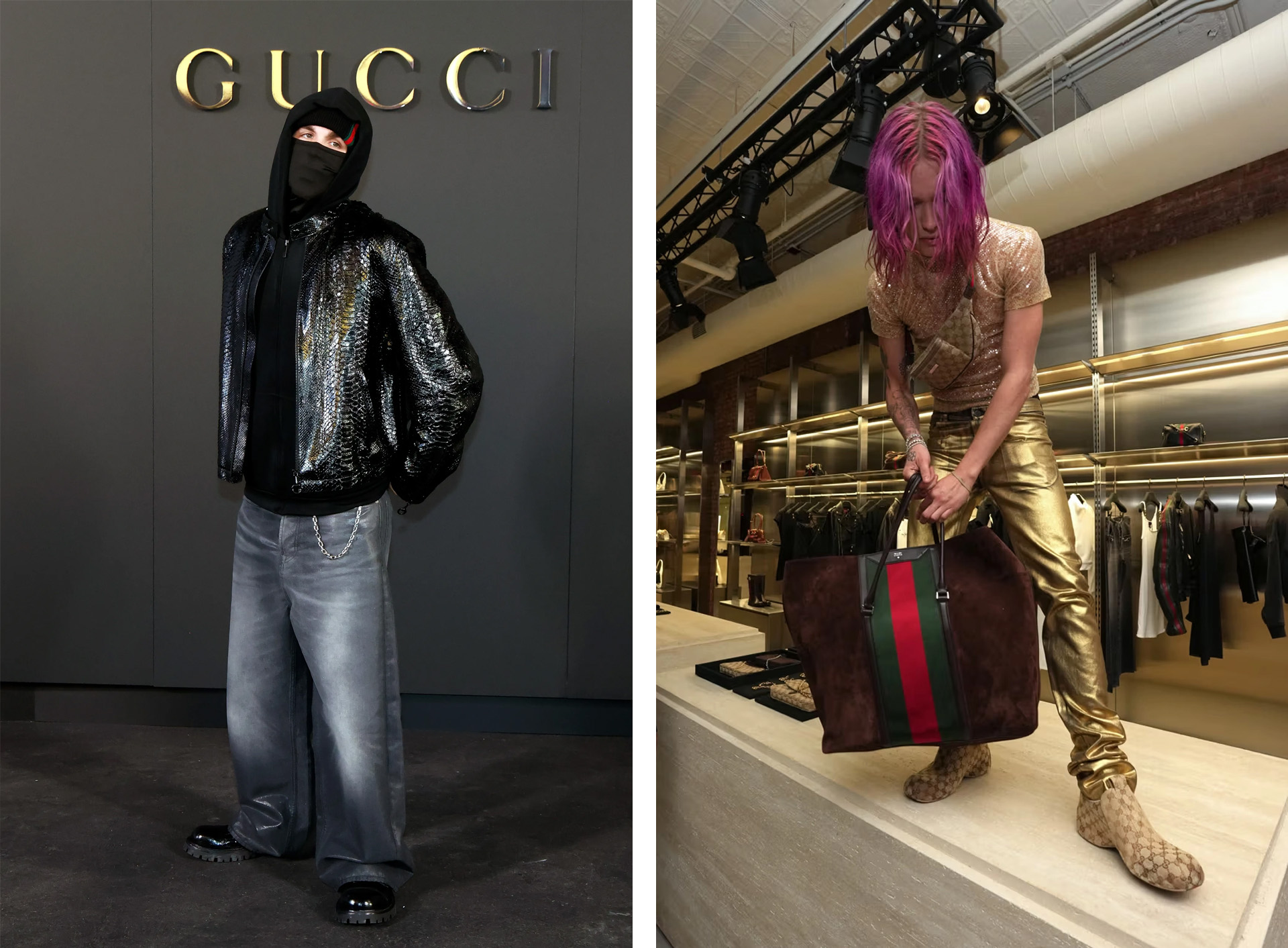 ©GETTYIMAGES, ©hypebeast.com
With GUCCI 2026 PRE-FALL he stopped limiting the past to one era. Ford's sensual nineties, the GUCCI of the seventies, the Italian femininity of the Frida Giannini years, all of it pulled out and recombined.
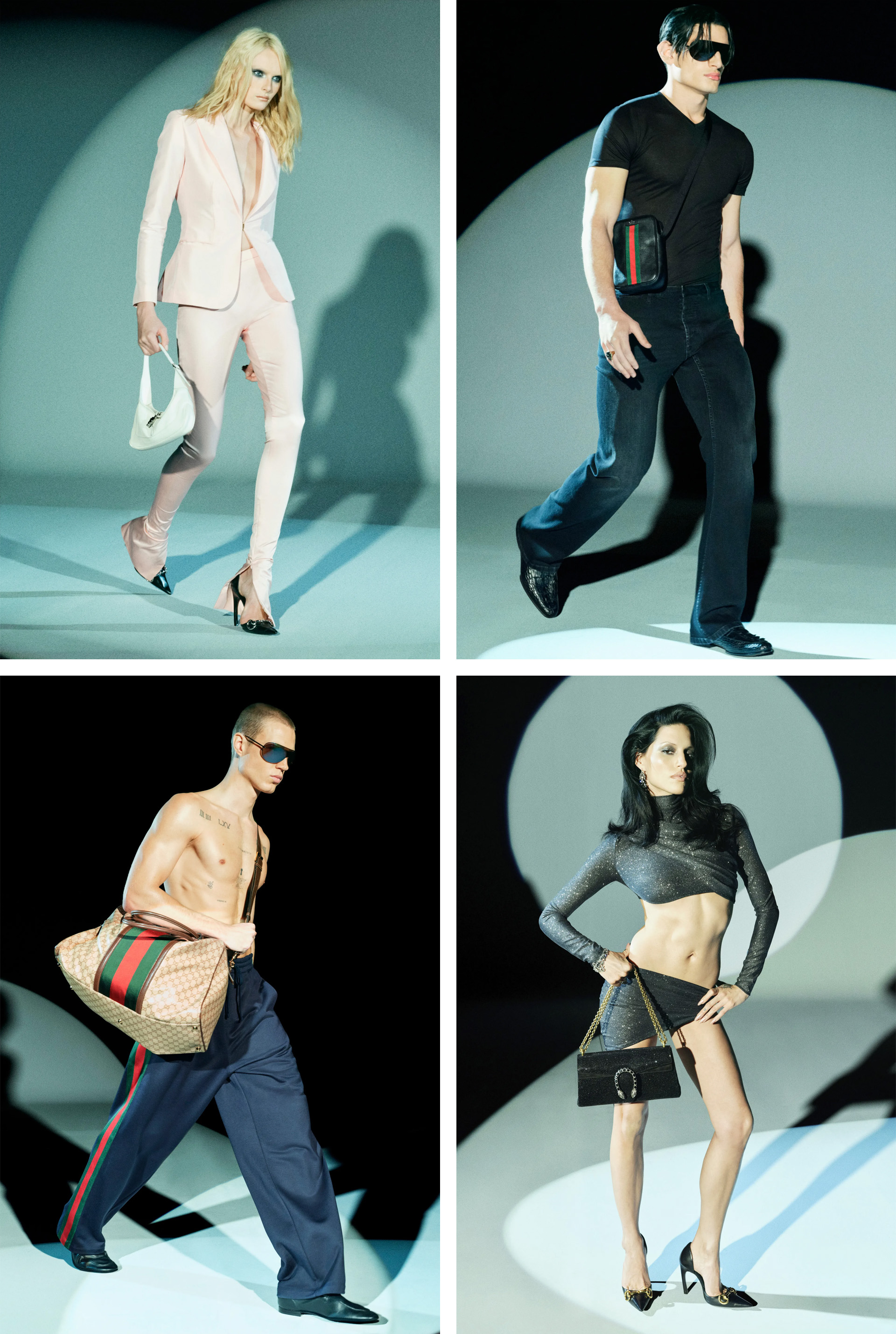 GUCCI 2026 PRE-FALL ©vogue.com
Presenting it, he said: "I think fashion is FOMO. Fashion has to create FOMO. I'm a fashion consumer, and I love when I see something and I don't need it, because nobody needs fashion, but I have a FOMO of not having it." That's the whole philosophy without a filter on it. Fashion manufactures the feeling that you're missing something, and that irrational want is the engine.
Which is why he doesn't restore the archive as it was. He picks the GUCCI moments he likes and rebuilds them into something you want immediately. It's the same reason he's said he'd rather make clothes you react to on sight, love or hate, than explain everything through a concept.
His most recent outing, GUCCI 2027 RESORT, staged in the middle of Times Square, is the same GUCCI-MAXXING in an everyday register.
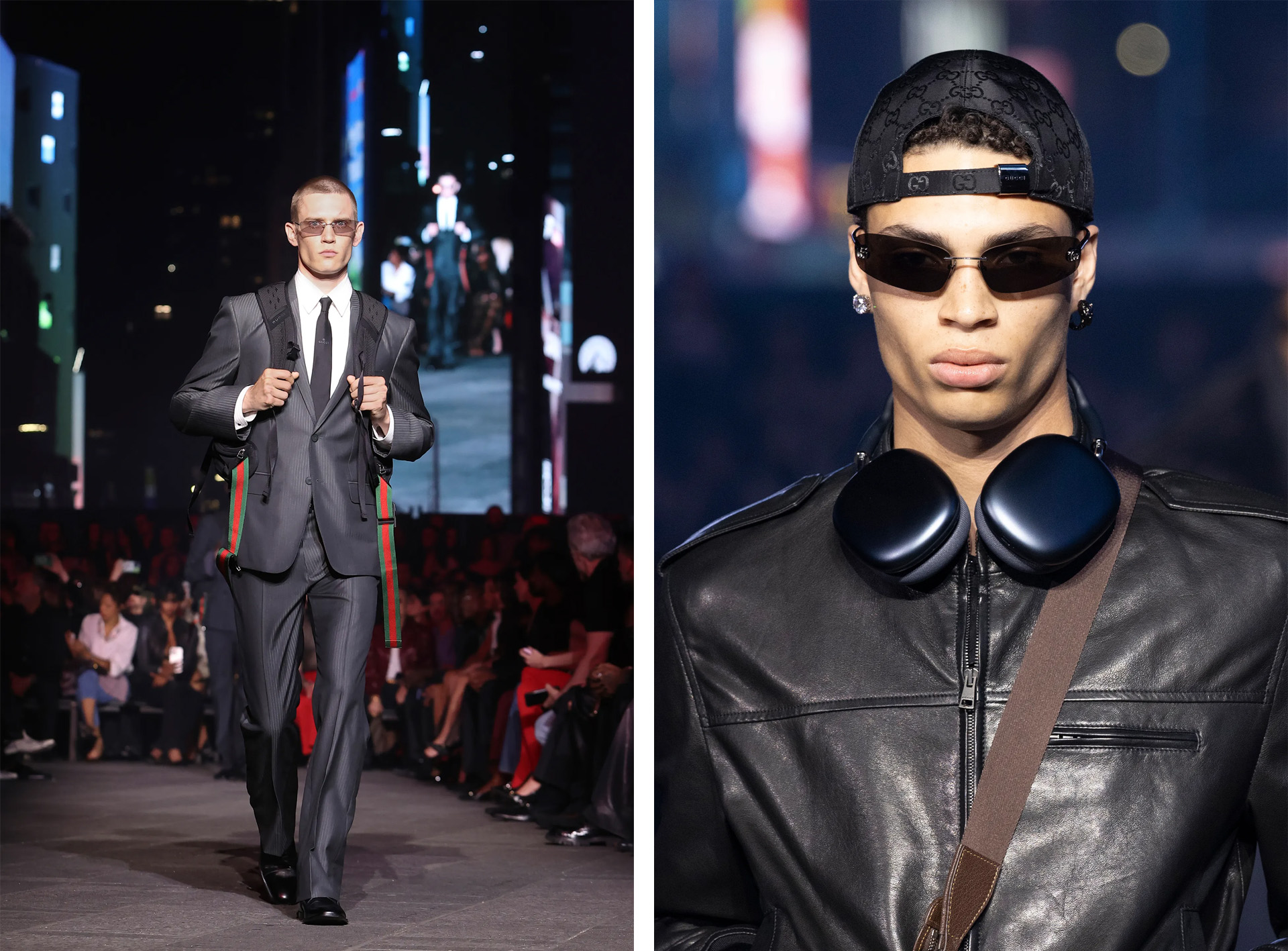 A collection Demna himself called 'GucciCore', built on classic GUCCI basics like jackets, suits, and pencil skirts. ©vogue.com
He's said he wants people to feel Gucci, and watching how far he can push the house toward being more itself is the part worth following. There's no settled definition of what that means, which is the point.
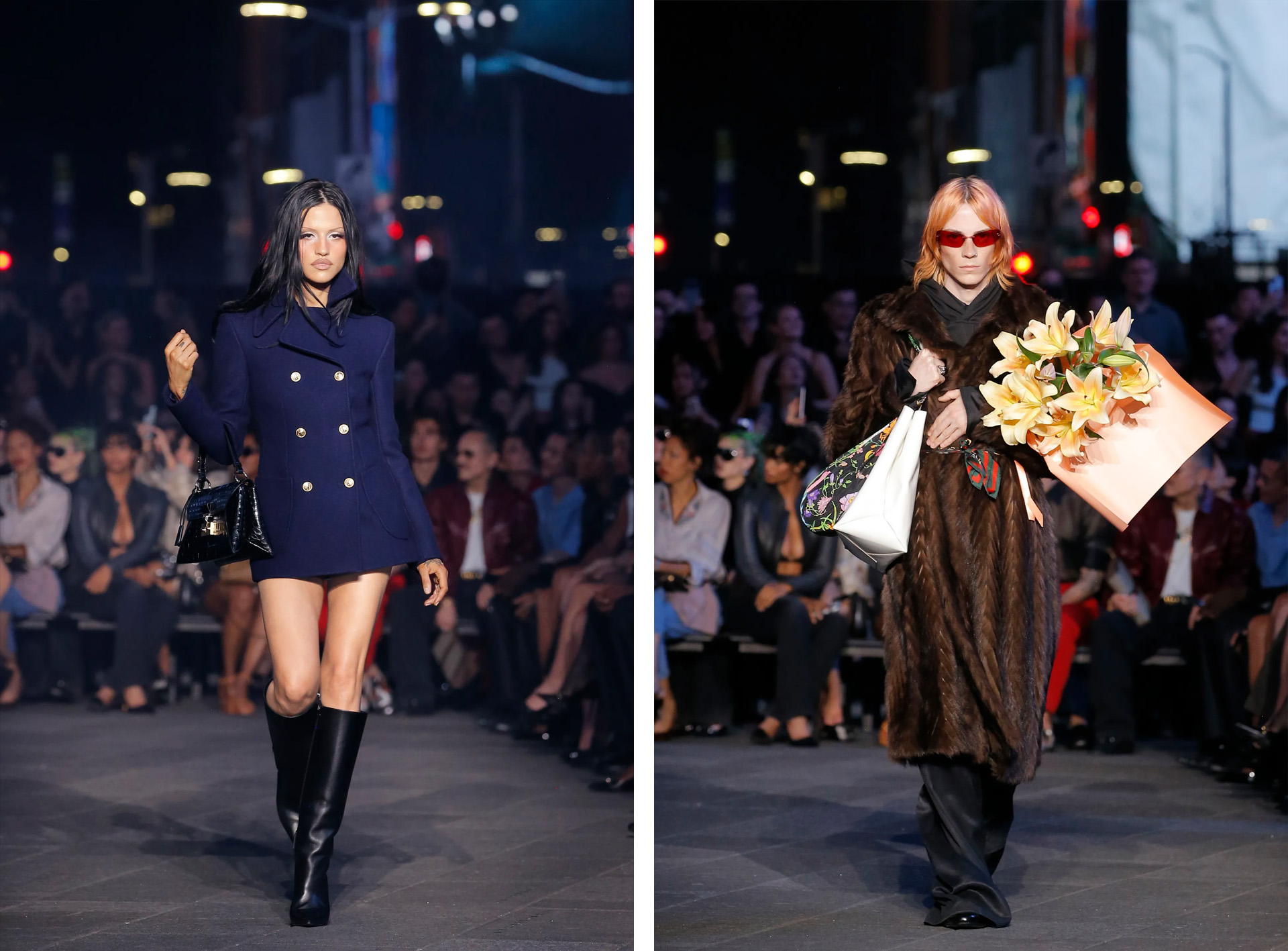 ©GETTYIMAGES
What he's actually doing isn't inventing a new GUCCI. It's taking the strongest DNA the house already had and running it back up to maximum. Sex, logos, the archive, and whatever is happening culturally right now, all of it pulled out to rebuild GUCCI's most intense past as a present-tense want. That's the GUCCI-MAXXING.
Editor: Kim Nayoung