
J.KIM
November 12, 2025
Meet Jenia Kim, the Koryo-saram designer operating out of Uzbekistan.
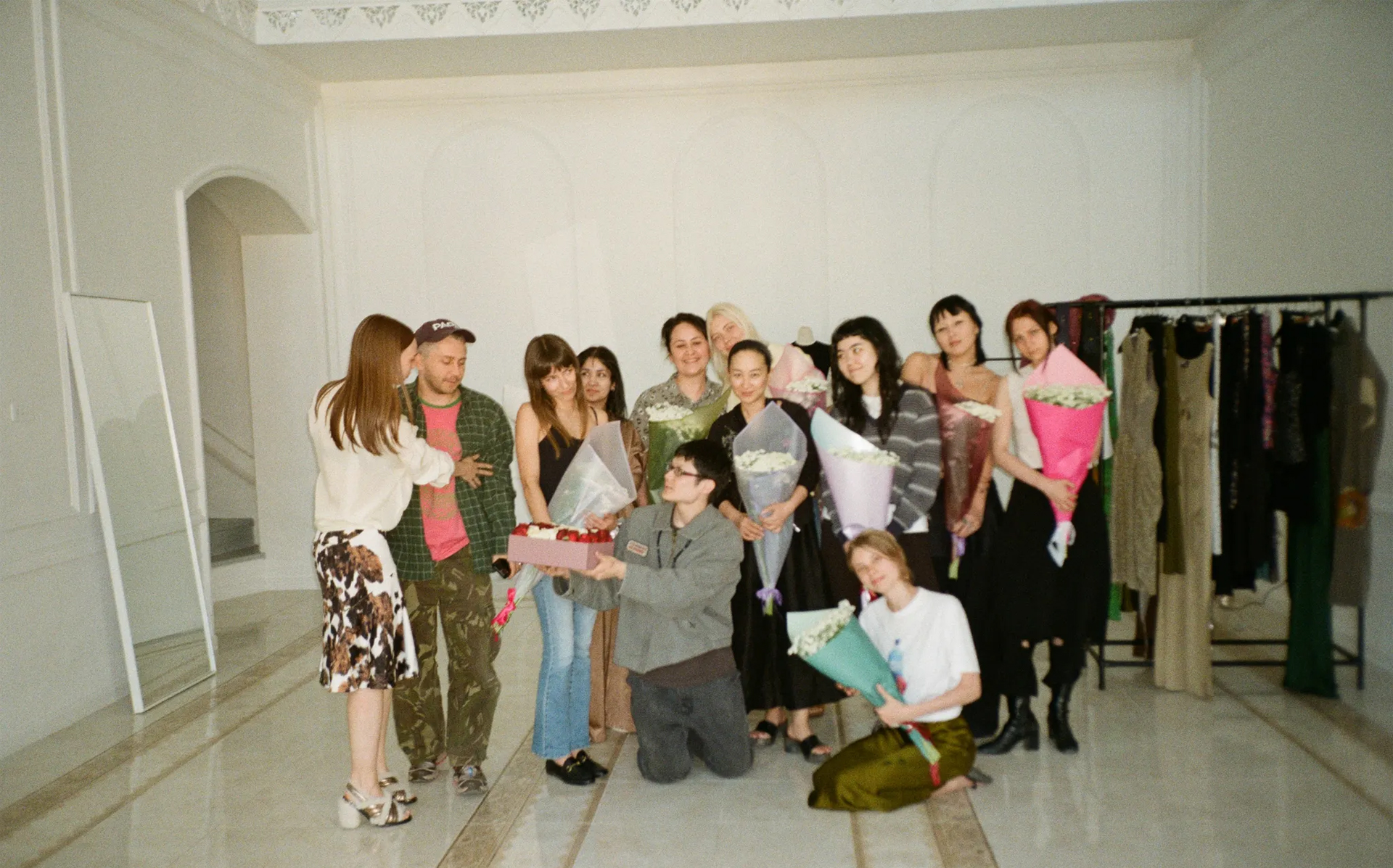
With eye-catching floral cutouts and silhouettes that feel somehow familiar yet new, her clothes are crafted with the heartfelt care of female artisans. Her brand J.KIM delicately weaves together tradition, modernity and craftsmanship into pieces that give a comfortable and protective sense of welcome to the women that wear them.
And now, J.KIM is coming to Seoul with a one-week pop-up at the JENTE building in Apgujeong, starting November 7th. It’s a space open to everyone who loves clothes, and to celebrate we reached out to Jenia Kim for an interview. She sent back some truly warm, thoughtful answers, and we’re excited to share her story with you.
Q1. For our JENTE readers, could you please introduce your brand, J.KIM?
I'm a 'Koryo-saram' designer. J.KIM is the brand I founded in Tashkent, the capital of Uzbekistan, built on that very identity.
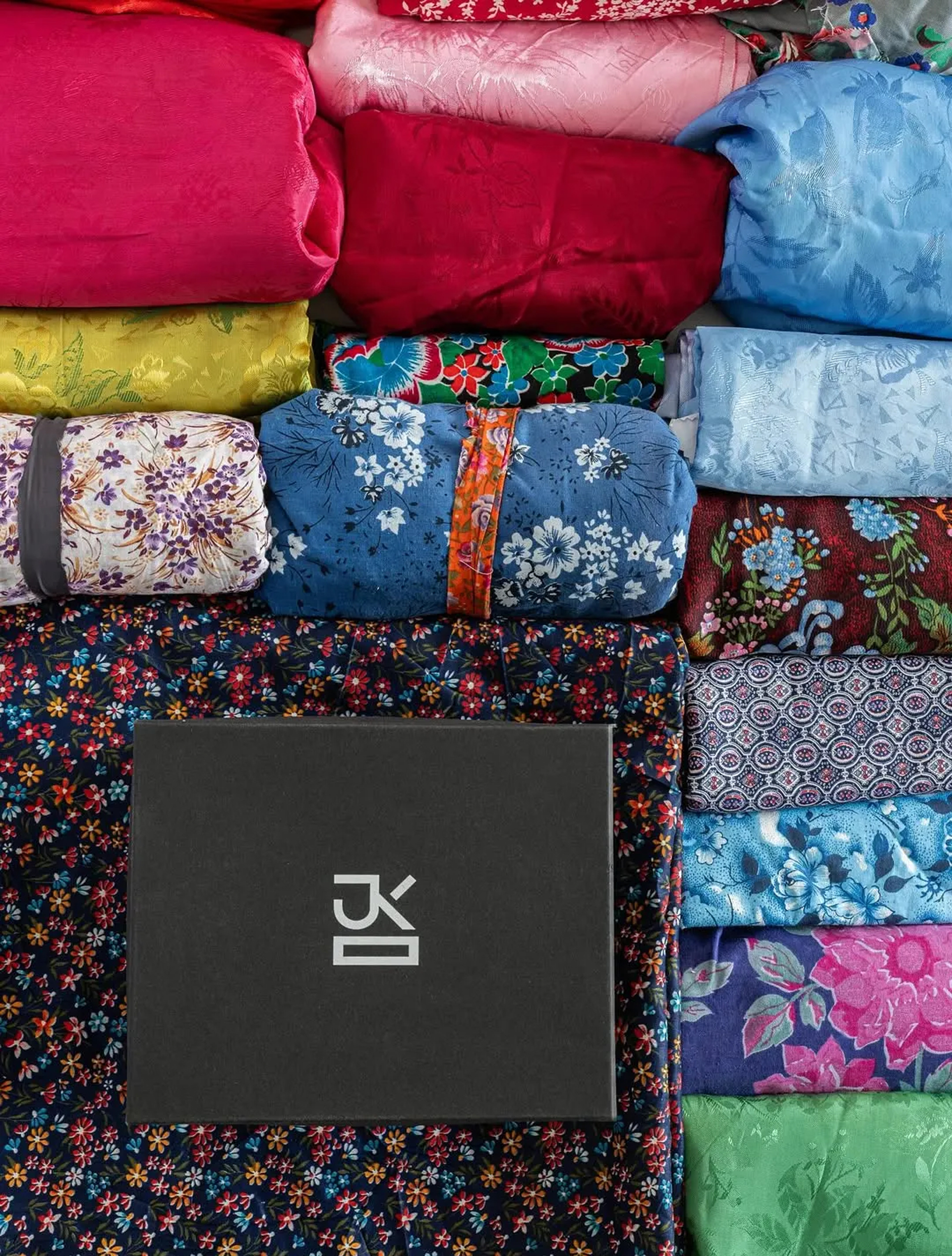
My designs are based on the cultural heritage of Uzbekistan where I grew up, blended with my Korean sensibilities. I also collaborate with artisans from various fields and pursue connections with urban cultures around the world. The hope is for J.KIM to become a cultural phenomenon, not simply a clothing label.
Q2. How does the J.KIM team work? We're curious about your operational style.
We operate a little differently than other brands. Most of our clothes are made by women who work from home, sewing pieces by hand right alongside their families. Our main workshop is in a historically significant space: a renovated former prosecutor's residence in Tashkent, where we both work and run a small showroom.
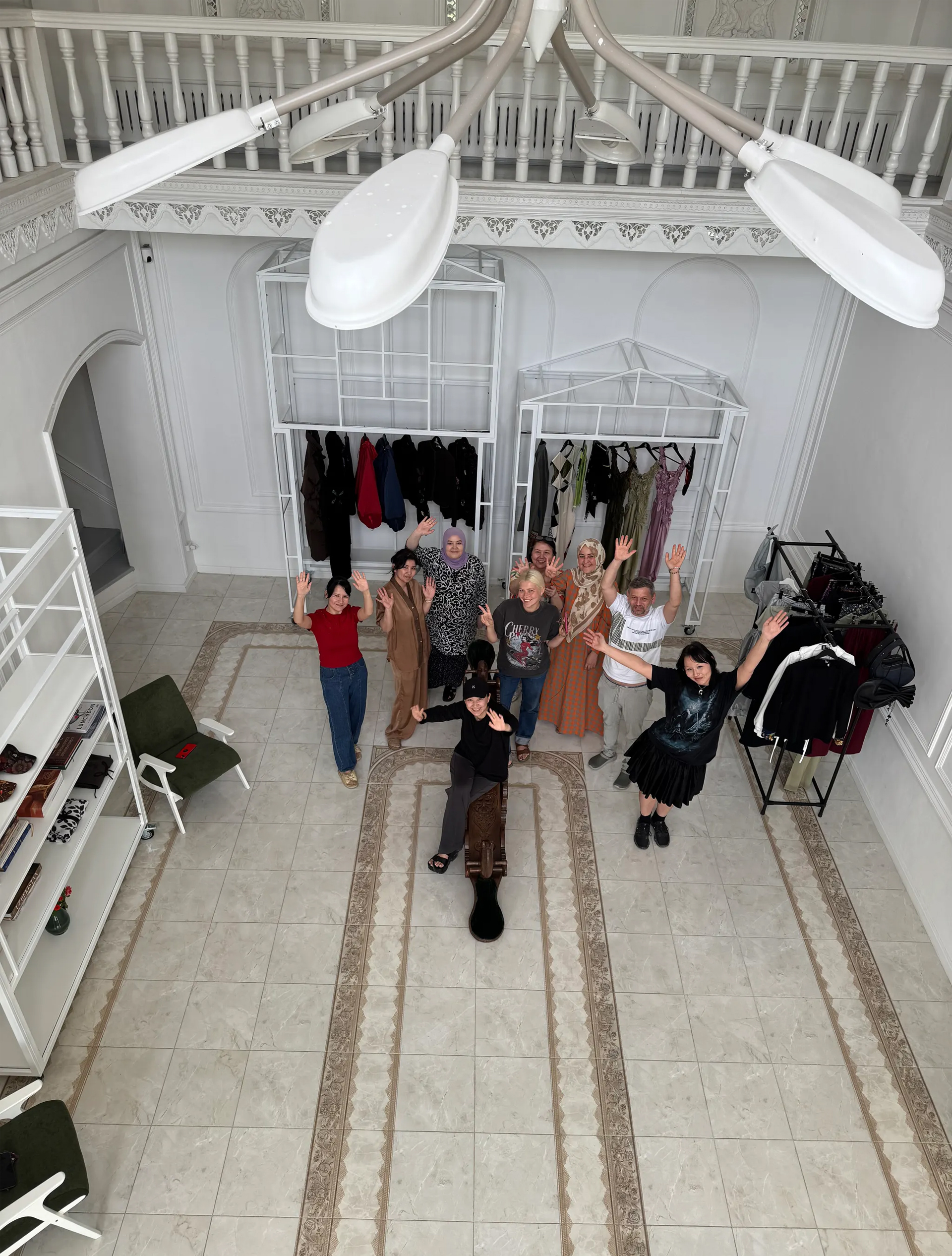
The fashion industry isn't really established in Uzbekistan yet, so our team works together like a big family, even sharing meals in our communal kitchen. While some team members work remotely, we remain the only brand here that produces all our clothing in-house while consistently exporting to the global market. We're pursuing both local artisanal craftsmanship and world-class quality and design, all at the same time.
Q3. You were born in Uzbekistan, raised in Russia, and are Koryo-saram. This multicultural background really comes through in the brand.
That's right. J.KIM is a blend of Uzbekistan, Russia, and Korea all at once. It's the environment I actually grew up in.
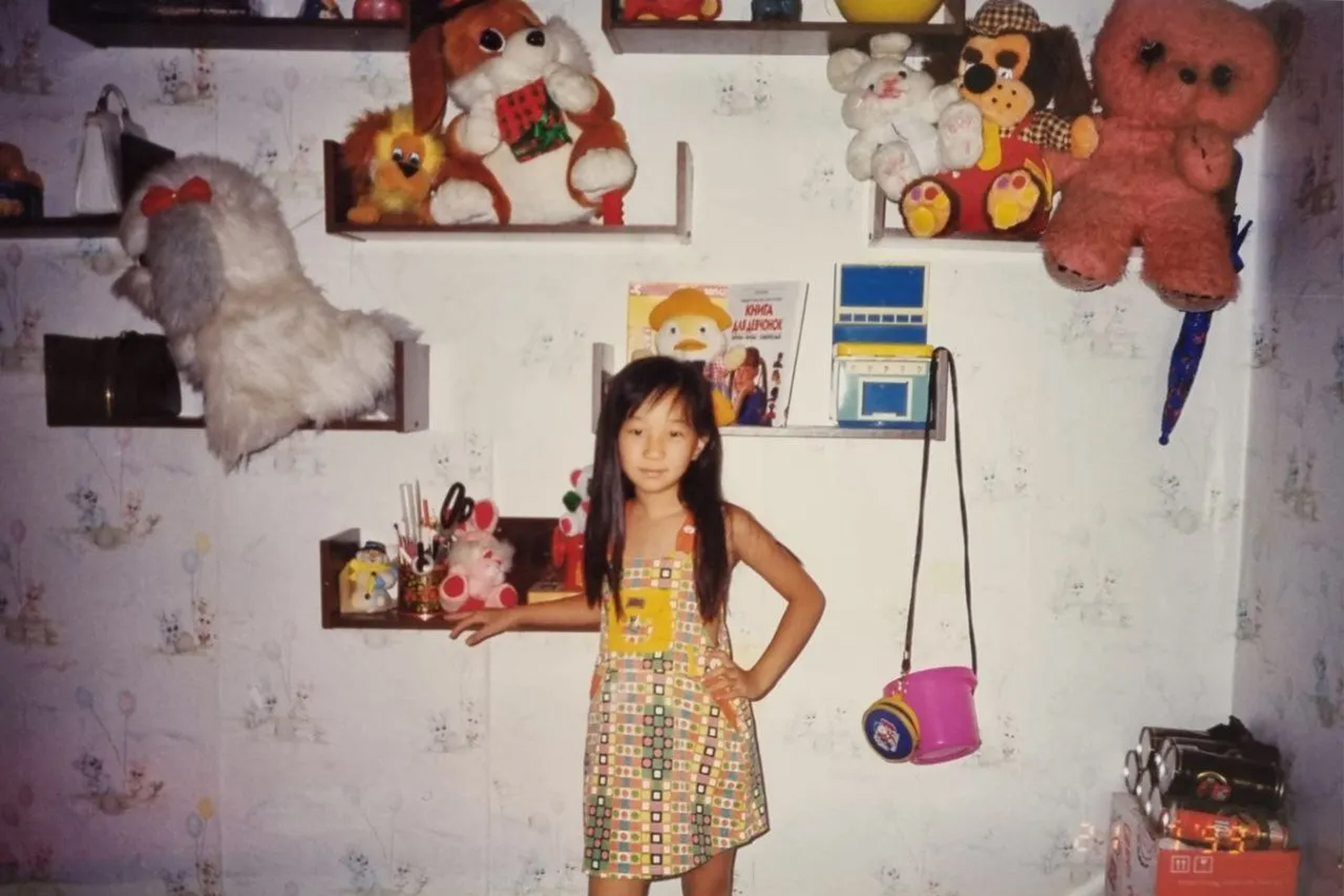
Director Jenia Kim's childhood
The artisan techniques and bold use of color that define our collections are inspired by Uzbekistan. The everyday items with a Soviet-era sensibility come from Russia. And the refined elegance and delicacy you see are the influence of Korea. For me, all of these things have always coexisted, so it's only natural that my collections reflect traces of all these different cultures.
Q4. Vintage Soviet textiles and Korean jacquard silk! These are J.KIM's signature materials. We're curious how you first came to choose them.
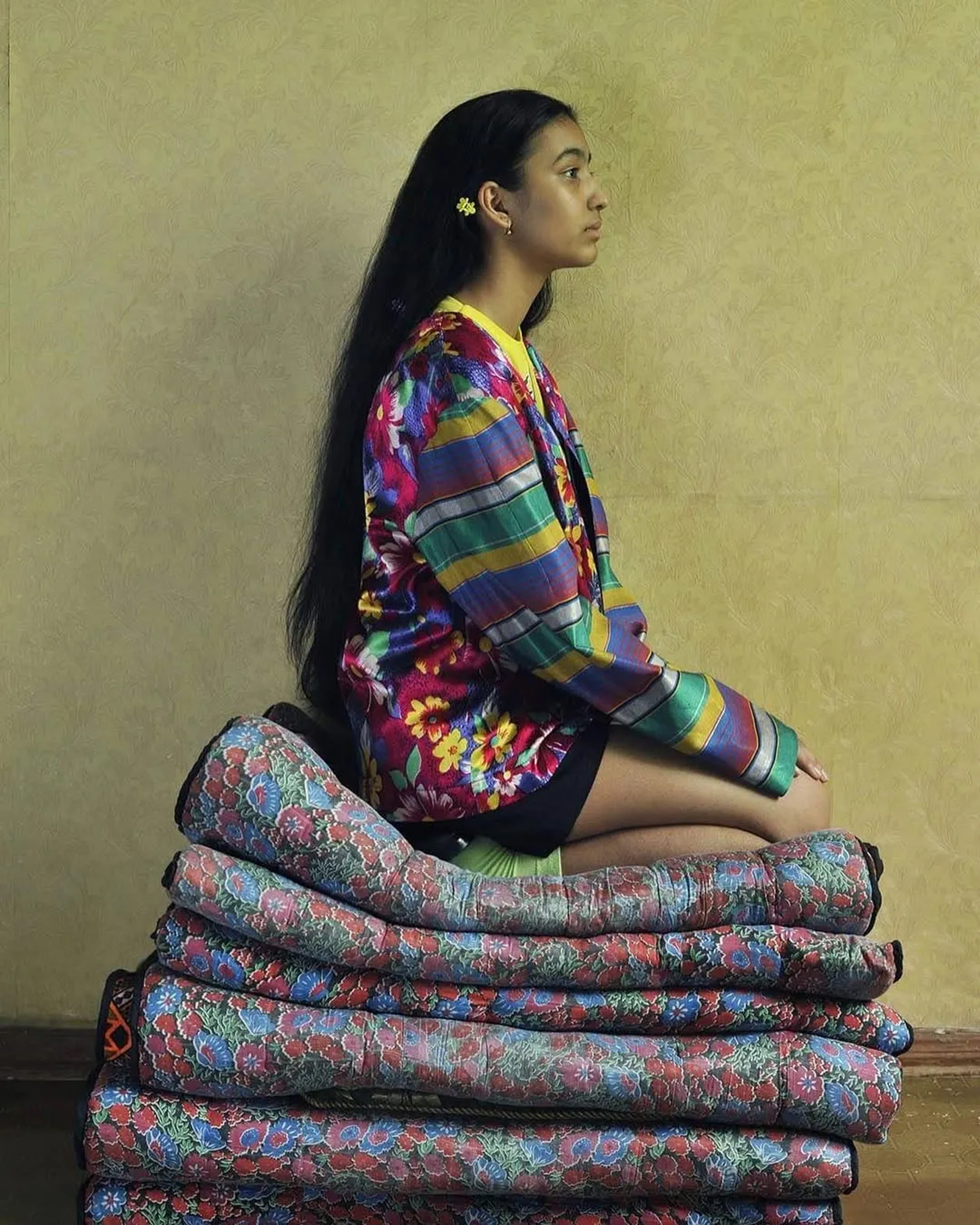
When I see Soviet-era textiles, it brings back warm childhood memories. In Uzbek homes, you can still commonly find traditional bedding called Kurpacha, a thick, cotton-filled duvet-like fabric that symbolizes the emotional connection you feel within family and community. I try to capture that feeling in my clothes.
©@j.kim
I first encountered Korean jacquard silk in 2019 when I went to Seoul looking into traditional hanbok. It felt so different from the strong graphics of Uzbekistan, with its intricate embroidery and subtle elegance. It was a totally different kind of beauty. Ever since then, I've been thinking about how a nation's unique character can be woven right into its textiles and clothes.
Q5. You've also presented collections in collaboration with local artisans. What has been the most meaningful one for you so far?
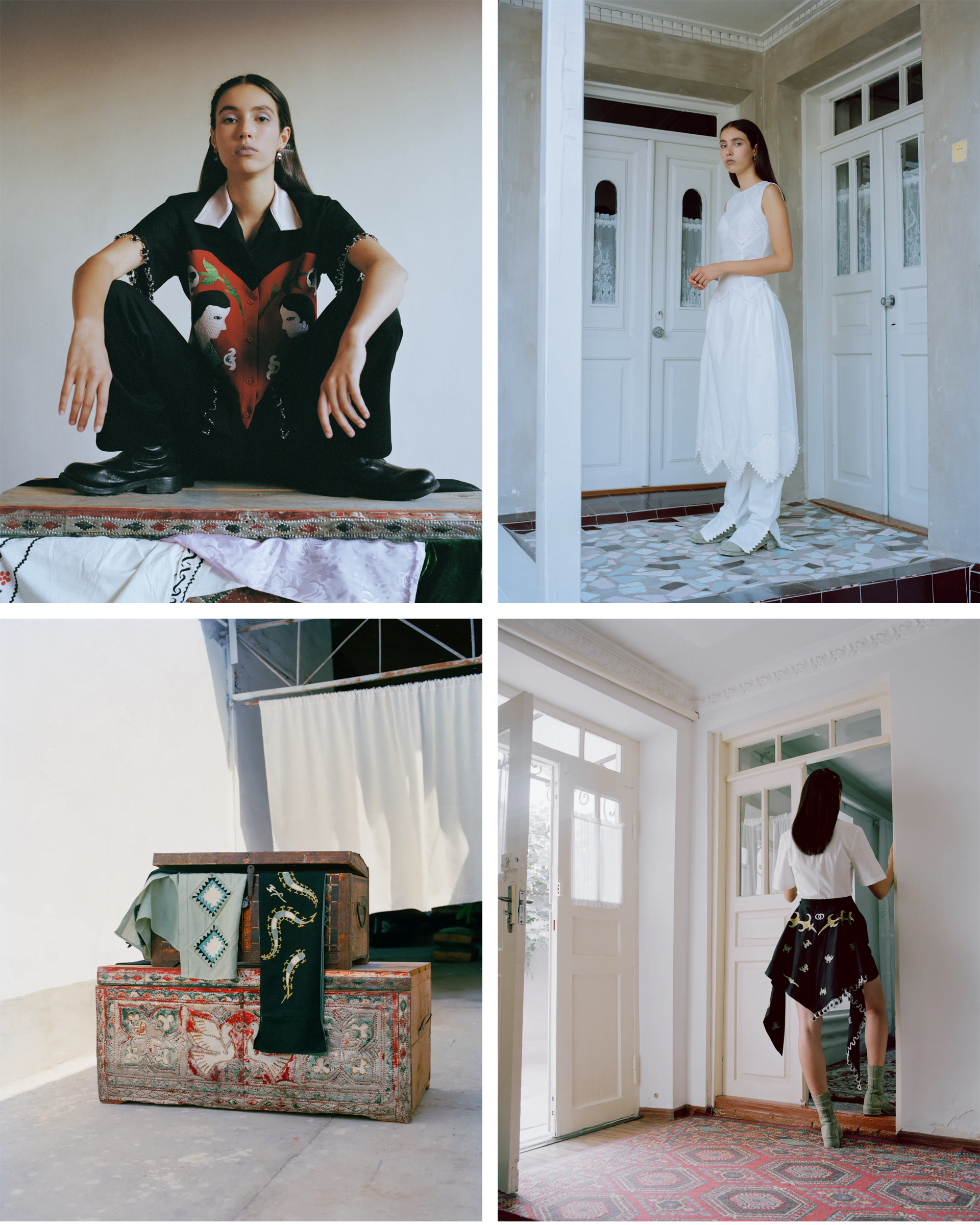
The most unforgettable project was a collection inspired by Uzbekistan's dowry culture.
At the time, I traveled all over the country and stayed in the homes of embroidery artisans and quilters. We ate together, sewed together, and formed a genuine connection. A female artisan named Yulduz Mukhiddinova had a huge influence on me. I learned how to make quroq, a traditional Uzbek quilt, from her mother. While dyeing, embroidering, and quilting, I really felt how these women form a community and preserve their traditions. That time wasn't about profit. It was a pure time for gathering, sharing stories, and sharing joy.
Q6. We often see flower-shaped knot details that look like pillows from a grandmother's house. Where did that inspiration come from?
The flower knot detail was born unconsciously.
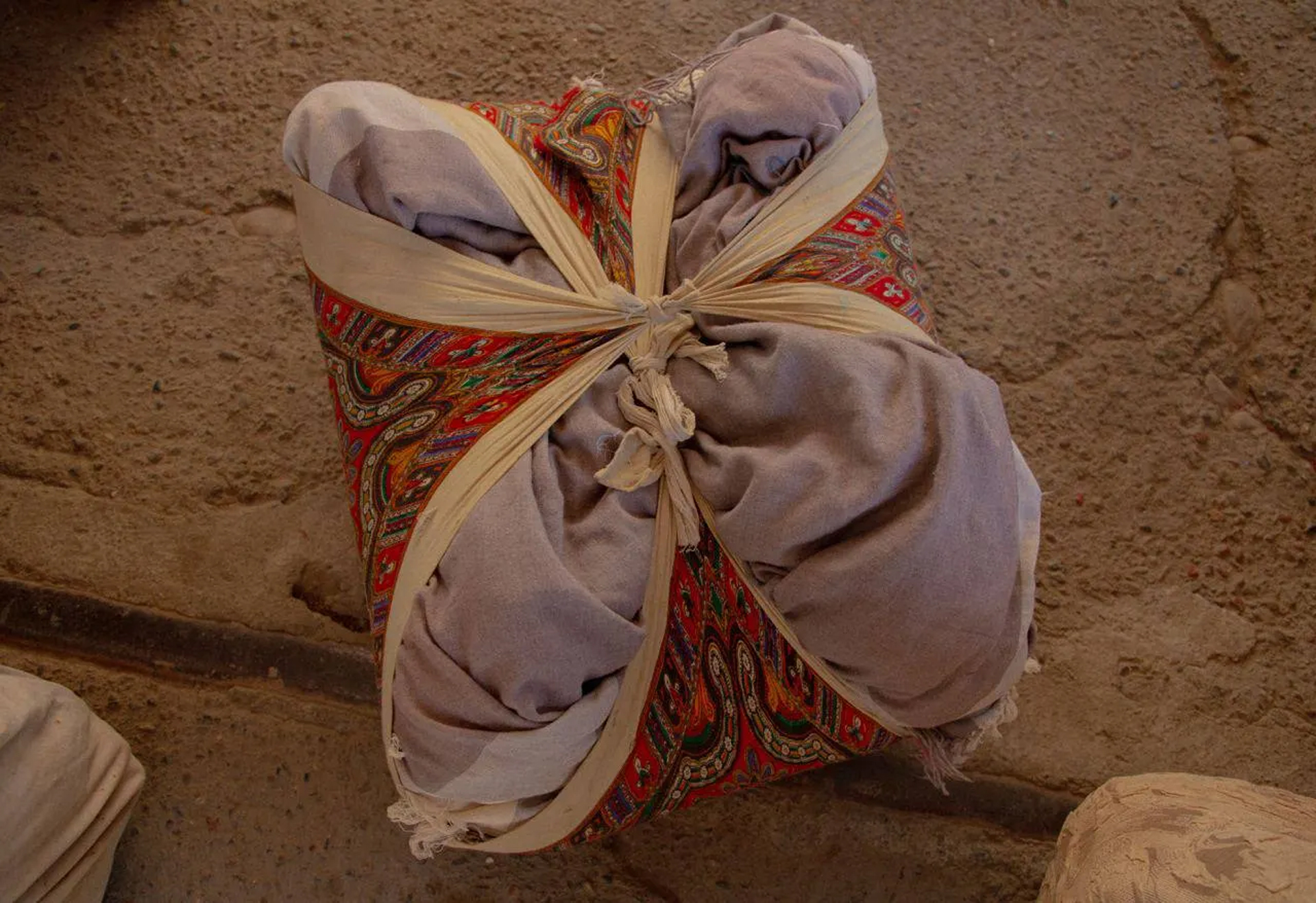
This culture of tying knots exists in traditional Uzbek homes as well as in Korea; it's an element you can commonly see in everyday household items. For me, this knot symbolizes the feeling of holding and protecting something precious. It wasn't a strategic decision, but people remembered us for this detail, and now it's become our signature element.
Q7. Along with the knot details, Suzani embroidery and cutouts are also J.KIM signatures. How do you approach these delicate design elements?
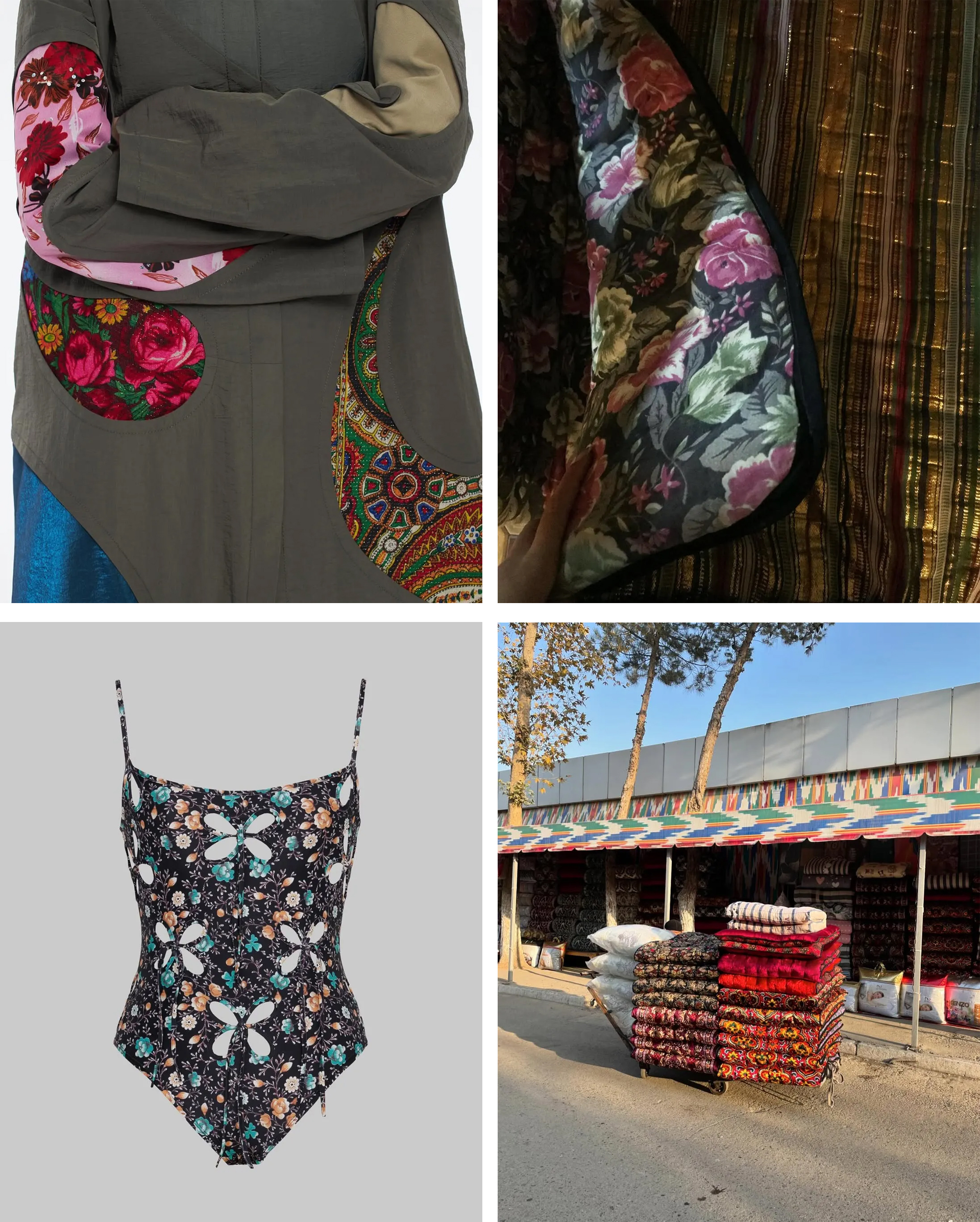
I always try to draw inspiration from real, primary sources I encounter in daily life, like stones, household goods, or local patterns, rather than from someone else's work. I'm always trying to create new forms myself, and I think that's what became our signature design. These details emerge when I try to capture the essence of something.
©@j.kim
Q8. We heard the FW25 collection is themed around motherhood. Does it reflect your personal experiences as well?
Yes, the FW25 collection is about the warm care of a mother. I wanted to express how precious even the most ordinary moments of daily life can be when viewed from a creative perspective.
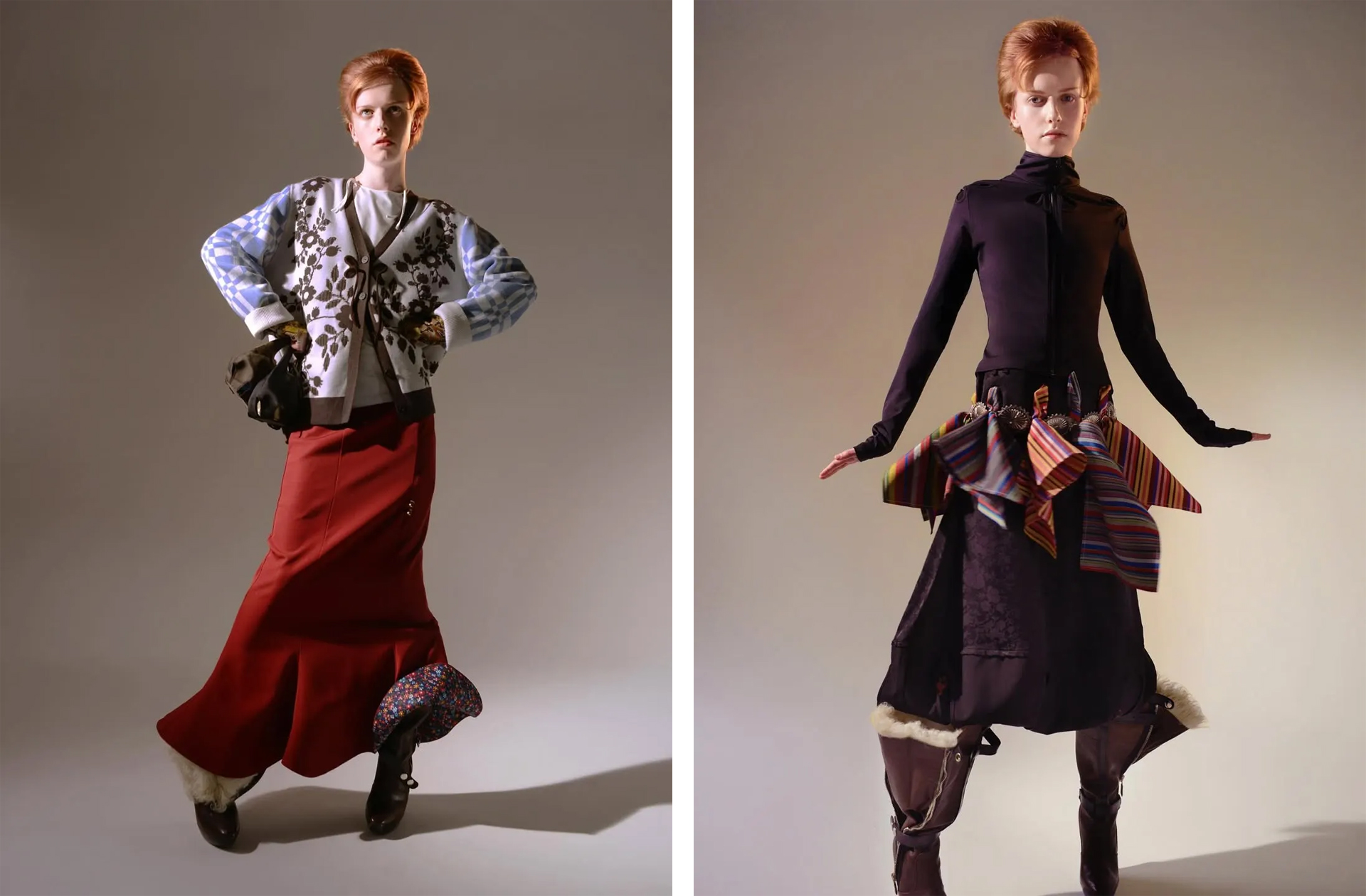
J.KIM FW25
Q9. Stories about women often appear in your collections. The SS25 collection was an homage to your grandmother's touch, reinterpreting embroidery and memory. What are your thoughts on femininity?
To me, femininity is the power to create a space you don't want to leave. It’s the ability to create an environment filled with warmth, protection, and unconditional care. I think women, through their life experiences, gradually learn to give without any conditions. It's not just in the collections you mentioned; I always try to capture the quiet strength of my mother and grandmother in my clothes. Those small, quiet actions like embroidery or cooking, the time taken for people you love.
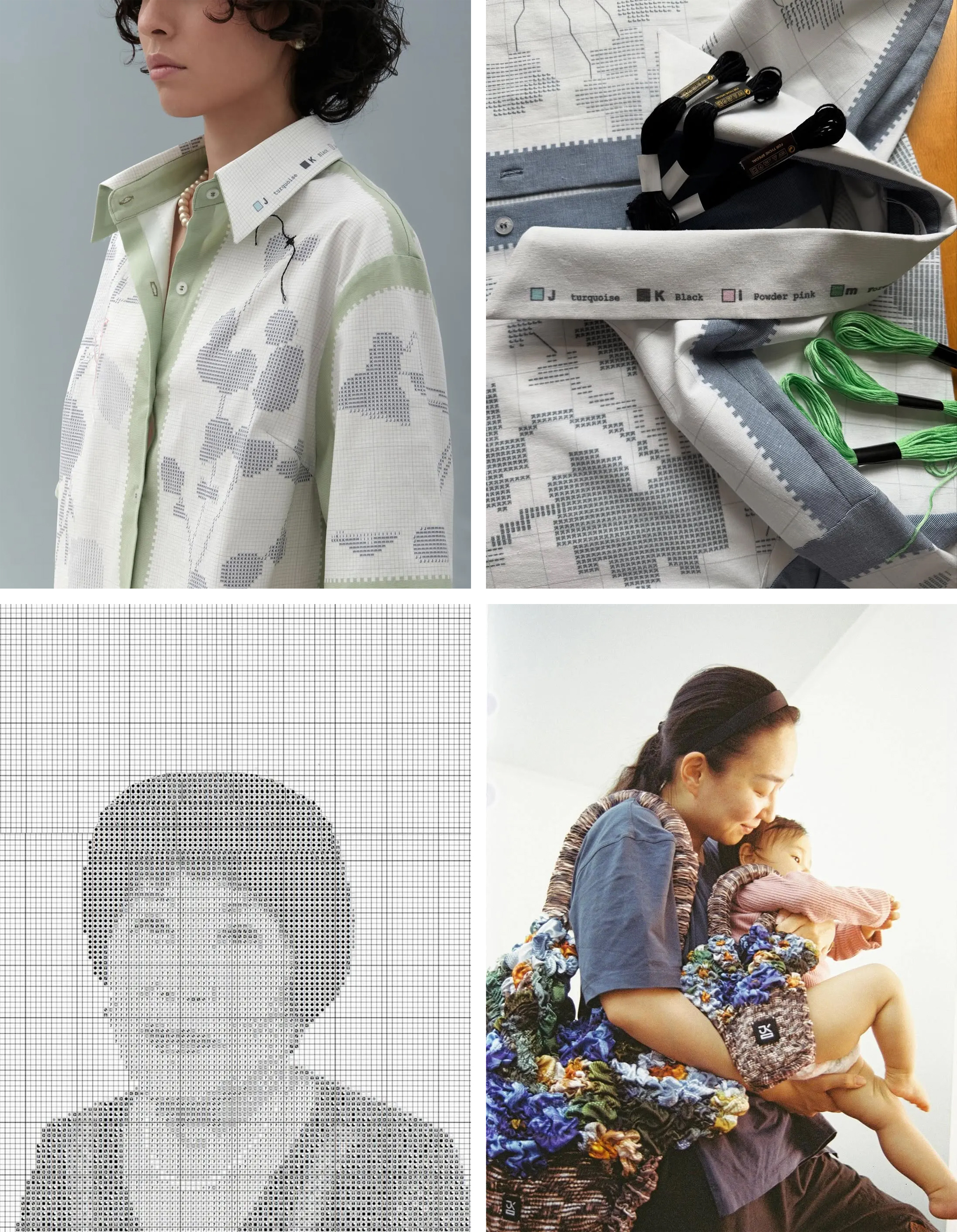
©@j.kim
Q10. In that case, what emotions or senses do you hope women feel when they wear J.KIM's clothes?
I hope when women wear J.KIM's clothes they feel comfortable, protected, and cherished.
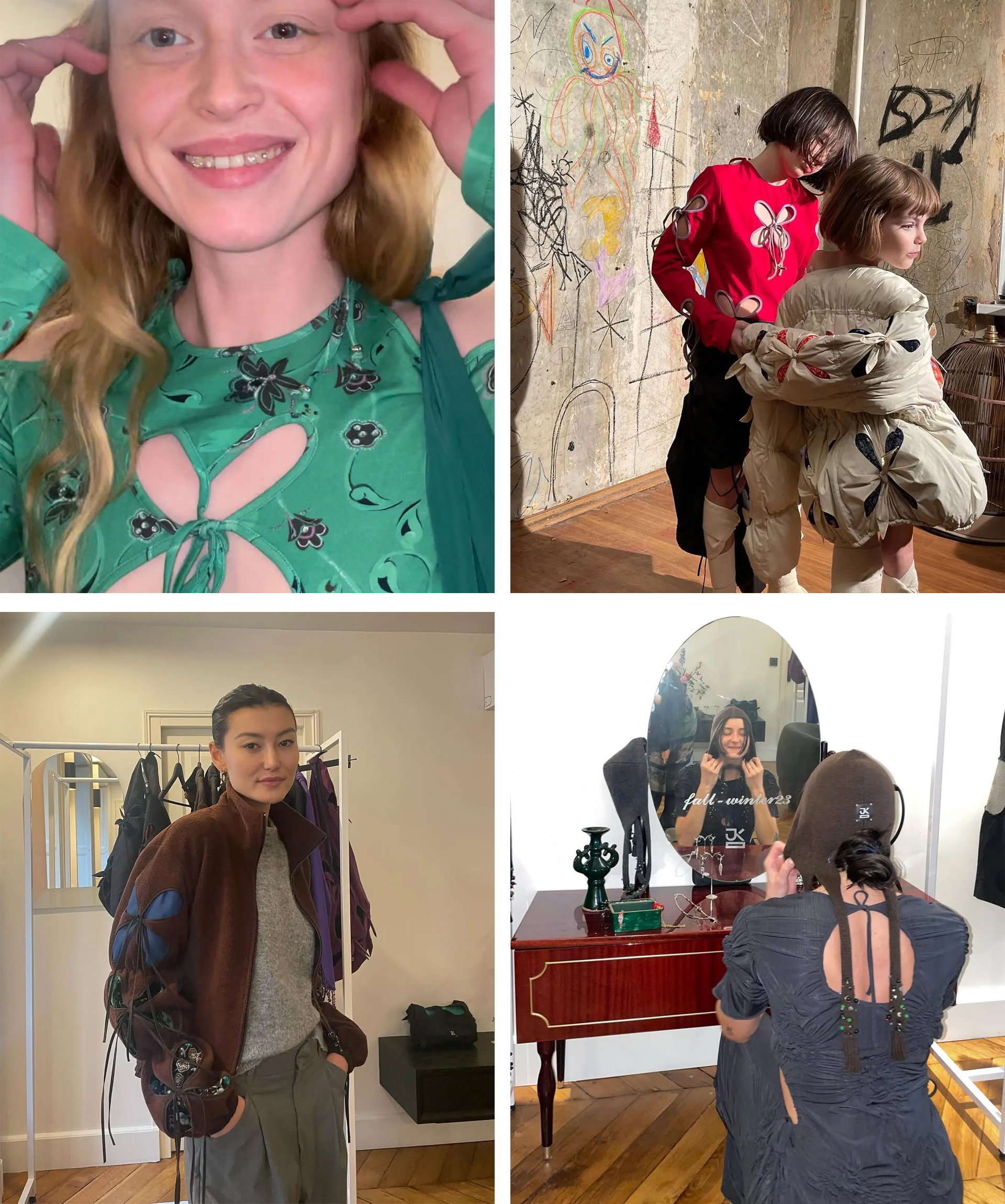
©@j.kim
Our clothes are imbued with the energy of the women who worked on them with such care and sincerity. I believe a garment born from that place can pass on a feeling of comfort and healing to the wearer.
Q11. We picked out a few J.KIM items available at JENTE that caught our eye. Could you briefly introduce each one?
ITEM 1: Petal Hoodie
The cutout detail is a recurring motif in our collections. This comfortable hoodie is meant to convey the image of a flower petal blooming.
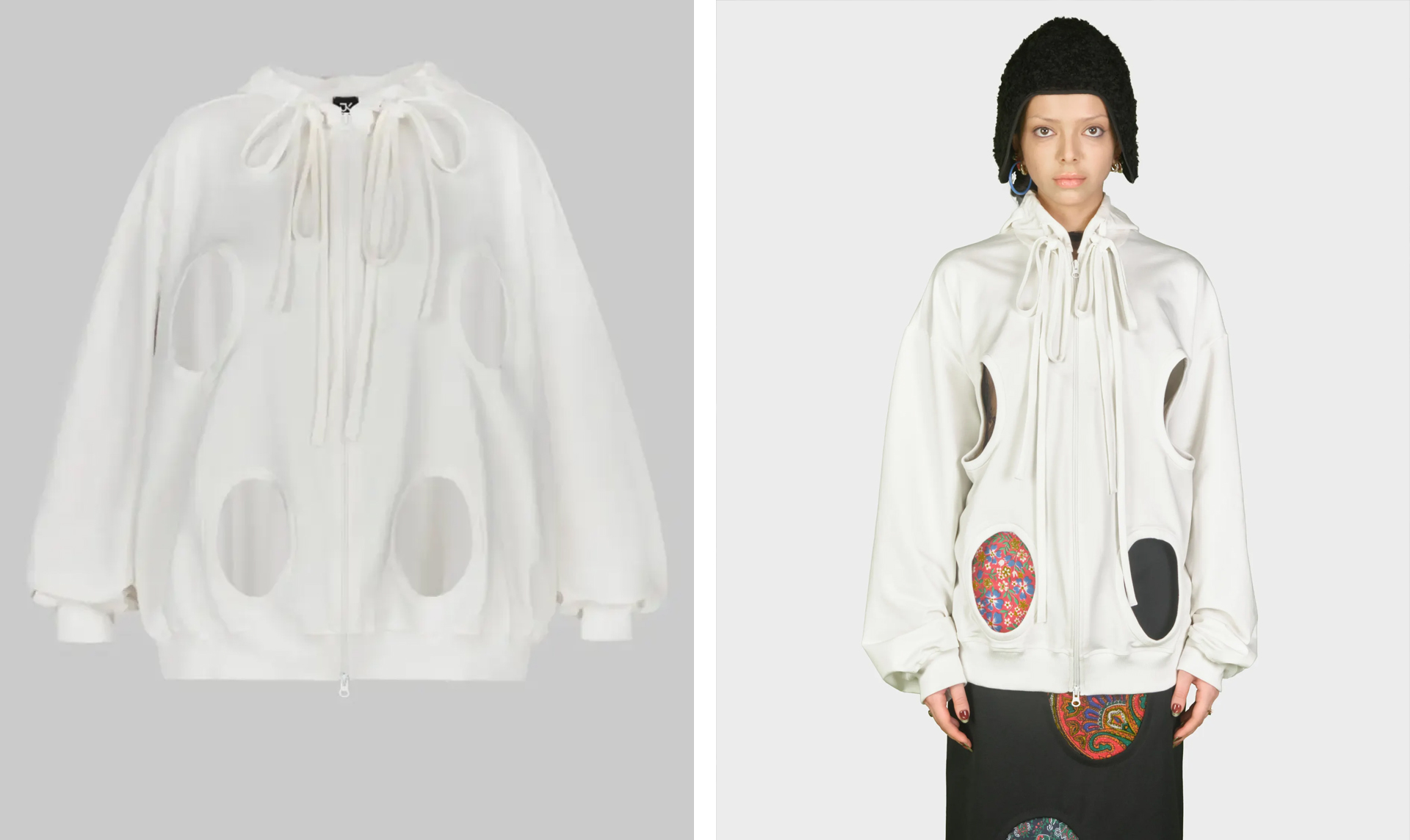
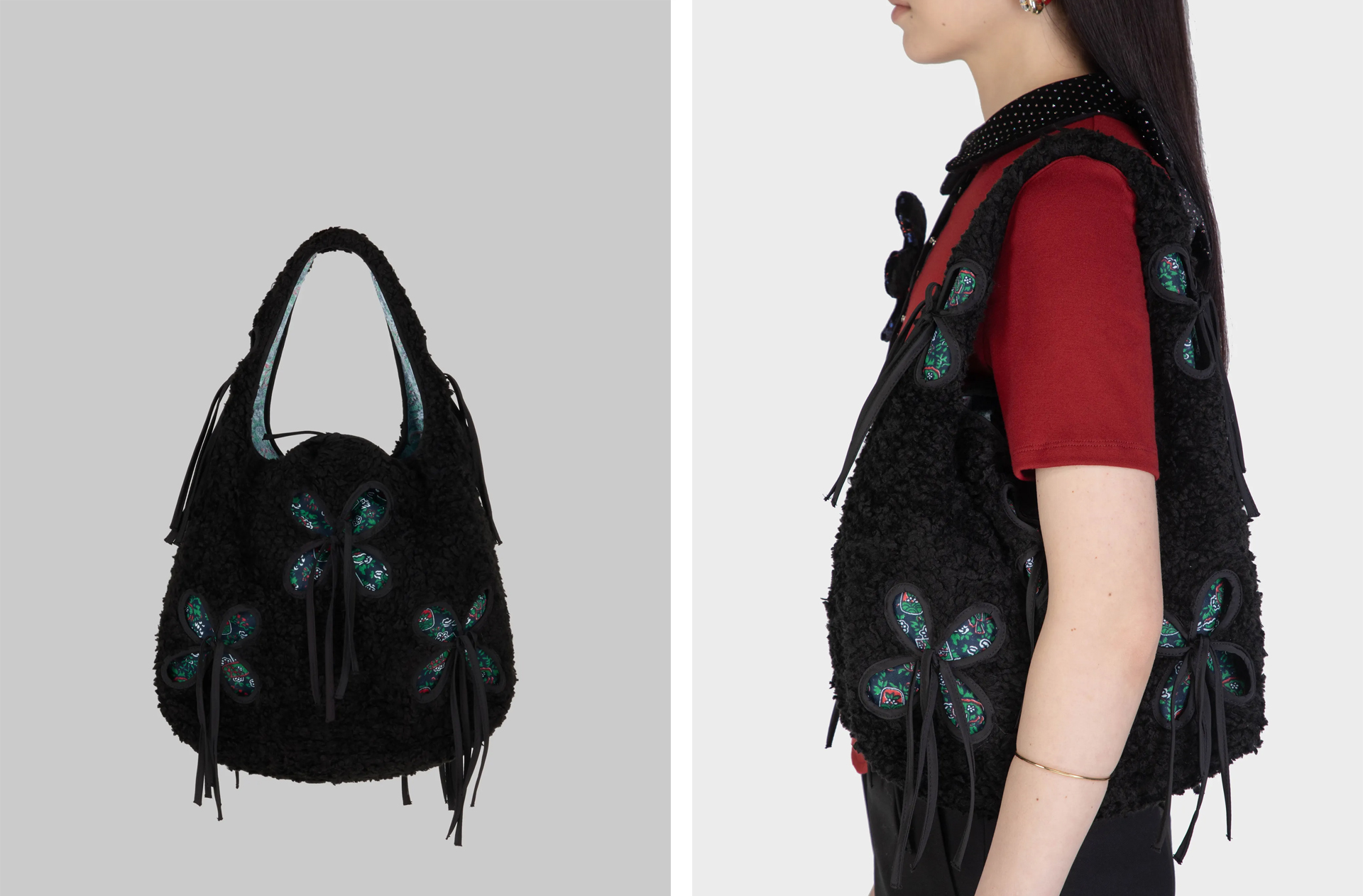
ITEM 2: Petal Faux-Fur Tote Bag
The inspiration for this bag came from the Karakul fur coats that people in Uzbekistan used to wear. At the same time, I wanted to connect the past and present by adding a playful petal shape.
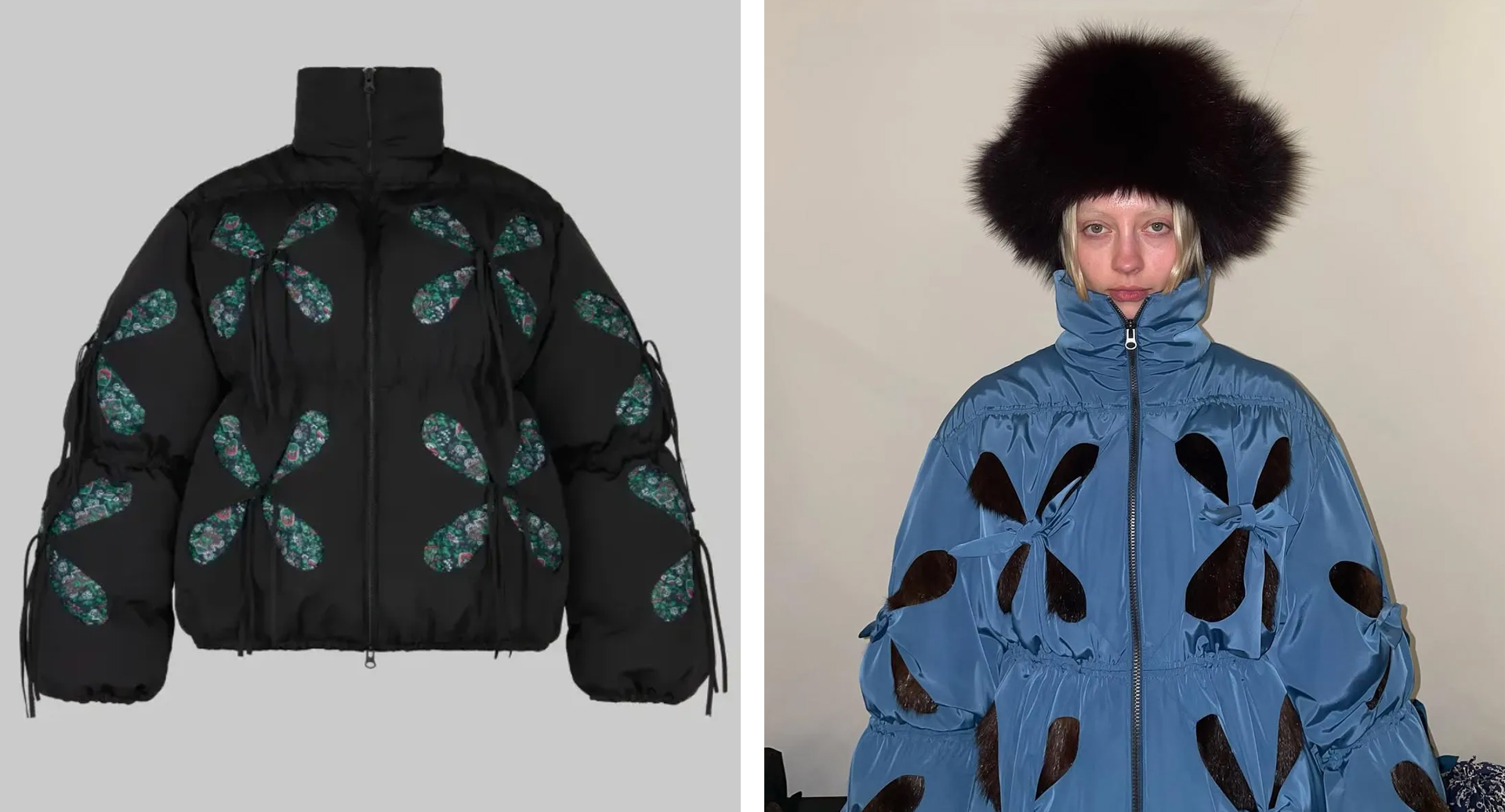
ITEM 3: Black Veil Jacket
The pattern print inside this jacket's cutout details was taken from the Kurpacha. This item captures both Uzbek practicality and Korean minimalism in one simple nylon silhouette.
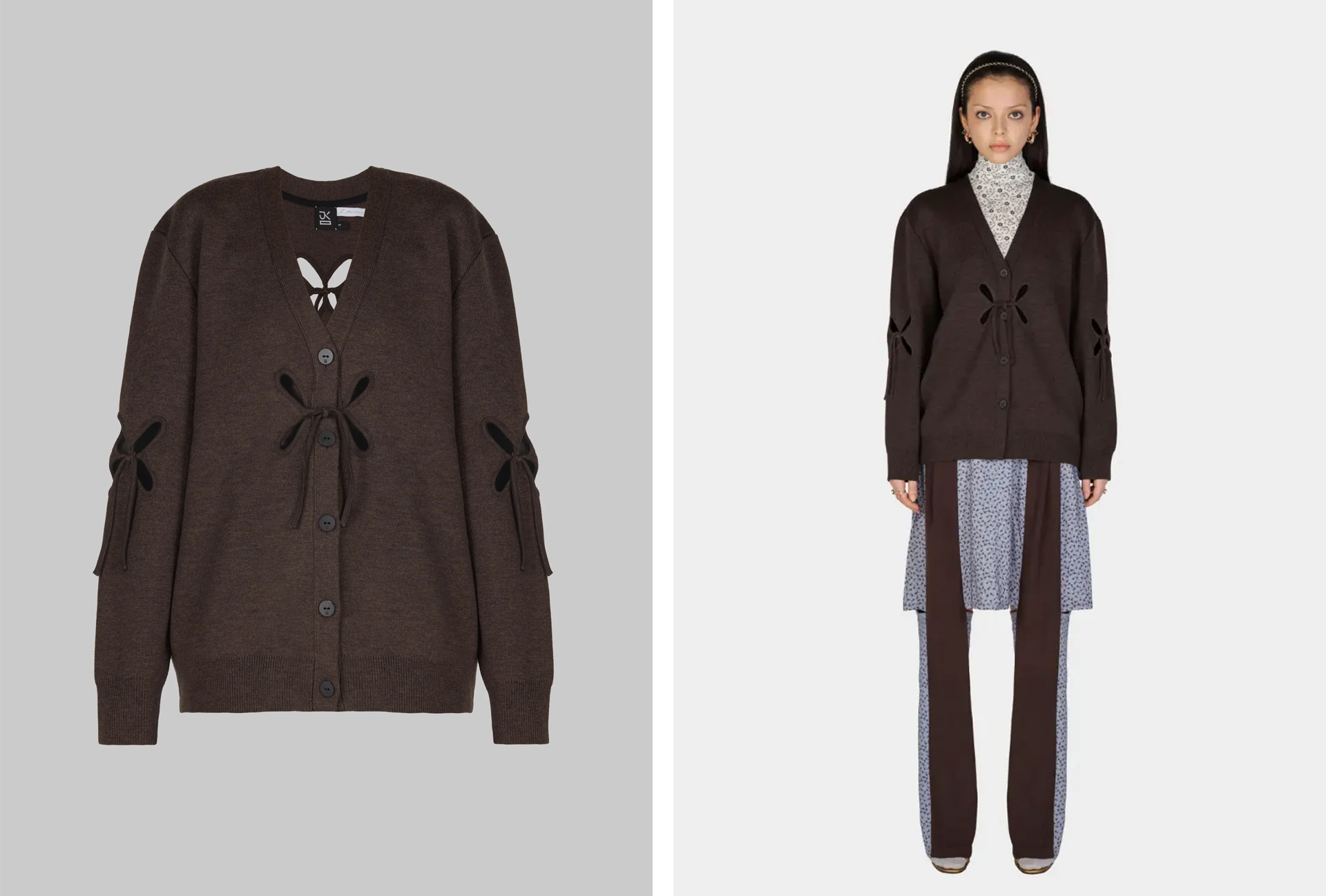
ITEM 4: Petal Knit Cardigan
This cardigan is a softer take on our petal motif. There's a meditative aspect to the knitting process, and I wanted to capture that sense of peace. It's an item that tries to convey emotional warmth, like a cozy piece of clothing passed down from family.
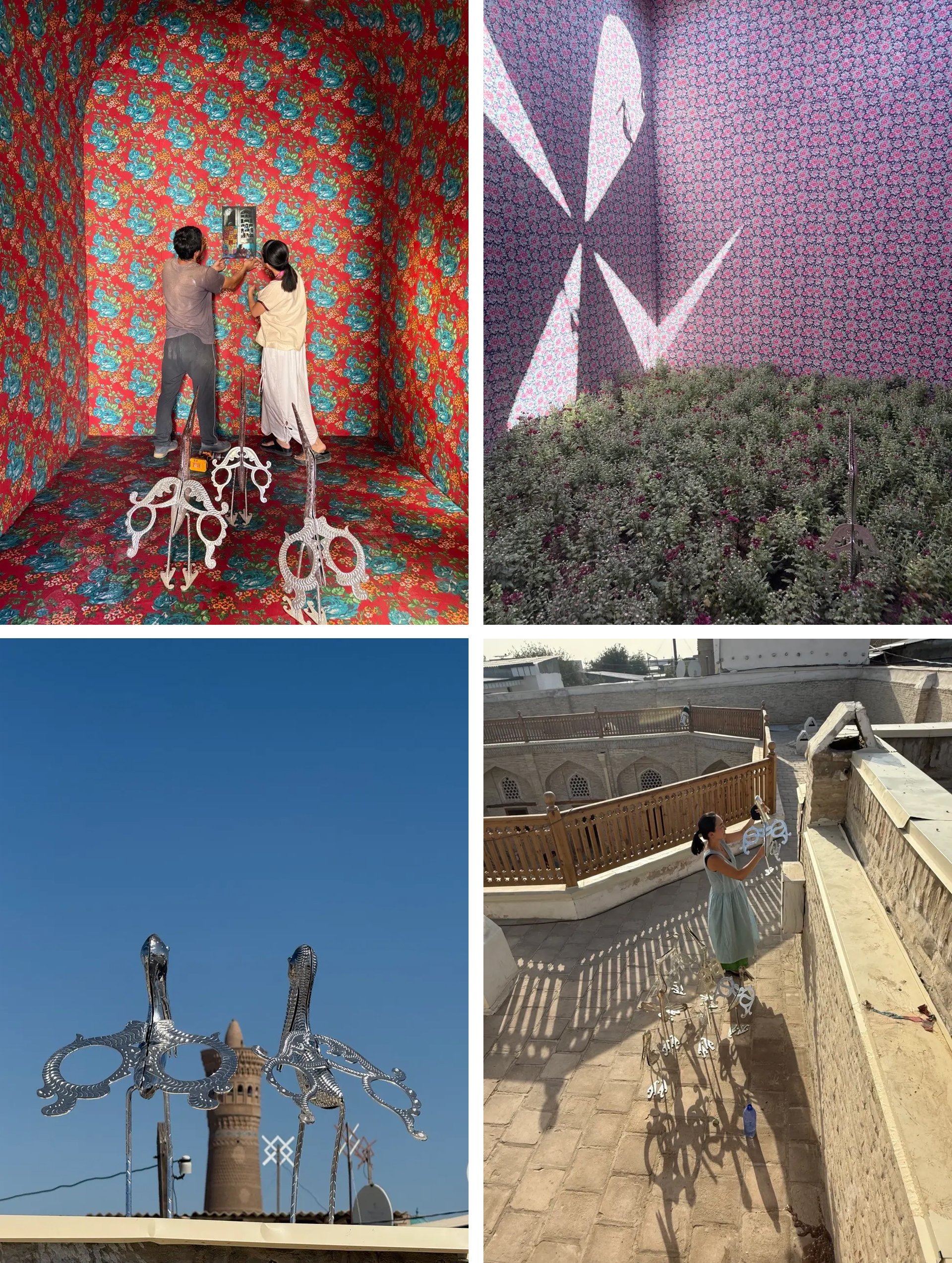
Q12. Beyond clothing, you’ve done diverse work like ceramic vases and parcel-inspired packaging. What story do you want to tell?
I recently did an installation at the Bukhara Biennial in Uzbekistan with a blacksmith, a gold-embroidery artisan, and a photographer.
I believe culture develops when people come together, not when they are separate, and I tried to capture that story in this work. I wanted to heal wounded hearts through empathy and respect, to create a space where people from different backgrounds can unite, feel welcomed, and cherish one another. In the future, I also want to contribute to educational projects. I have a dream of sharing knowledge and cultivating new artisans.
Q13. What are you obsessed with these days?
Watching the culture unfold in Uzbekistan and Central Asia! Museums, cultural facilities, and residences designed by world-renowned architects like Ando Tadao and Zaha Hadid are constantly popping up. Watching this, I feel like I'm right here as history is being made, and I want to play a meaningful role in it.
Q14. We're curious about how you want to build the brand moving forward.
Honestly, as a Koryo-saram, my feelings about Korea have always been complex. Sometimes I even felt a sense of distance. These days, I get to meet Korean customers who show a genuine interest in my history and the brand's history, which gives me hope that we can be a meaningful presence here. For now, I want to deepen the bond between our two countries, Korea and Uzbekistan.
Q15. Finally, do you have a message for our JENTE readers in Korea?
I would love it if through J.KIM you also discover the history of Uzbekistan and the Koryo-saram people. If our clothes sparked your cultural curiosity, my mission is accomplished.