
Comme des Garcons FAMILY
December 12, 2025
The Comme des Garçons Genealogy: A Guide to the Chaos
The Lonely Path,
Since Rei Kawakubo first launched the label in 1969, the story of COMME des GARÇONS can be summed up in one sentiment: absolute independence. Ignoring trends, the brand stands as a unique rebellious, creative, and totally original icon in fashion. Surrounding Kawakubo is a wild web of sub-brands and designers, forming a tangled fashion family tree that often leaves even experts asking, "Just how many lines are there?" We’ve mapped it out.
Defining the Avant-Garde: The Kawakubo Era
The beginning was groundbreaking. When COMME des GARÇONS debuted on the Paris Fashion Week schedule in 1981, the reception was icy. At a time when high fashion was defined by the hyper-glamorous, tight silhouettes of Gianni Versace or the wide-shouldered suits of Thierry Mugler, Kawakubo, alongside Yohji Yamamoto, presented something entirely different. Her garments were distressed, asymmetrical, and heavily reliant on raw seams. They were, in a word, undone.
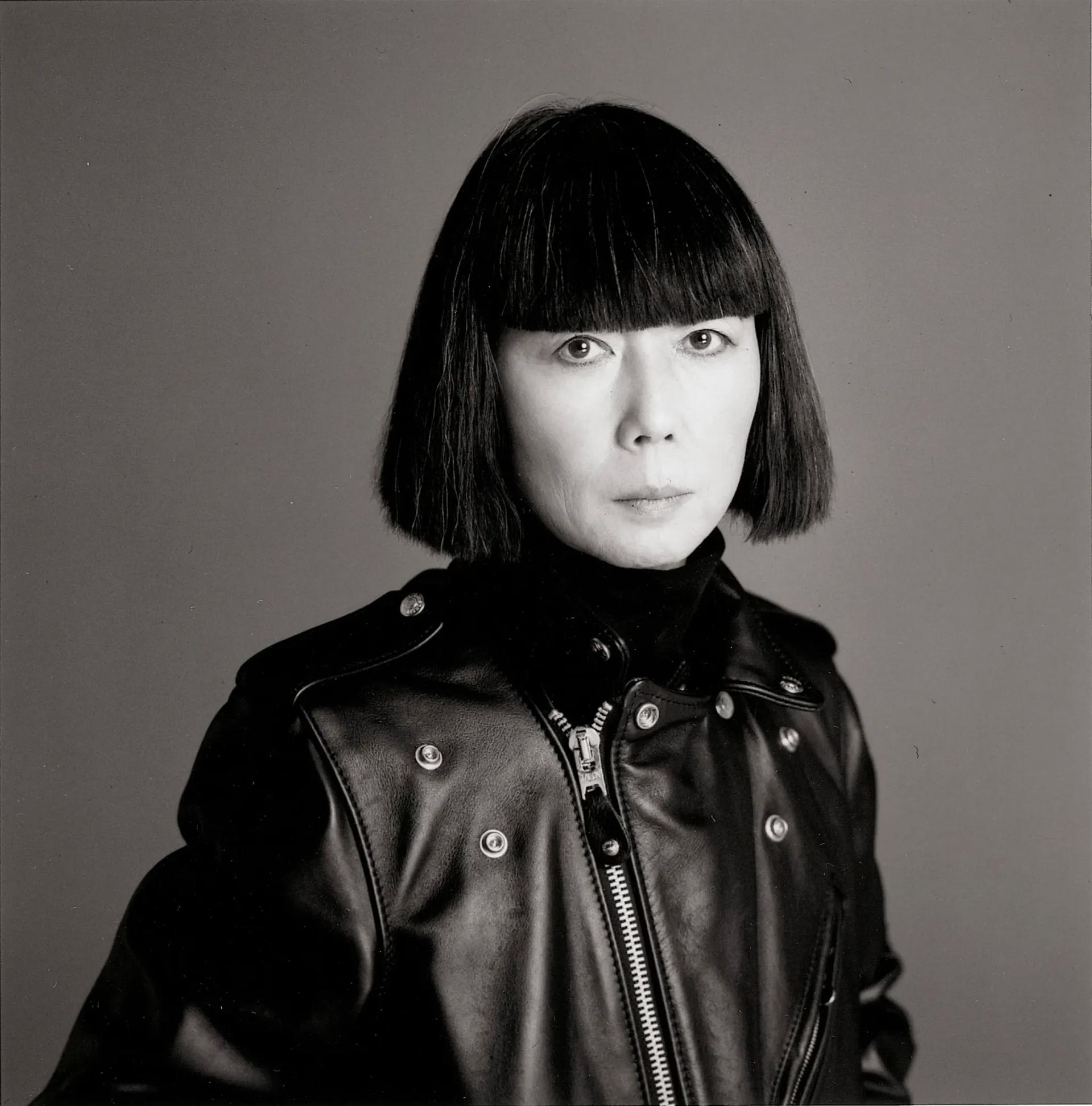 ©newyorker.com
Critics mocked it, calling the style “Hiroshima Chic” because of the heavy use of black. But as is often the case with true visionaries, the world just needed time to catch up. That show is now seen as a pivot point in fashion history. From that day forward “Avant-Garde” becamse synonymous with Rei Kawakubo.
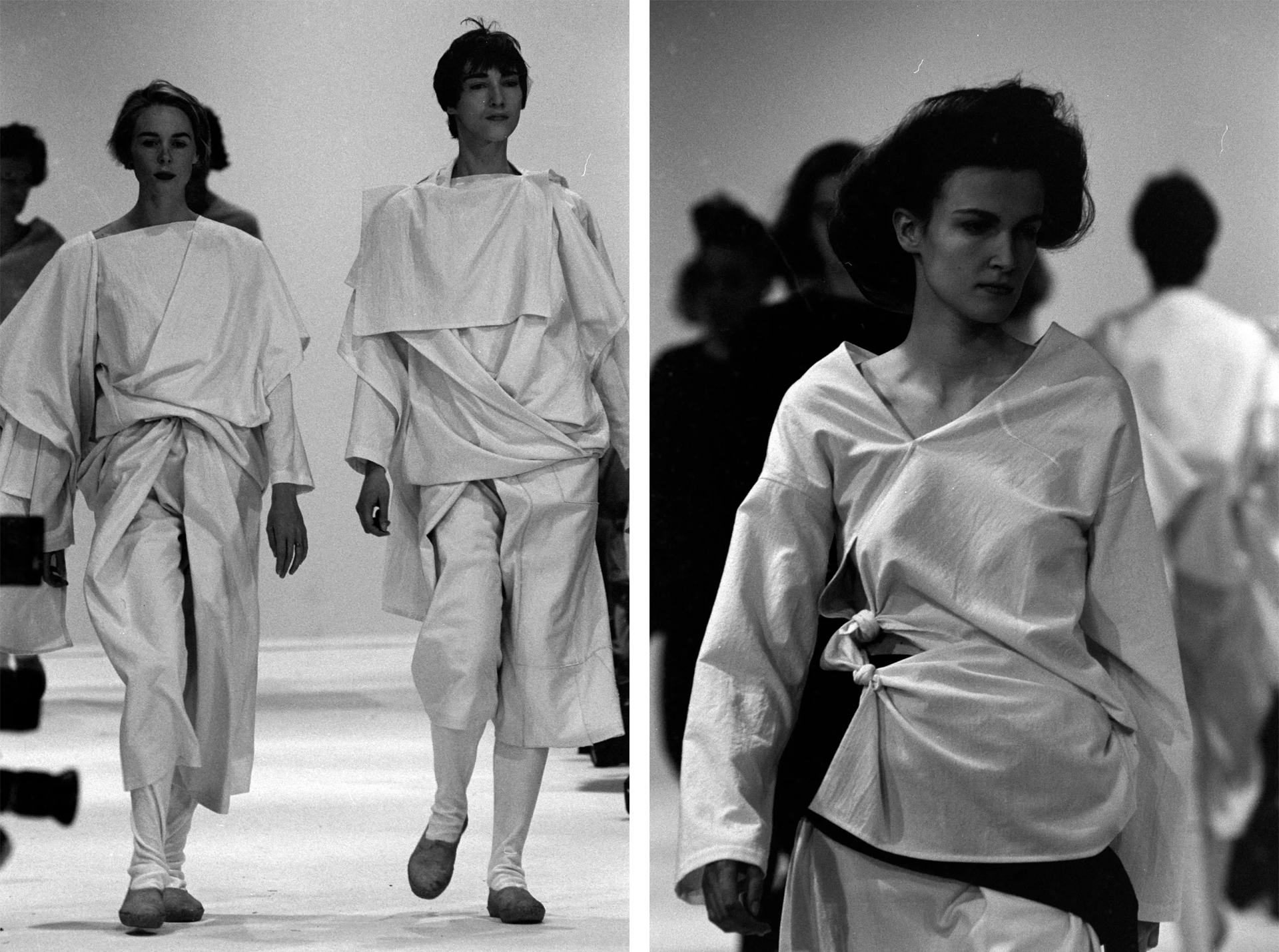
COMME des GARÇONS FW83 ©vogue.it
She introduced deconstructionism, previously an art movement, to the runway, using abstract design to take the very concept of clothing apart. It wasn’t just about covering the body; it was about questioning form and existence itself. The loose, baggy fits and dark colors soon became the brand’s signature look.
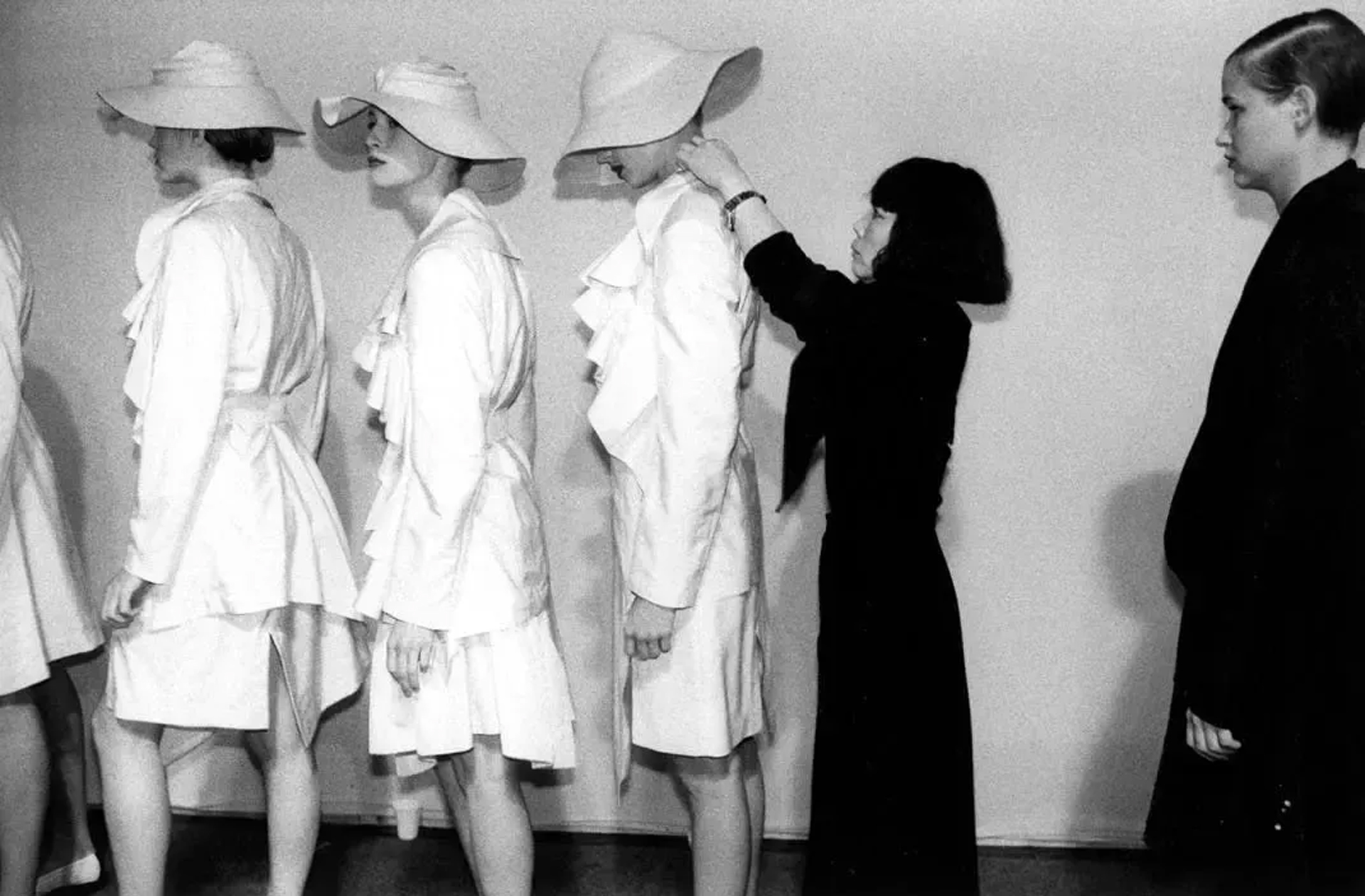
©lofficielusa.com
"It is our job to question convention. If we don't take risks, who will?" — Rei Kawakubo
Even today, defining a CdG garment is difficult, because the brand is Kawakubo herself. As she famously said, “For something to be beautiful, it doesn’t have to be pretty.” Her clothes challenge you. They demand more than just a quick glance.
The avant-garde world she built under the name of deconstruction left a massive footprint on the generations that followed. A legion of designers, including the Antwerp Six, Martin Margiela, Ann Demeulemeester, Dries Van Noten, Yohji Yamamoto, and Hussein Chalayan, wore her clothes, drew inspiration from her, and built their own new fashion worlds upon her foundations.
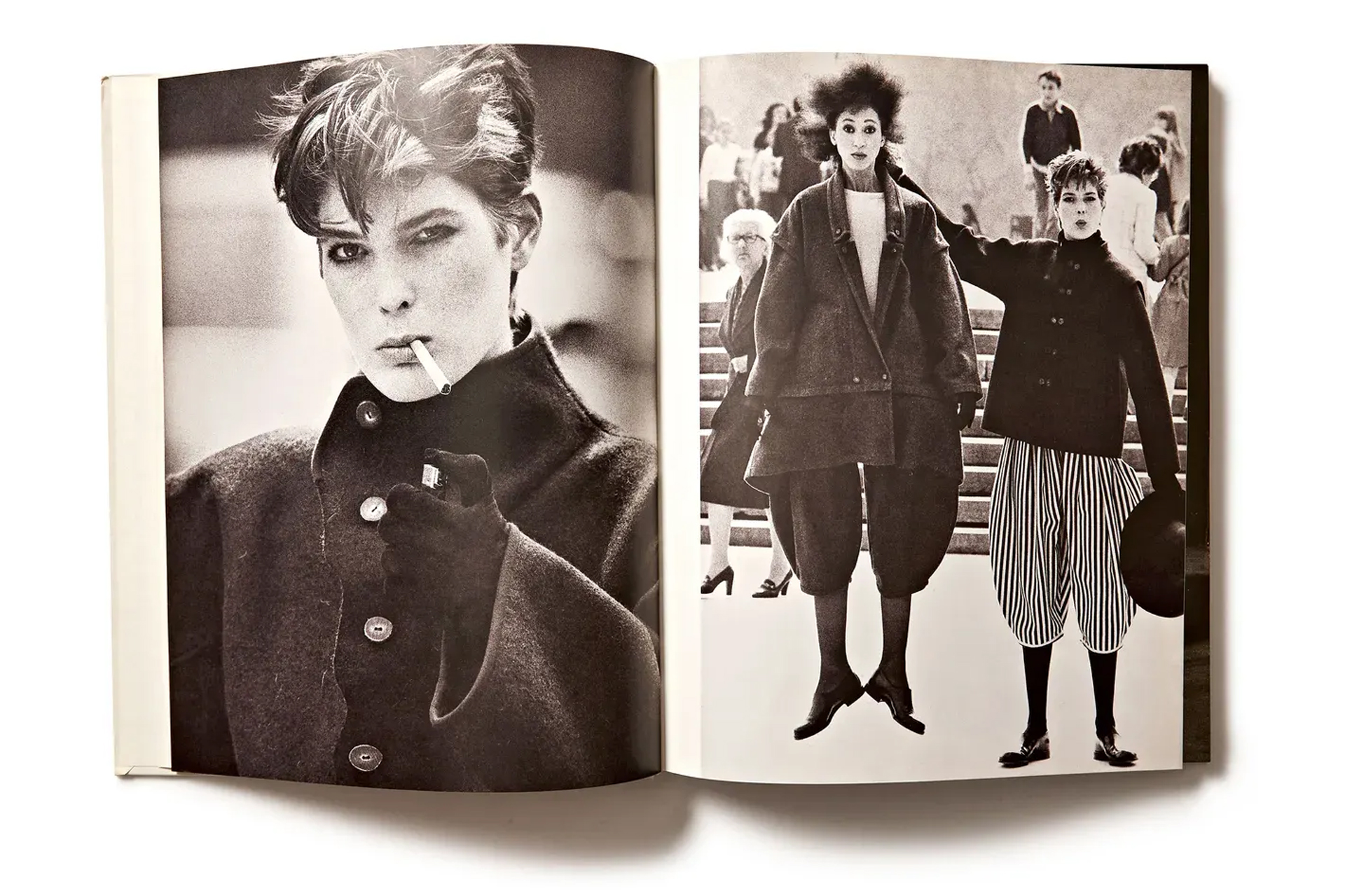 ©thecut.com
The fact that we now naturally accept asymmetry, oversized fits, and gender-blurring unisex silhouettes is entirely thanks to the questions she posed a generation ago. With a single inquiry, "What is clothing?", Rei Kawakubo continues to rewrite the language of fashion today.
Family Tree Field Guide
No other fashion house operates like this. COMME des GARÇONS is a unique “fashion school” where Kawakubo’s main line sits at the center, while her students, Junya Wantanabe, Kei Ninomiya, Tao Kurihara, lead their own sub-lines. It is a creative collective that maintains the core philosophy of the avant-garde while adding their own unique colors.
Here is the hierarchy, organized chronologically to help you understand the flow.
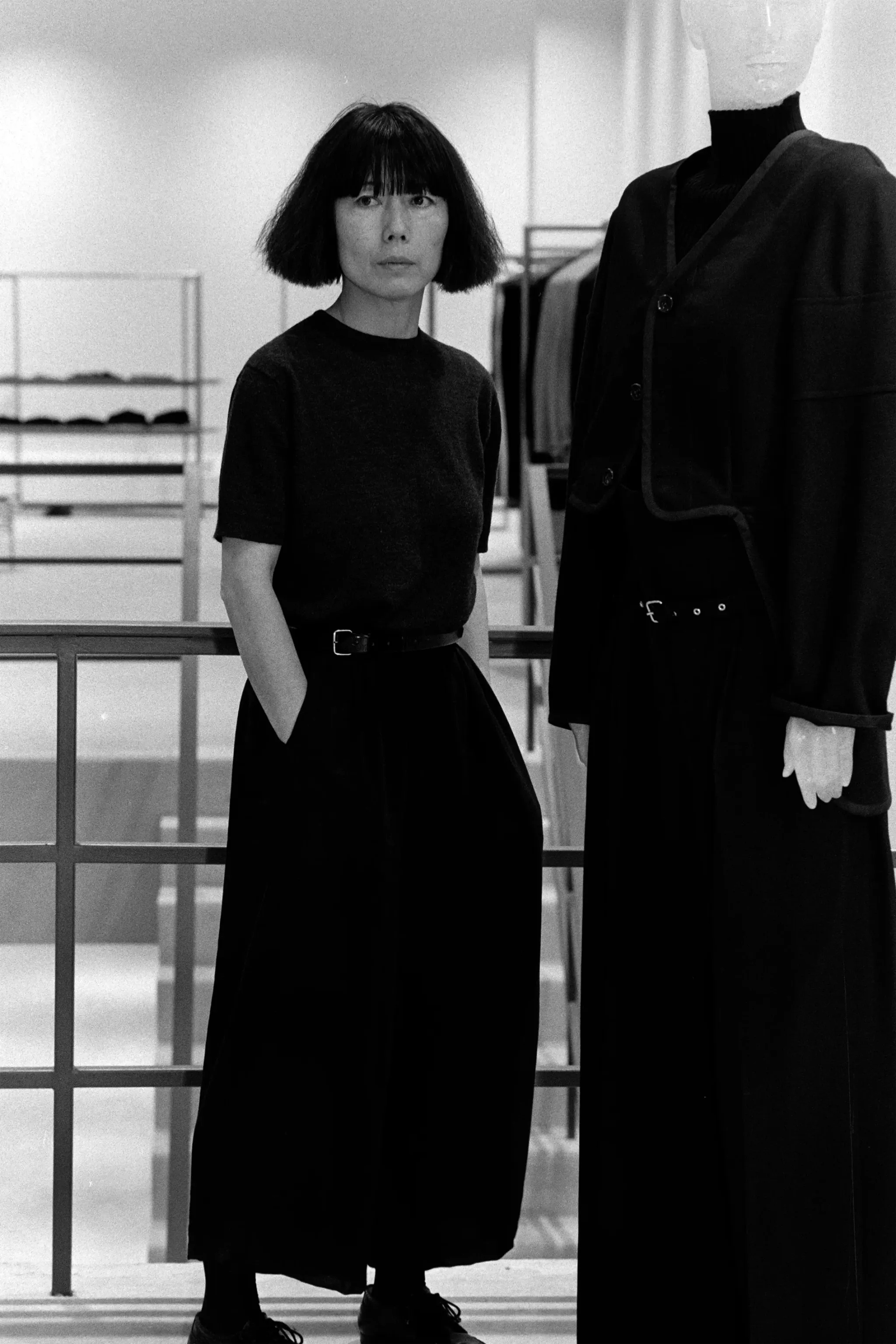
©vogue.it
COMME des GARÇONS (Mainline)
Est. 1969 (Official launch 1973)
Rei Kawakubo was born in Tokyo in 1942. After studying art and literature at Keio University, she worked in advertising for a textile company before becoming a freelance stylist. She began designing clothes under the name COMME des GARÇONS in 1969 and officially established the company in 1973.
This is the mothership. It is the collection line where you can meet Kawakubo’s creativity in its purest form. Every season features radical challenges using new materials and hand-craft techniques. It focuses on avant-garde styles, deconstruction, and exaggerated silhouettes.
Inspired by Françoise Hardy’s 1962 song "Tous les garçons et les filles" ("All the boys and girls"). It translates to "Like Boys." She simply liked the sound of the words. However, using the word "boys" for a womenswear brand hints at her intention not to distinguish between genders. For this reason, Kawakubo famously did not design high heels and did not have models wear them on the runway.
 COMME des GARÇONS FW85 ©vogue.it
You can't talk about CdG without mentioning black. While her first collection was entirely black, she has experimented with various colors over the years.
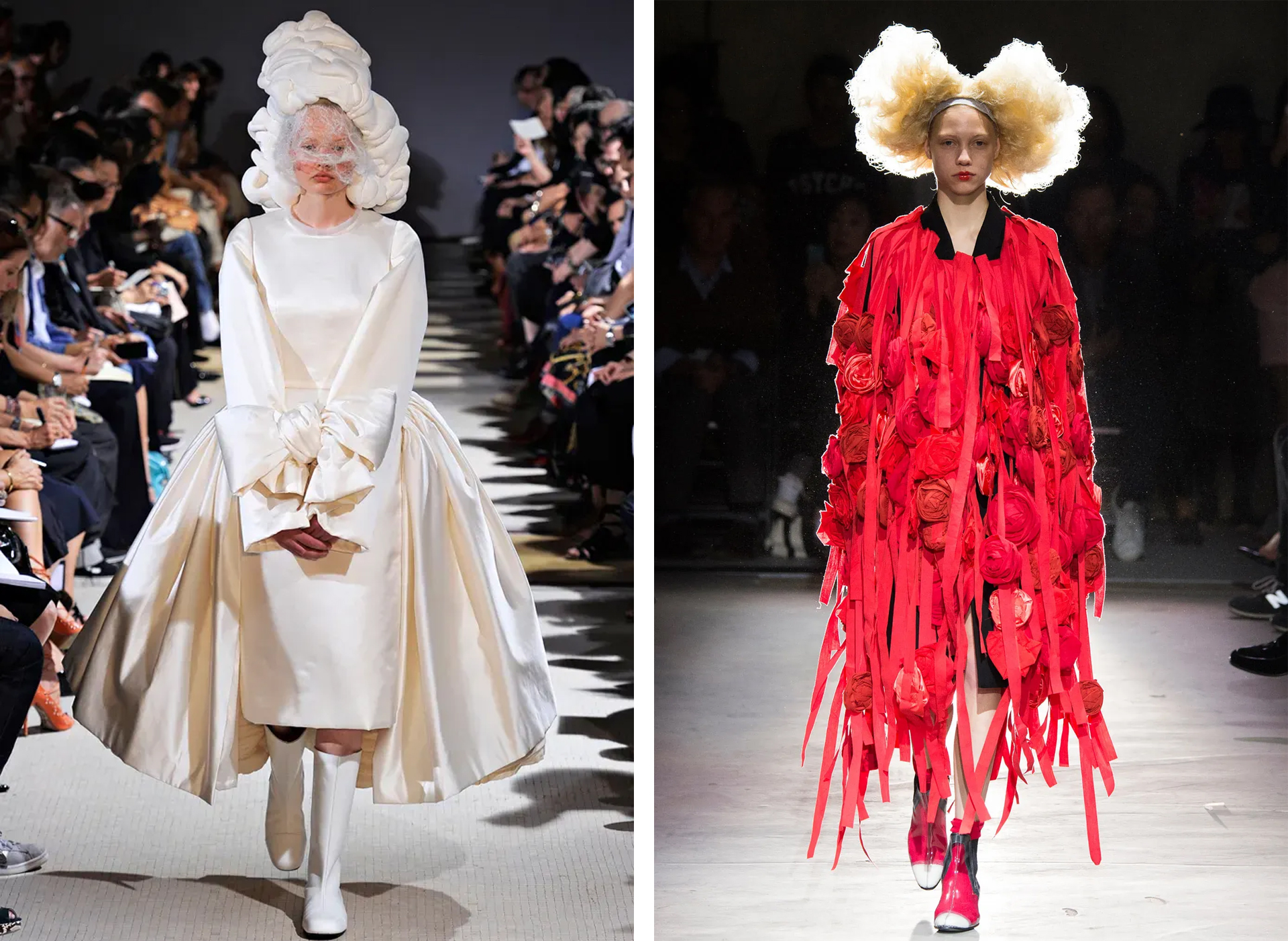
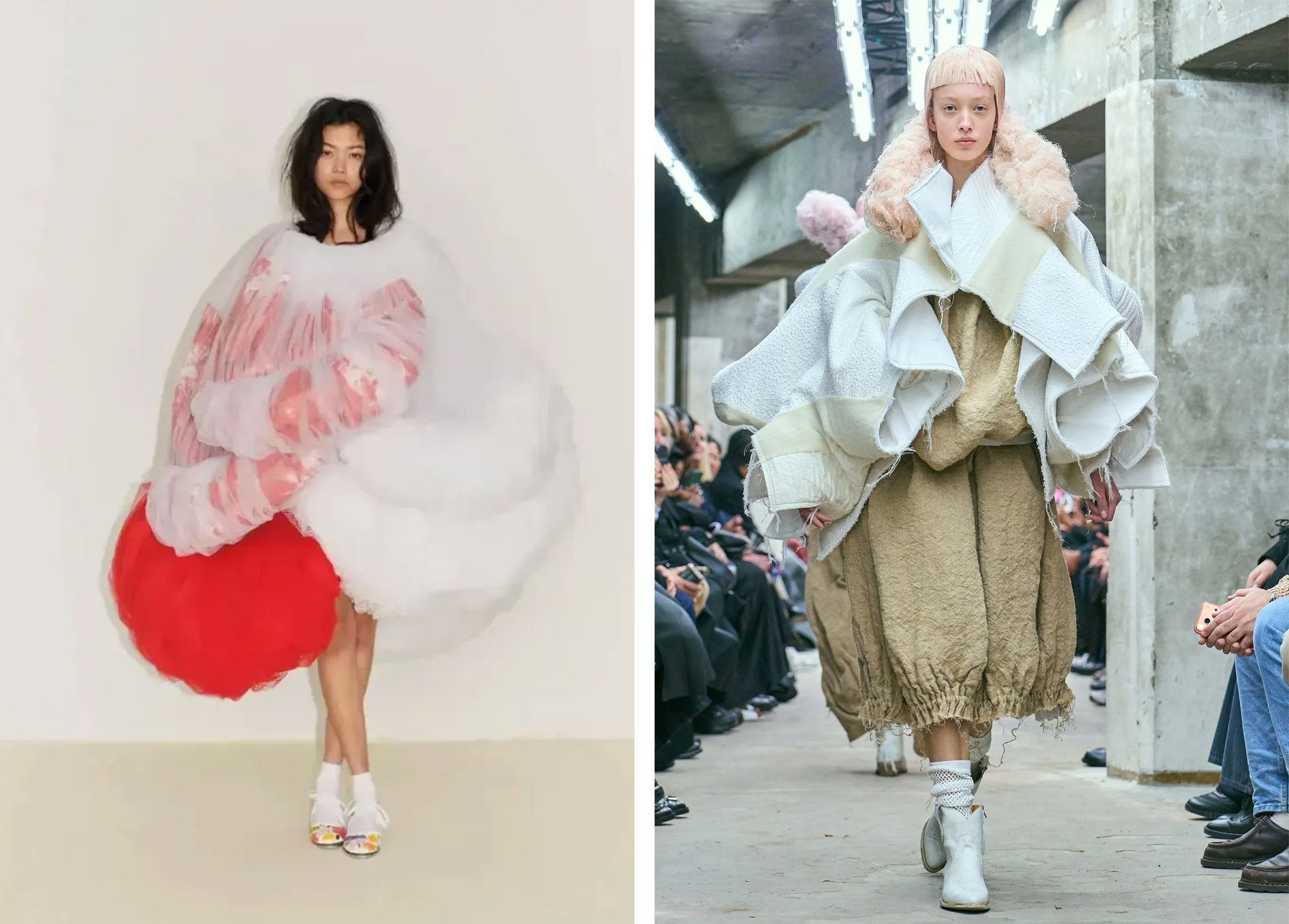
COMME des GARÇONS SS25, SS26 ©@commedesgarcons ©vogue.com
COMME des GARÇONS HOMME
Est. 1978 The first sub-label and, as the name says, a line for men. It consists of comfortable, "safe" collections made for daily wear, but with unique and fun details.
Designed by Kawakubo from 1978 to 1989. Then, Keiichi Tanaka took over from 1990 to 2003. Since 2003, Kawakubo's disciple Junya Watanabe has led the line as creative director. Look for Watanabe’s signature patchwork and mixed fabrics.
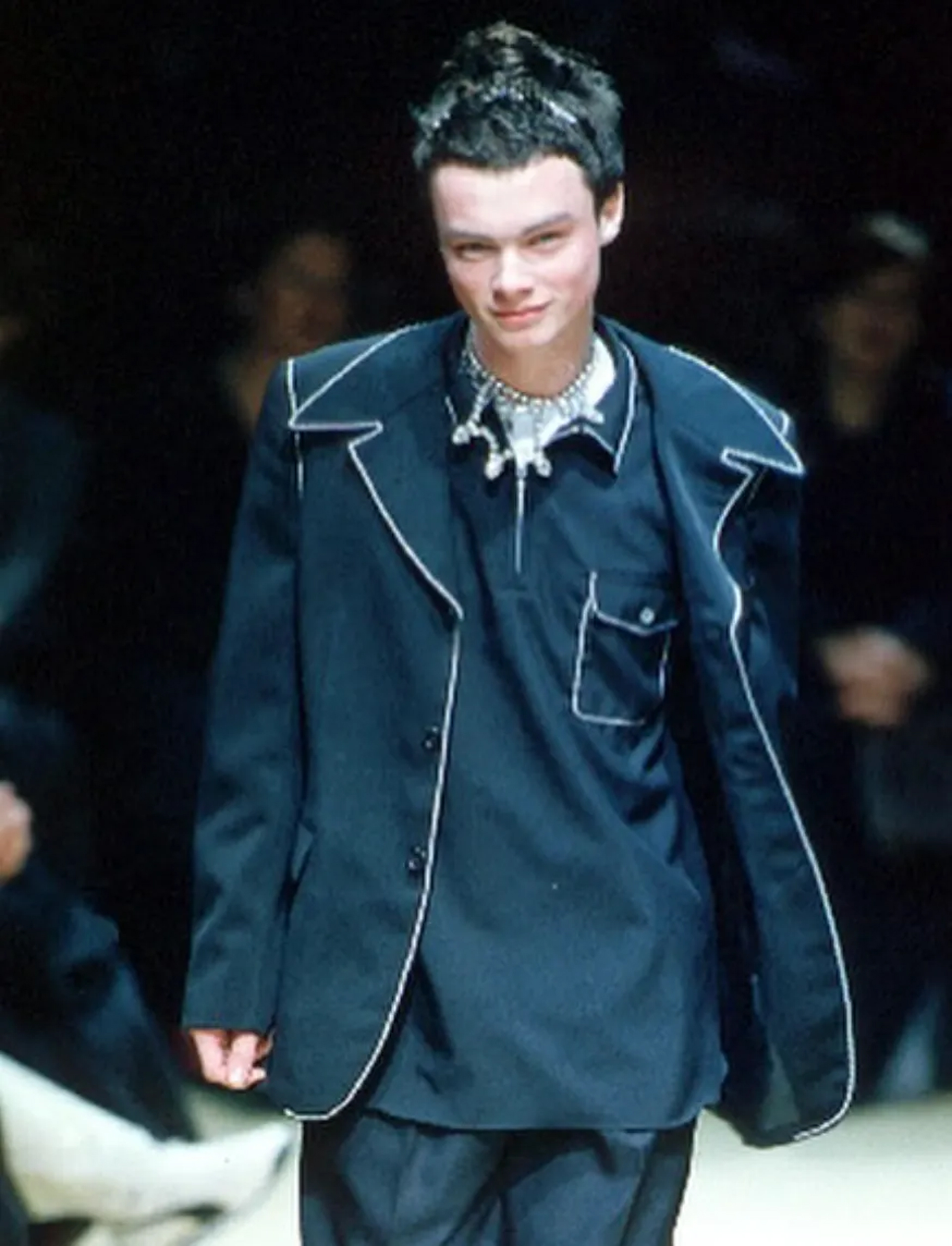
COMME des GARÇONS HOMME ©@odysseyrebuild
COMME des GARÇONS tricot
Est. 1981
As the name implies (French for "knit"), this line specializes in knitwear and woven patterns. It centers on black but uses a wider color palette than other lines, emphasizing a softer, more feminine mood.
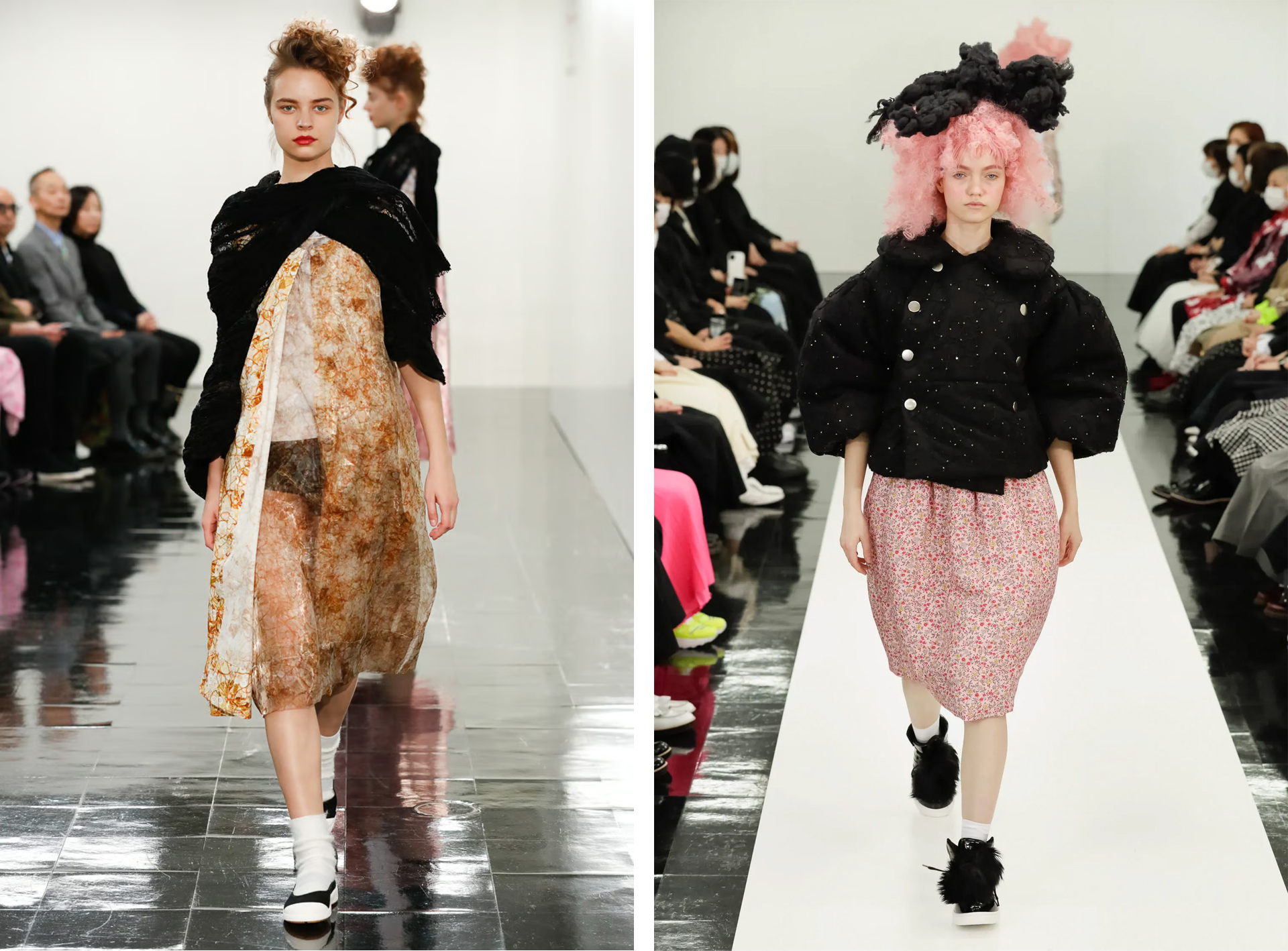
COMME des GARÇONS tricot FW18, FW20 ©fashionsnap.com
Rei Kawakubo led it until 1986. Junya Watanabe took over from 1987 to 2001, followed by Tao Kurihara from 2002 to 2021. Tao was known for combining CdG's structural sense with feminine romanticism using embroidery, mesh, and hand-knitting. After ending the line in 2021, Tao Kurihara launched her own brand, COMME des GARÇONS TAO.
COMME des GARÇONS HOMME PLUS
Est. 1984
Distinctly different from the previously mentioned COMME des GARÇONS HOMME. The "PLUS" implies going beyond simple ready-to-wear; it experiments with the very concept of menswear. Kawakubo uses this line to deconstruct the traditional image of masculinity, presenting a flexible and unique new vision.
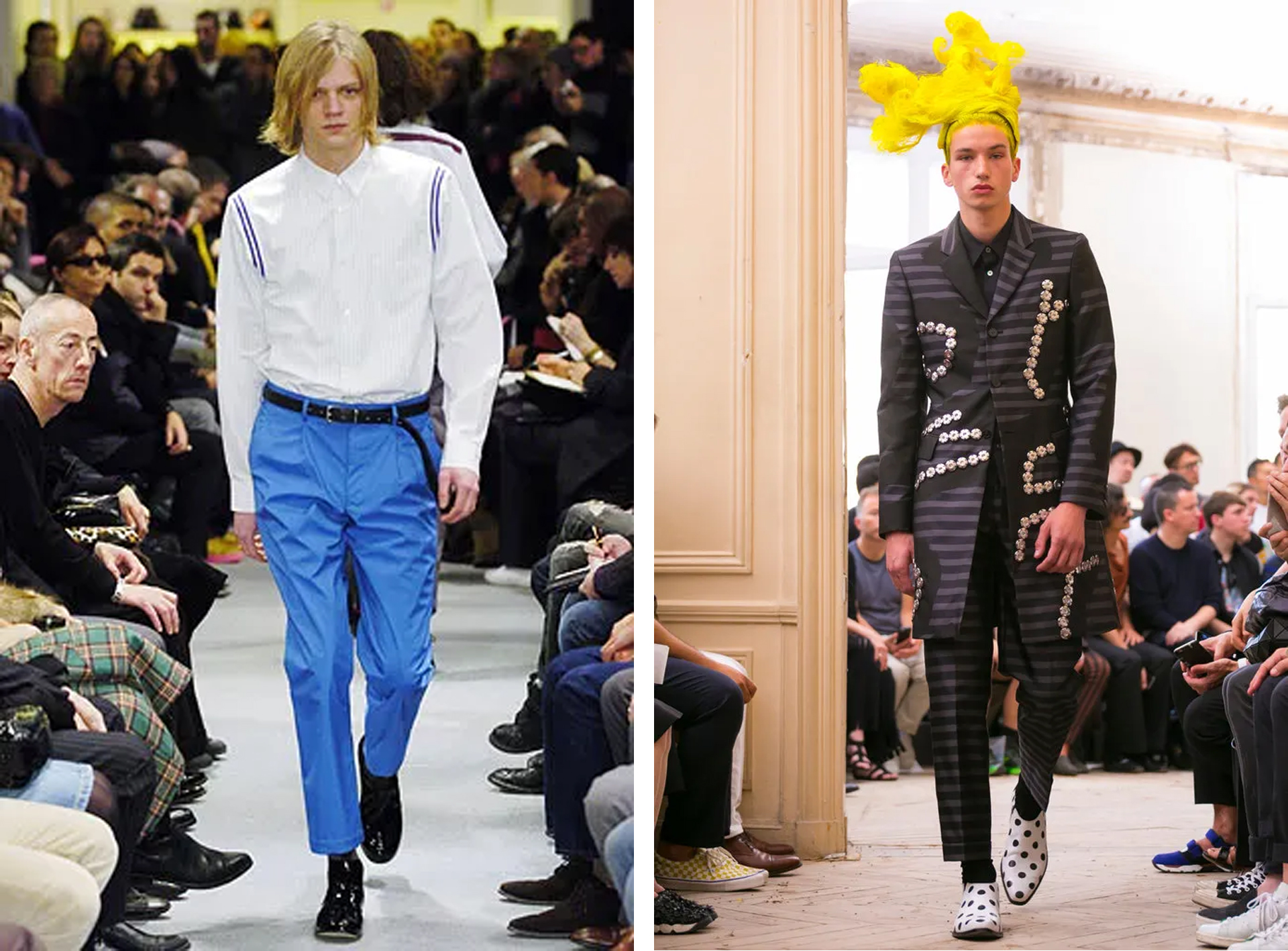
COMME des GARÇONS HOMME PLUS FW05, SS16 ©tenpomap.blogspot.com
While the line looks like menswear on the surface, the silhouettes, details, and styling blur gender boundaries. Perhaps the "masculinity" CdG speaks of is closer to being genderless. "I do not believe in the distinction between men and women. There are only humans." This philosophy is most clearly visible in HOMME PLUS.
COMME des GARÇONS HOMME DEUX
Est. 1987
The subversive suit. This is Kawakubo’s take on Western business attire. Think sharp blazers and schoolboy ties, but with subtle distortions like a slightly off-kilter cut or an unexpected fabric.
Revitalized in 2009 by United Arrows co-founder Hirofumi Kurino, it now sits at the perfect intersection of classic tailoring and street sensibility. It's for the businessman who hates being a businessman.
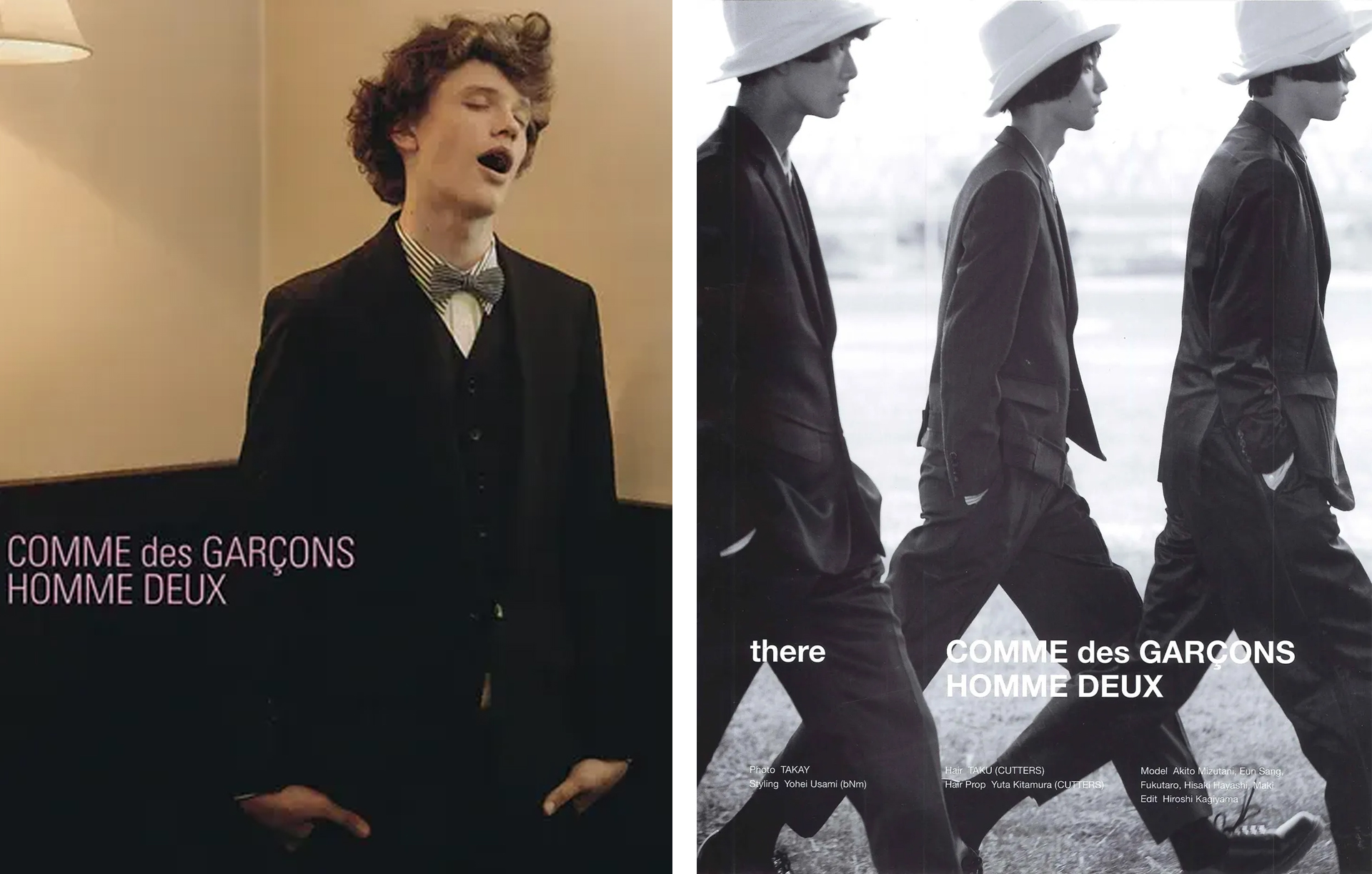
©sorrythanksiloveyou.com ©tenpomap.blogspot.com
Currently, HOMME DEUX is evaluated as the most realistic of the men's lines. If HOMME PLUS leads artistic experiments, DEUX depicts the subtle balance between city life and business. The charm of this line is how it breaks down the boundaries between formality and freedom, suits and casual wear.
COMME des GARÇONS SHIRT
Est. 1988
A masterclass in obsession. The concept is simple: take the most basic item in a wardrobe, the shirt, and reinvent it infinitely.
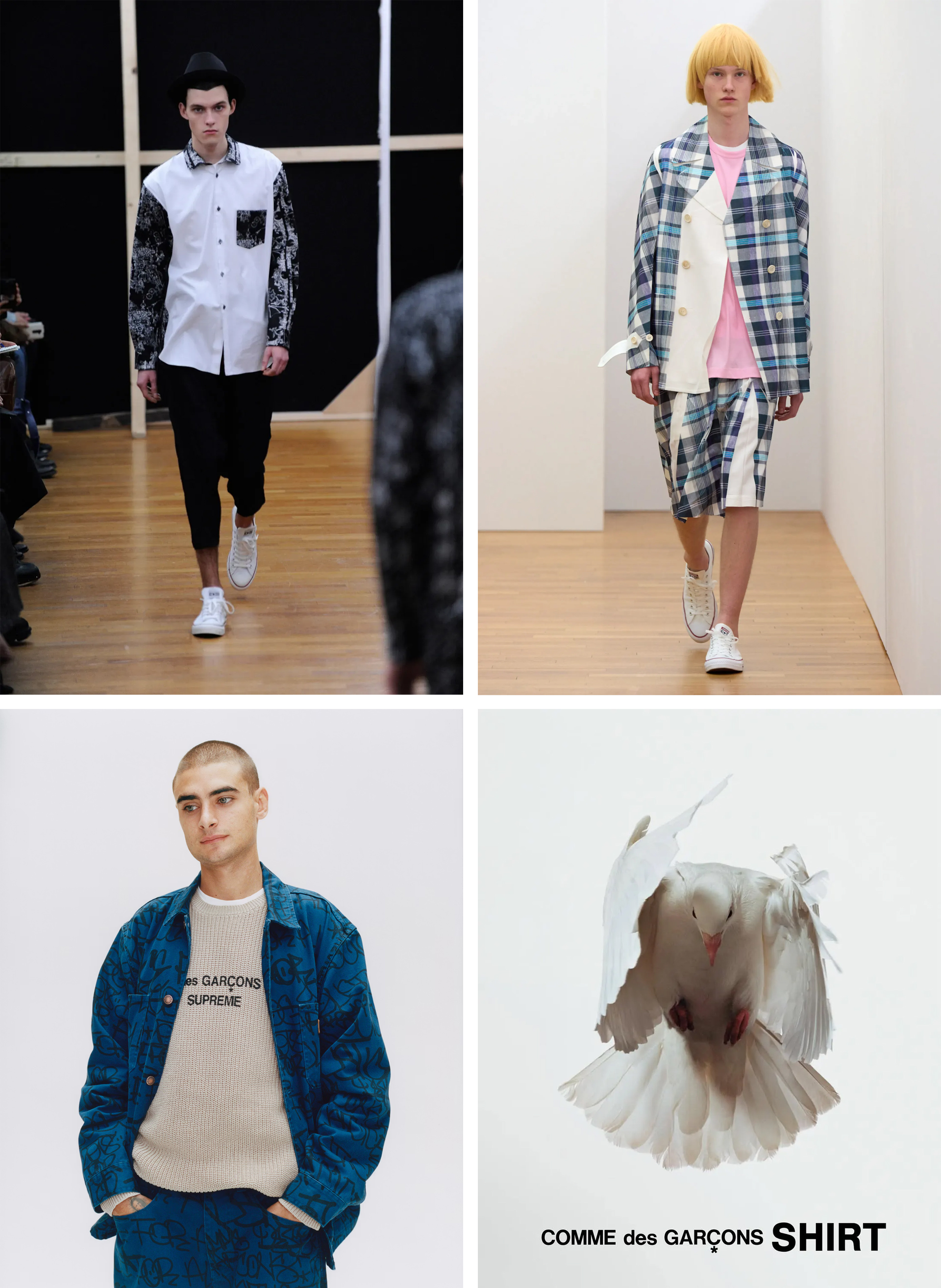
COMME des GARÇONS SHIRT FW14, SS25, FW07 ©vogue.com ©supreme.com ©@commedesgarcons
This line is the bridge to street culture. Through collaborations with Supreme, KAWS, and Futura, SHIRT creates the most hype-driven, accessible entry point for the visually literacy crowd.
JUNYA WATANABE
Est. 1992
Junya Watanabe is a designer handling multiple brands within COMME des GARÇONS. Once a pattern maker for Kawakubo and her disciple, he understands her design language better than anyone.
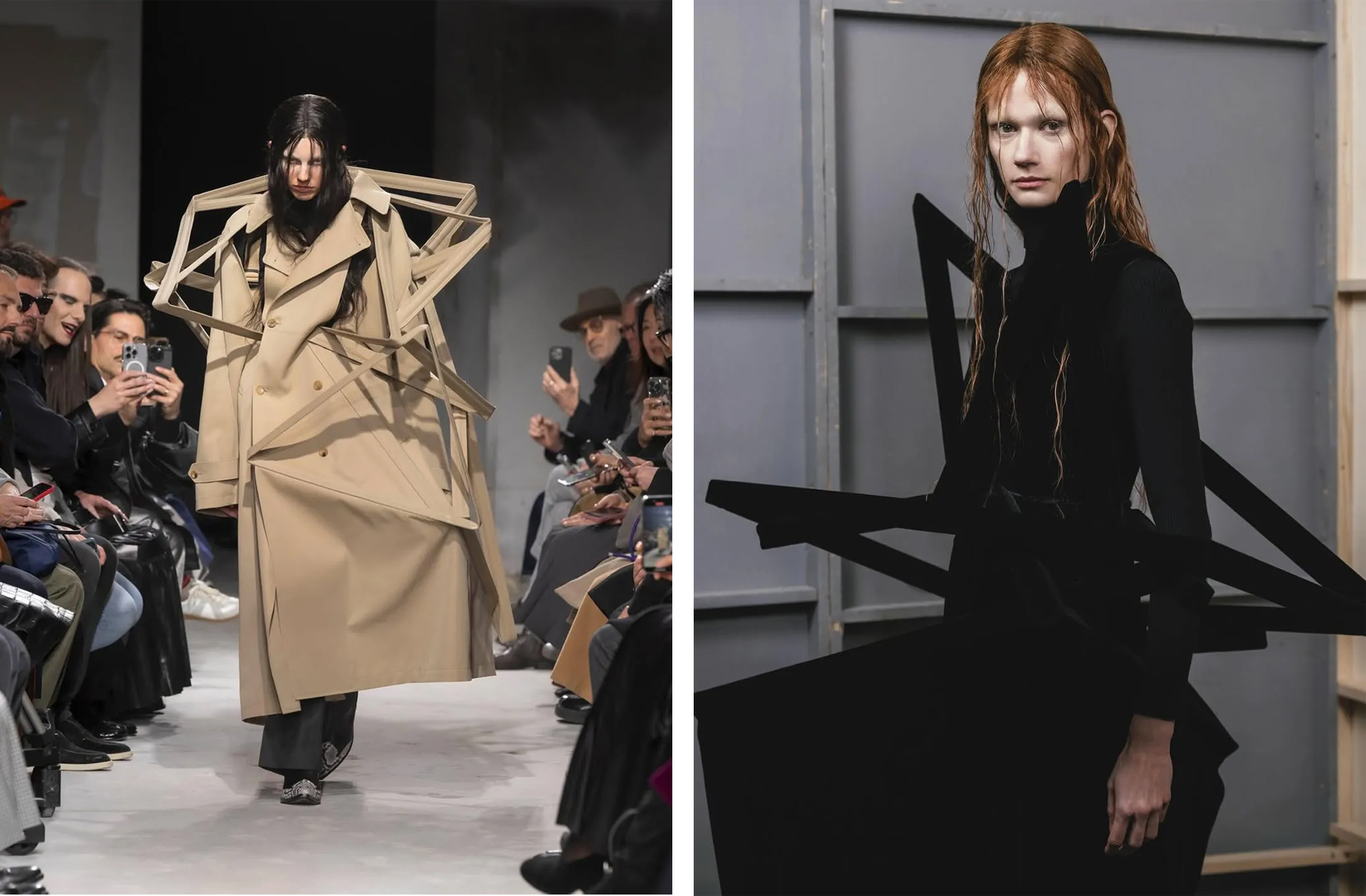
JUNYA WATANABE FW25 ©@junyawatanabe
His clothes don't just deconstruct form; they explore materials and the very method of wearing them. His line is relatively independent within the company. The design is left entirely to Junya's autonomy, going beyond the teacher-student relationship with Kawakubo to reveal his own distinct color that speaks a different language within the CdG world.
COMME des GARÇONS COMME des GARÇONS
Est. 1993
Often called "CdG CdG," this is the "Rei Kawakubo Uniform." It started as a project for Rei to create the clothes she actually wanted to wear daily.
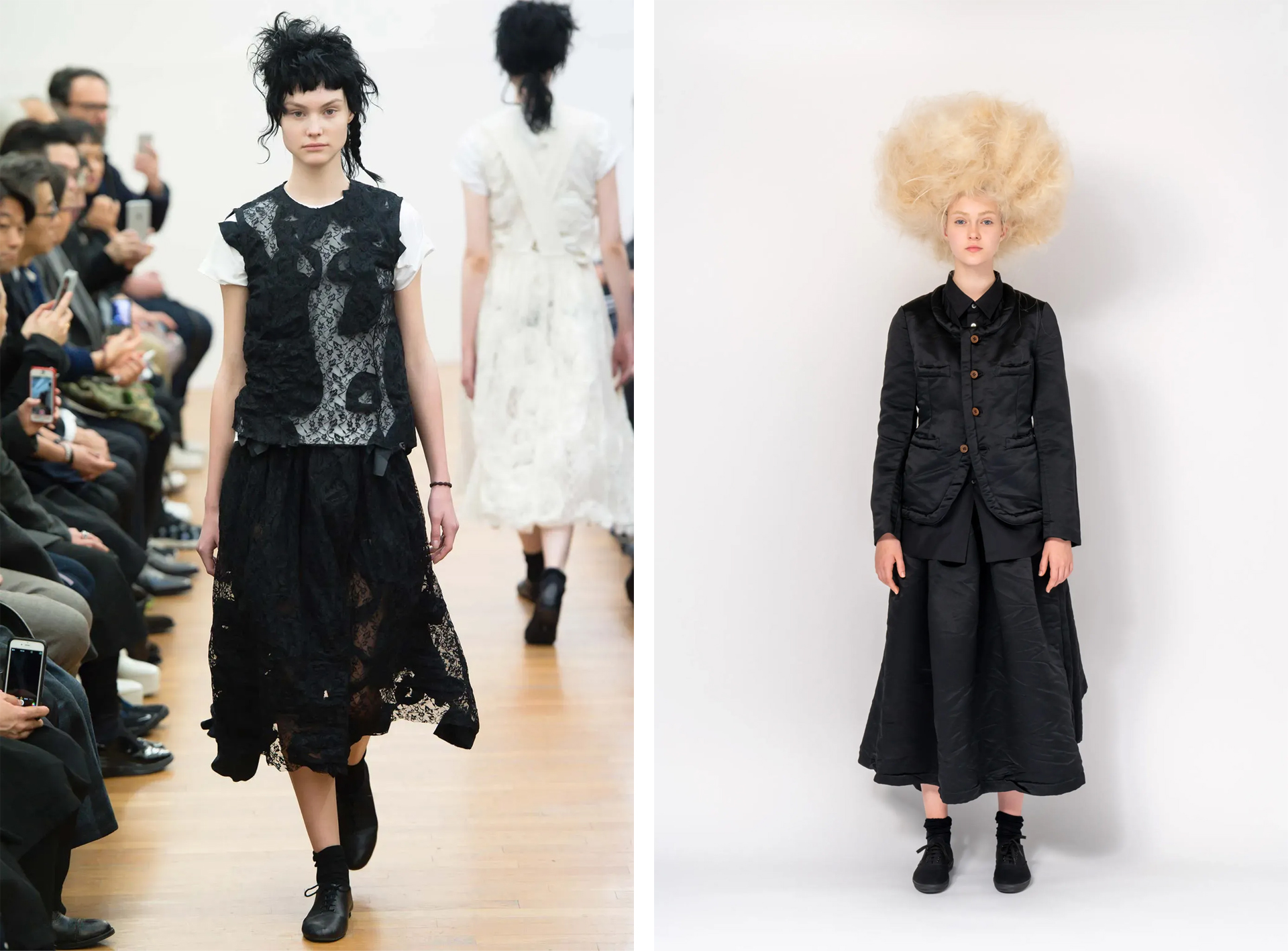 COMME des GARÇONS FW15, SS20 ©vogue.com
Using black and navy as key colors, it perfects the look with structural silhouettes and perfect fits rather than crazy decorations. As a result, while not flashy, it is the line that shows her style in its most refined form. Kawakubo actually wears this line most often. For her, COMME des GARÇONS COMME des GARÇONS is a language to express herself and is closer to a way of life.
JUNYA WATANABE MAN
Est. 2001
After the commercial success of his existing womenswear line JUNYA WATANABE COMME des GARÇONS, Junya Watanabe expanded into menswear.
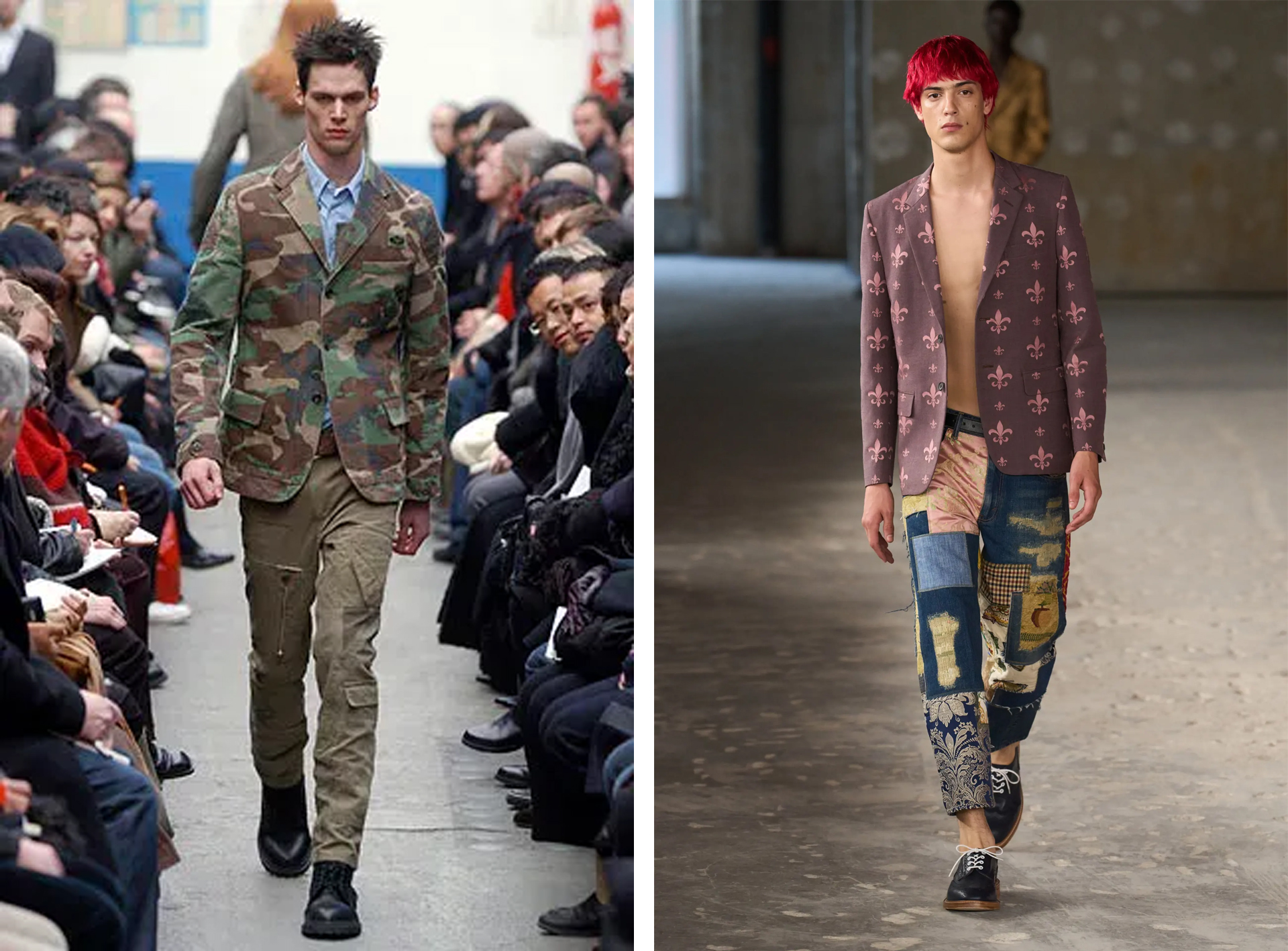
JUNYA WATANABE COMME des GARÇONS MAN FW06, SS26 ©vogue.com
It highlights Watanabe's signature experiments, technical details, and functional materials. He naturally mixes the asymmetric cuts and exposed seams seen in womenswear into menswear, maintaining the avant-garde spirit of the main house.
COMME des GARÇONS PLAY
Est. 2002
The heart with eyes. You know it, you’ve seen it, you probably own it. The most publicly known sub-line of COMME des GARÇONS, it is often a must-buy souvenir for travelers in Japan.
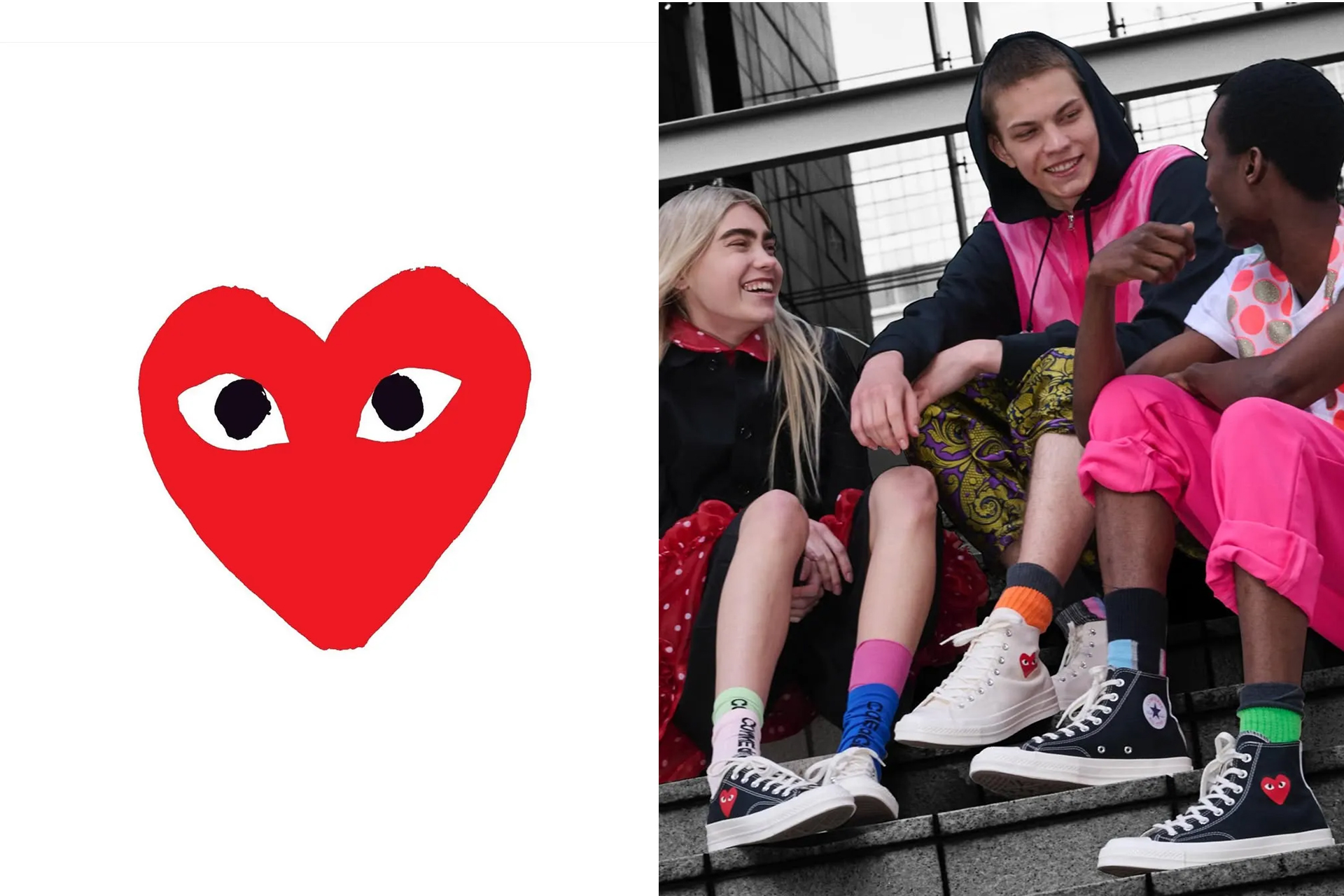
©@commedesgarcons
Designed with graphic artist Filip Pagowski, PLAY is the anti-fashion line. It’s t-shirts, hoodies, and Converse. It’s the cash cow that funds the avant-garde experiments of the mainline. It’s accessible, iconic, and arguably the most recognizable logo in modern fashion.
COMME des GARÇONS BLACK
Est. 2008
Born from the recession. Launching post-Lehman Brothers crash, the concept was "CdG for hard times.”
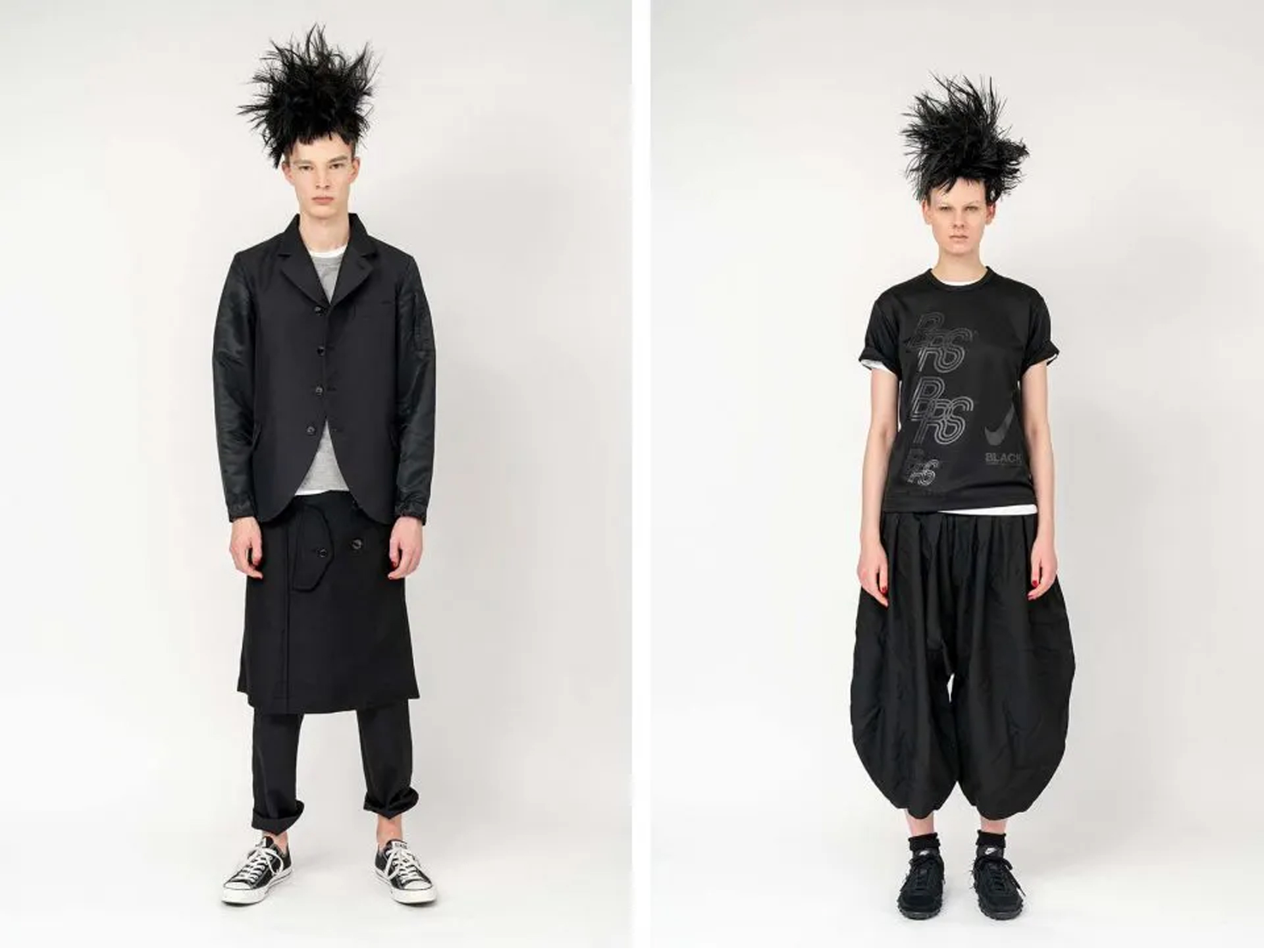
©@outpump.com
Lower price points, unisex sizing, strictly monochrome (black/white/grey). It was meant to be temporary but was too good to kill. It remains the best way to get that mainline aesthetic without the mainline price tag.
COMME des GARÇONS GANRYU
Est. 2008
This line was launched by Fumito Ganryu, a designer within COMME des GARÇONS, offering experimental menswear grafted with streetwear sensibilities.
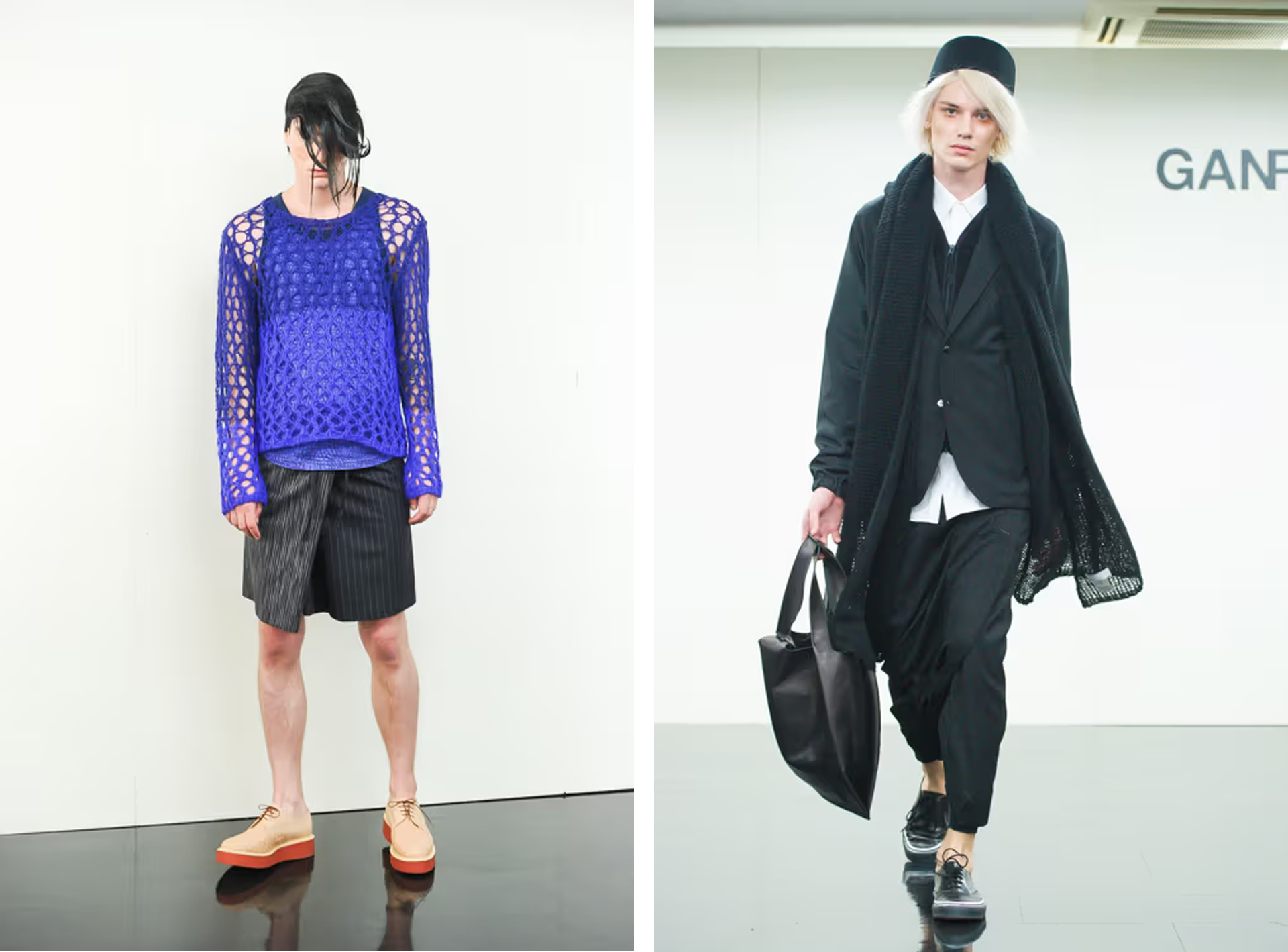
COMME des GARÇONS GANRYU SS14, FW14 ©hypebeast.com
Ganryu built his career at COMME des GARÇONS HOMME PLUS before starting COMME des GARÇONS GANRYU at Rei Kawakubo's suggestion. It operated as an in-house line centered on Japanese stores and did not participate in the Paris Collection.
COMME des GARÇONS GANRYU was a place where Ganryu could freely experiment with his fashion world and expand his design language within Rei Kawakubo's worldview. The line ended in 2017, but he established his own independent brand named FUMITO GANRYU in 2018 and is now active in the Paris Collection.
NOIR KEI NINOMIYA
Est. 2012
Kei Ninomiya worked as a pattern cutter for COMME des GARÇONS. As the name Noir (French for Black) suggests, it focuses on black collections with avant-garde and structural silhouettes.
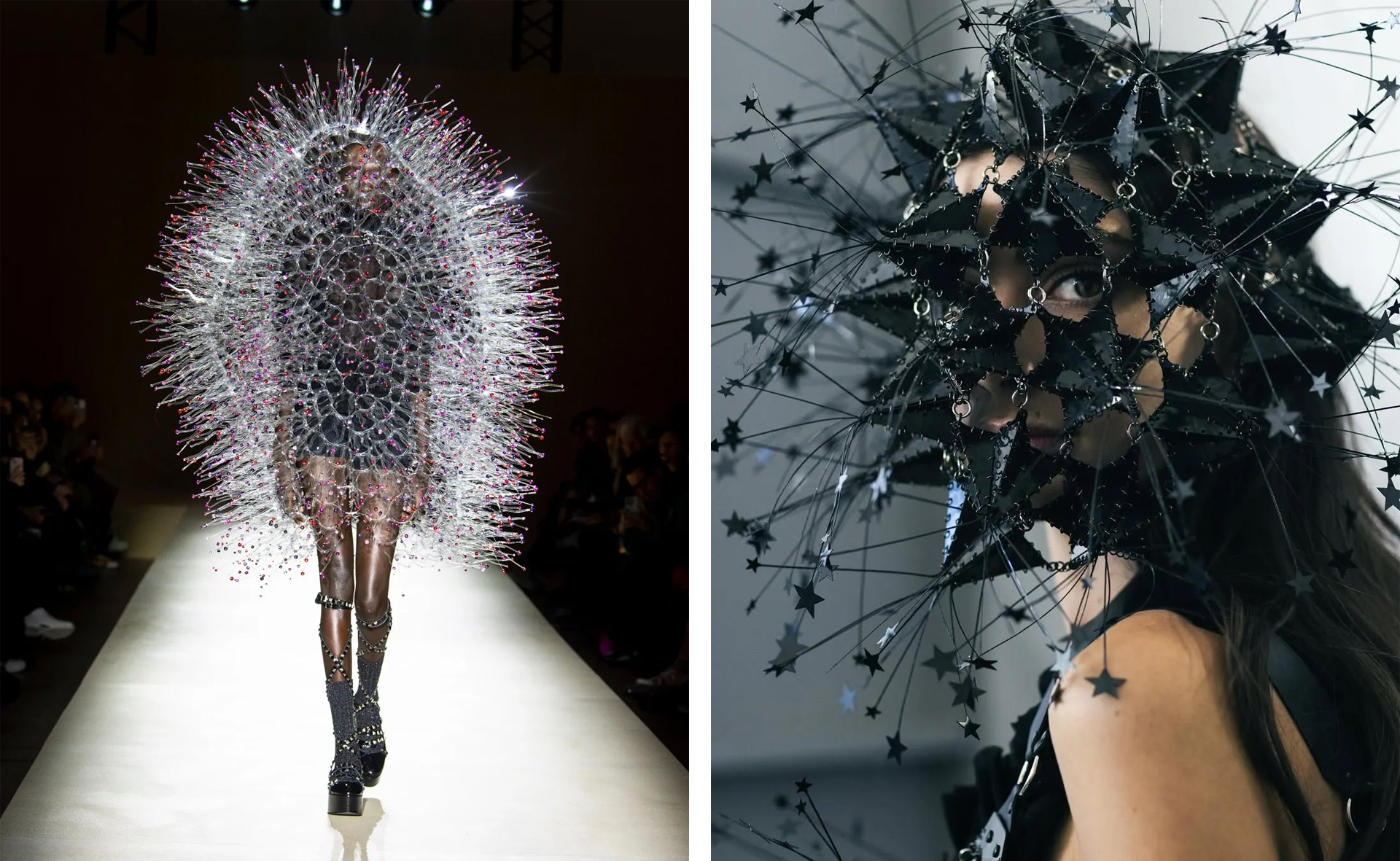
NOIR KEI NINOMIYA FW23, SS26 ©@noirkeininomiya
Based on pattern making and tailoring skills, Ninomiya experimentally transforms the shape, material, and sewing structure of clothes, showing a unique design that combines fashion with architectural sense. This line presents collections in Paris that freely reveal the experimental avant-garde spirit rather than a commercial approach.
COMME des GARÇONS GIRL
Est. 2015
As the name suggests, this is a brand where Kawakubo reinterprets COMME des GARÇONS in a "girlish" way. It is the successor to the COMME des GARÇONS SHIRT GIRL line ended in 2014 FW, containing the emotions of a girl. It uses various materials and details like frills, satin, and ribbons to pursue cuteness and experimentation simultaneously.
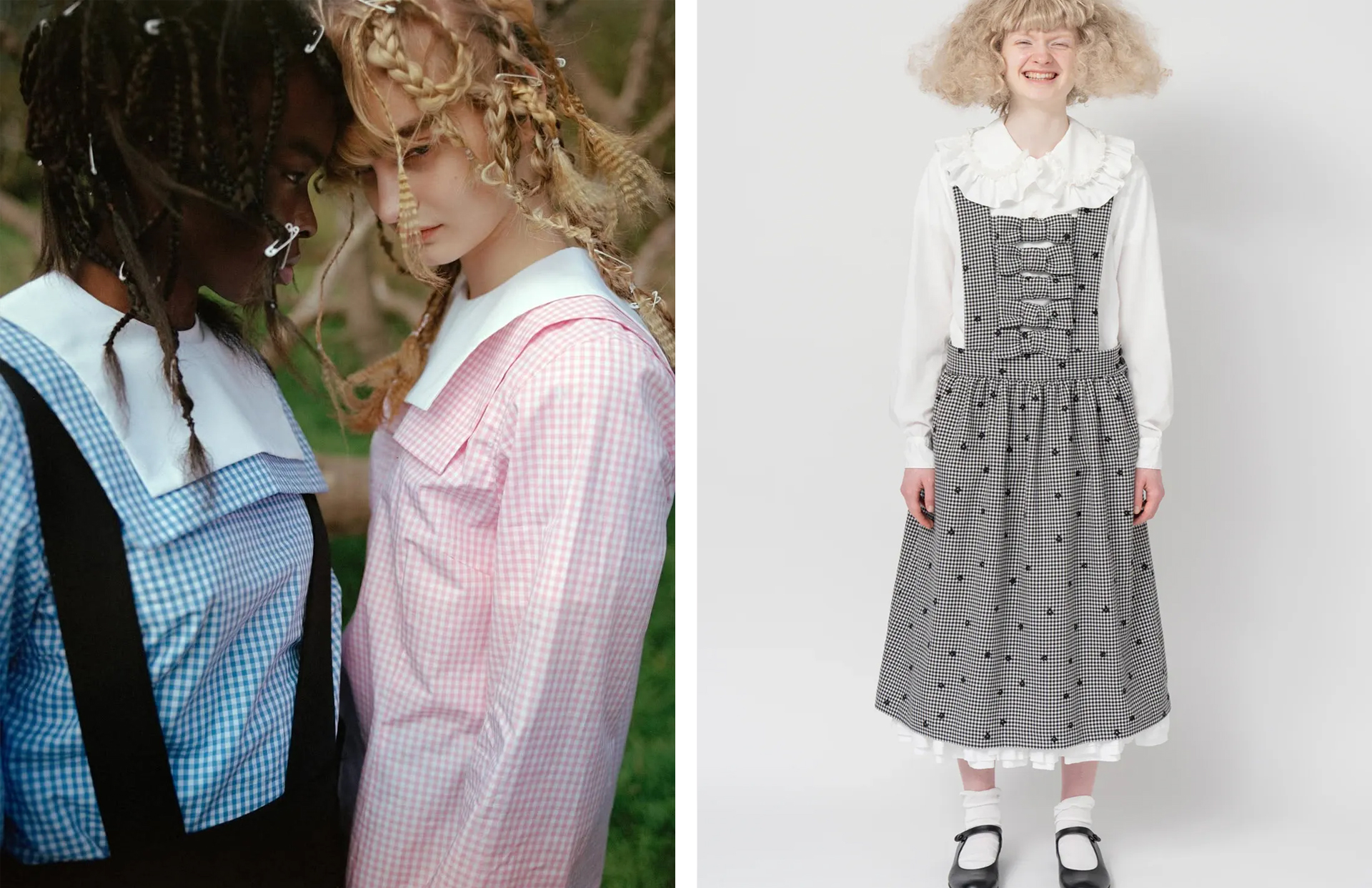
©@commedesgarcons ©@doverstreetmarketbeijing
While maintaining main colors like black and navy, it actively uses point colors, revealing the restrained aesthetic of the main house and the playful sensibility of the GIRL line simultaneously. In other words, it has established itself as an entry-level sub-brand that contains the avant-garde sense of the main house but is good for daily wear.
CDG CDG CDG
Est. 2018
The direct-to-consumer, logo-centric streetwear line. It taps into the drop-culture energy, focusing on branding and casual essentials for the internet generation.
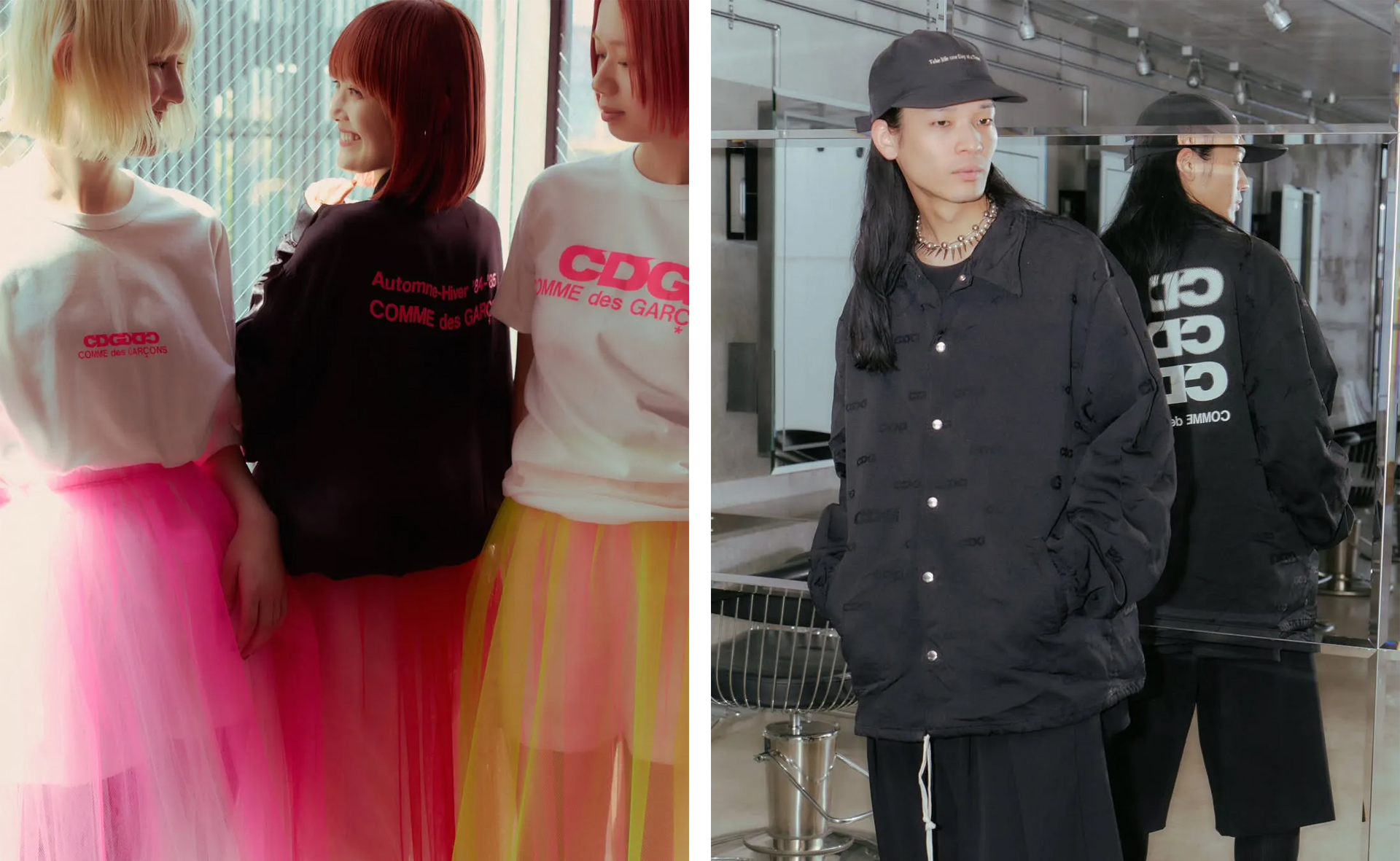
©@cdgcdgcdg
The influence of CdG extends far beyond its own labels. The company acts as a proving ground for talent. Chitose Abe (sacai) and Junichi Abe (kolor) both cut their teeth under Kawakubo, learning the delicate art of hybridization and pattern manipulation before launching their own empires.
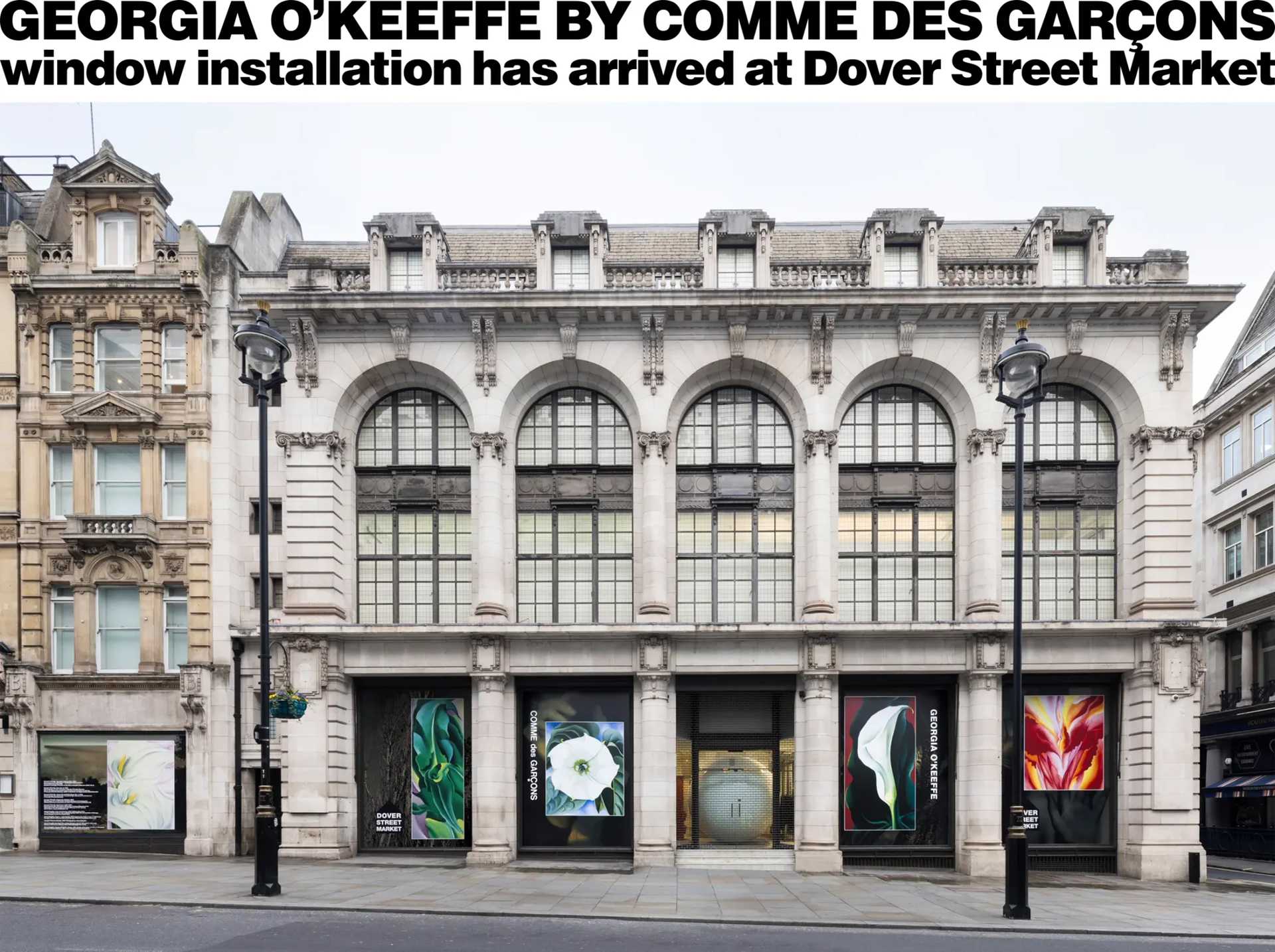
©doverstreetmarket.com
Rei Kawakubo, who has steadily expanded her universe, founded Dover Street Market (DSM) in London in 2004 with her husband Adrian Joffe, physically bringing her artistic world to life. Later opening in Ginza, New York, Singapore, Beijing, LA, and Paris, they expanded their influence worldwide. Dover Street Market is literally a space that handles "only designer brands we believe in," including COMME des GARÇONS. It is a shop where fashion, art, and design blur boundaries and offer inspiration.
The Eternal Muse
To understand the true gravity of COMME des GARÇONS and its impact on fashion, you only need to look at who they inspire. Marc Jacobs once defended his own collection against plagiarism accusations by telling Suzy Menkes: "Jil Sander was influenced by COMME des GARÇONS. Miuccia Prada was influenced by COMME des GARÇONS. We are all influenced by COMME des GARÇONS."
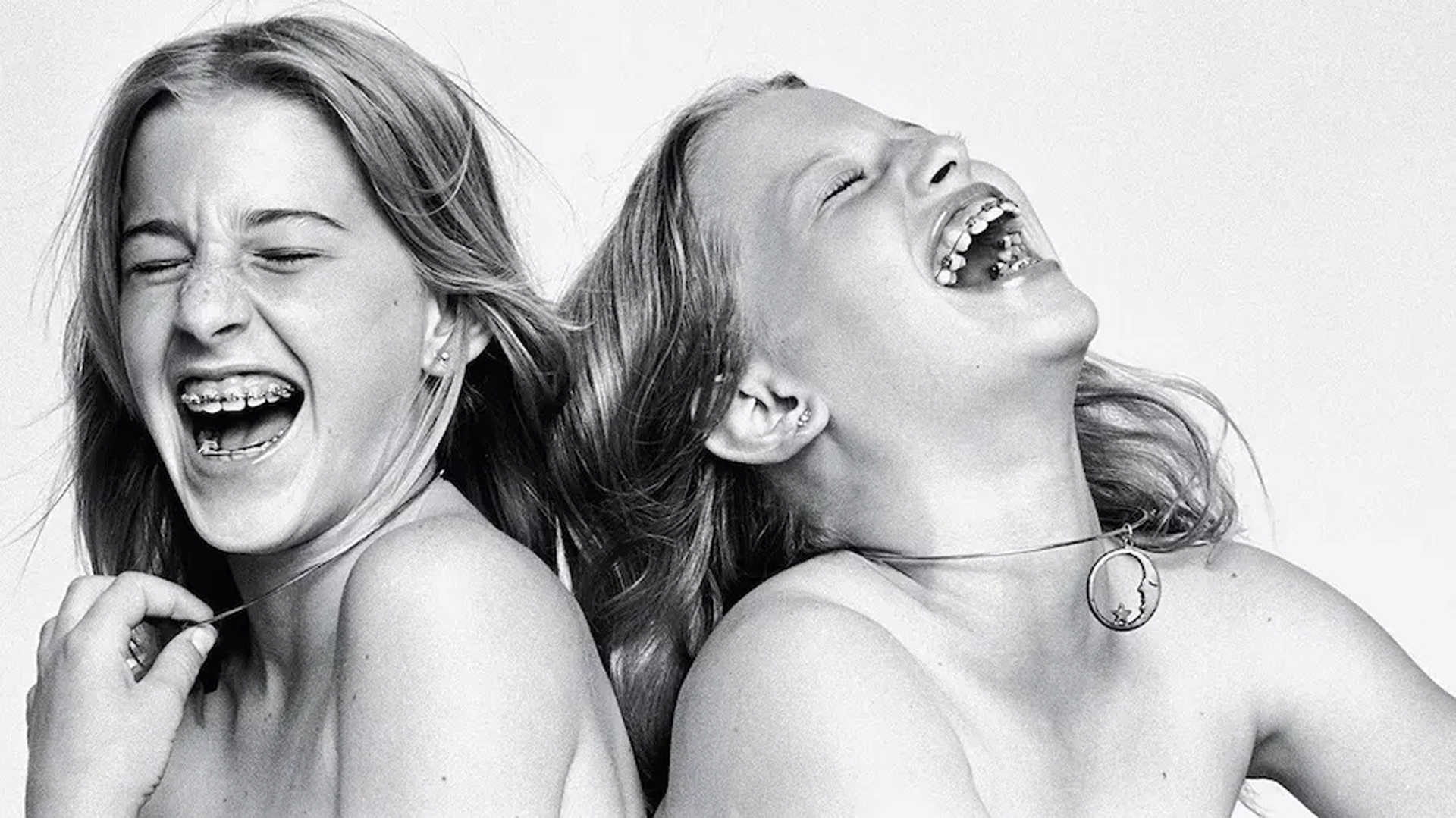
©dazeddigital.com
In a world obsessed with the "new," CdG remains the constant. Since 1969, Rei Kawakubo has refused to compromise, proving that fashion isn't about chasing a trend. It's about maintaining an attitude. Amidst the noise of luxury conglomerates and fleeting hype, COMME des GARÇONS stands apart: solitary, silent, and superior.